

Quercus Prinoides
quercus prinoides
Quercus prinoides, gemeinhin als Zwerg-Chinkapin-Eiche bekannt, ist ein bemerkenswerter nordamerikanischer Strauch oder kleiner Baum, der der hohen Statur seiner Eichenverwandten trotzt. Gewöhnlich nicht höher als 1 bis 3 Meter wachsend, breitet er sich über unterirdische Rhizome aus, um dichte, ausgedehnte Dickichte zu bilden. Trotz seiner geringen Größe ist er ein produktiver Erzeuger süßer, tanninarmer Eicheln, die manchmal schon im Alter von wenigen Jahren und bei einer Höhe von einem halben Meter Früchte tragen. Dies macht ihn zu einer unglaublich wertvollen ökologischen Ressource in den trockenen, felsigen und sandigen Lebensräumen, die er sein Zuhause nennt. Seine Widerstandsfähigkeit, einzigartige Wuchsform und sein überproportionaler Beitrag zu lokalen Nahrungsnetzen machen ihn zu einer faszinierenden Entdeckung für Naturbegeisterte, die Hochlandwälder und Kiefernheiden erkunden.
Lebensraum: Zu finden in trockenen, felsigen oder sandigen Böden, insbesondere in Kiefernheiden, Kalksteinfelsen, Hochlandrücken und an den Rändern offener Wälder.
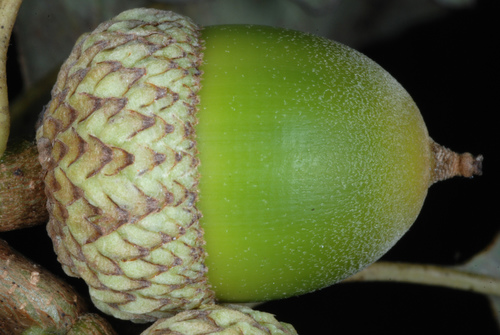
Die Zwerg-Chinkapin-Eiche ist ein mehrstämmiger, dickichtbildender Strauch, der typischerweise eine Höhe von 1 bis 3 Metern erreicht. Ihre Blätter sind einfach, wechselständig und verkehrt eiförmig bis länglich, 4 bis 14 Zentimeter lang, mit grob gezähnten, welligen Rändern, die denen von Kastanien-Eichen ähneln. Die Oberseite der Blätter ist glänzend dunkelgrün, während die Unterseite deutlich heller ist und eine dichte Schicht feiner, grauweiser Haare aufweist. Im Herbst verfärbt sich das Laub hellgelb oder orangebraun. Die Pflanze produziert kleine, einzelne oder paarweise Eicheln mit einem Becher, der etwa ein Drittel der Nuss umschließt und warzige, höckerige Schuppen aufweist.
Kategorie
PflanzenSeltenheit
Gewöhnlich
Gefahr
1/5 · Sehr gering
Snaps
Mach den ersten Snap!
Da sie sich über unterirdische Rhizome ausbreitet, kann ein einzelnes genetisches Individuum ein dichtes Dickicht von mehreren Metern Durchmesser bilden.
Obwohl sie selten Kopfhöhe überschreitet, kann eine Zwerg-Chinkapin-Eiche schon im Alter von drei bis fünf Jahren eine riesige Ernte süßer Eicheln produzieren.
Ihre Eicheln sind deutlich süßer und tanninarmer als die vieler anderer Eichenarten, was sie zu einer bevorzugten Nahrung für eine Vielzahl von Waldtieren macht.
Diese Miniatur-Eiche ist hoch an feuergefährdete Umgebungen angepasst; ihre oberirdischen Stängel können abbrennen, aber sie treibt schnell aus ihrem geschützten Wurzelsystem wieder aus.
Wie alle grünen Pflanzen produziert die Zwerg-Chinkapin-Eiche ihre eigene Energie durch Photosynthese.
Für dieses Objekt sind noch keine Merkmal-Badges vergeben.
Noch keine Alternativnamen vorhanden.
Sammlungen für dieses Objekt erscheinen hier, wenn weitere Themen hinzugefügt werden.
Gefahr
1/5 · Sehr gering
Noch keine besonderen Sicherheitshinweise.
Beginne mit der ganzen Pflanze und vergleiche dann Blattstellung, Blattränder, Stängel und eventuelle Blüten oder Früchte. Gegenständige Blätter wachsen paarweise, wechselständige einzeln am Stängel. Zusammen verraten diese Details weit mehr als ein einzelnes grünes Blatt. Pflanzen bestimmen: Lade ein Foto hoch und vergleiche die sichtbaren Merkmale.
100-300 cm
20-100 Jahre
Wie alle grünen Pflanzen produziert die Zwerg-Chinkapin-Eiche ihre eigene Energie durch Photosynthese.
Zu finden in trockenen, felsigen oder sandigen Böden, insbesondere in Kiefernheiden, Kalksteinfelsen, Hochlandrücken und an den Rändern offener Wälder.
Zoome hinein, um Cluster aufzulösen und zu sehen, wo dieses Objekt fotografiert wurde.
Neueste Snaps erscheinen hier, wenn neue Beobachtungen hinzukommen.
Nimm die Entdeckung mit
Fotografiere deinen Fund mit Snappit, bestimme die Art und füge die Entdeckung deiner Sammlung hinzu.