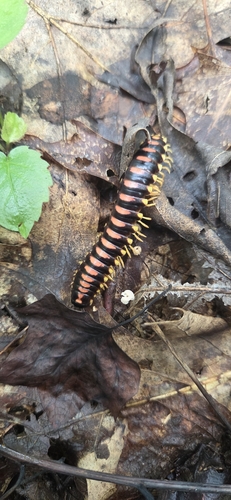


Rudiloria Trimaculata
rudiloria trimaculata
Rudiloria trimaculata ist ein auffälliger Tausendfüßer aus der Familie der Xystodesmidae, der für seine lebendige Warnfärbung und sein flaches Aussehen weithin geschätzt wird. Dieser faszinierende Arthropode, beheimatet in den feuchten Laubwäldern des östlichen Nordamerikas, ist ein sanfter Riese der Laubstreu. Als wichtiger Bestandteil des Waldökosystems arbeitet er unermüdlich als Detritivore, indem er verrottende Pflanzenstoffe abbaut und Nährstoffe in den Boden zurückführt. Was R. trimaculata wirklich bemerkenswert macht, ist sein chemischer Abwehrmechanismus; wenn er bedroht wird, kann er eine Blausäure enthaltende Flüssigkeit absondern, die einen an Bittermandeln erinnernden Geruch abgibt, um Raubtiere abzuschrecken.
Lebensraum: Zu finden in feuchter, schattiger Laubstreu und verrottenden Baumstämmen in alten Laubwäldern im östlichen Nordamerika.
Dieser Tausendfüßer zeichnet sich durch eine deutlich flachrückige (polydesmide) Körperform aus, mit seitlichen Erweiterungen, den sogenannten Paranota, an jedem Segment. Wie sein Art-Epitheton 'trimaculata' andeutet, ist er wunderschön mit drei deutlichen, leuchtend gefärbten Flecken – typischerweise gelb, orange oder rot – auf jedem seiner dunkelbraunen oder schwarzen Rückensegmente verziert, bestehend aus einem zentralen und zwei seitlichen Flecken. Ihm fehlen gänzlich Augen; stattdessen verlässt er sich auf seine Antennen, um in seiner dunklen, feuchten Umgebung zu navigieren. Trotz des Namens 'Tausendfüßer' besitzt er bei Weitem keine tausend Beine, sondern ein Paar an den ersten wenigen Segmenten und zwei Paare an den verbleibenden Körpersegmenten.
Kategorie
AnimalSeltenheit
Gewöhnlich
Gefahr
1/5 · Sehr gering
Snaps
1
Obwohl der Name 'Tausendfüßer' 'tausend Füße' bedeutet, hat diese Art weniger als 100 Beine und besitzt an den meisten ihrer Körpersegmente genau zwei Paare.
Sein Artname, 'trimaculata', bedeutet direkt 'dreifleckig' und beschreibt perfekt das auffällige Trio farbiger Punkte auf jedem Körpersegment.
Wie alle Arten der Ordnung Polydesmida ist er vollständig blind und navigiert in der dunklen Laubstreu ausschließlich über Berührung und Geruch.
Rudiloria trimaculata riecht bei Störung stark nach Kirsch-Cola oder Bittermandeln, eine deutliche chemische Warnung, dass er giftiges Cyanwasserstoffgas absondert.
Scheidet bei Bedrohung Cyanwasserstoff und Benzaldehyd aus, um Raubtiere abzuschrecken, was stark nach Bittermandeln riecht.
Verwendet helle, kontrastreiche dreifleckige Muster auf seinen Segmenten als visuelle Warnung an potenzielle Raubtiere vor seiner Toxizität.
Da er völlig augenlos ist, verlässt er sich auf hochsensible Antennen und Tasthaare, um in der dunklen Laubstreu zu navigieren und Nahrung zu finden.
Ernährt sich hauptsächlich von verrottendem organischem Material und spielt eine entscheidende Rolle im Nährstoffkreislauf des Waldbodens.
Altersunterschiede: Jungtiere konsumieren weicheres, stärker zersetztes organisches Material, während Erwachsene zähere Laubstreu und Holzreste verarbeiten können.

Trametes versicolor
Ernährt sich von verrottendem Holz, das von Pilzen abgebaut wird, wobei der Pilz sowohl als Nahrungsergänzung als auch als Verarbeitungsagens genutzt wird.

Phengodes laticollis
Wird von spezialisierten Leuchtkäfern gejagt, deren Larven fast ausschließlich giftige Tausendfüßer fressen.

Blarina brevicauda
Teilt den Lebensraum der Laubstreu, wird aber aufgrund seiner chemischen Abwehrmechanismen im Allgemeinen gemieden.
Für dieses Objekt sind noch keine Merkmal-Badges vergeben.
Noch keine Alternativnamen vorhanden.
Sammlungen für dieses Objekt erscheinen hier, wenn weitere Themen hinzugefügt werden.
Gefahr
1/5 · Sehr gering
Noch keine besonderen Sicherheitshinweise.
Beginne mit der Körperform, den Beinen oder Flossen, Fell, Federn oder Schuppen und auffälligen Zeichnungen. Berücksichtige dann Größe, Lebensraum und den Ort, an dem du das Tier gesehen hast. Jungtiere und saisonale Felle können ganz anders aussehen als die bekannten erwachsenen Tiere. Tiere bestimmen: Lade ein Foto hoch und vergleiche die sichtbaren Merkmale.
3-5 cm
0.001-0.005 kg
1-3 Jahre
Ernährt sich hauptsächlich von verrottendem organischem Material und spielt eine entscheidende Rolle im Nährstoffkreislauf des Waldbodens.
Zu finden in feuchter, schattiger Laubstreu und verrottenden Baumstämmen in alten Laubwäldern im östlichen Nordamerika.
Futtersuche
50-300
Zoome hinein, um Cluster aufzulösen und zu sehen, wo dieses Objekt fotografiert wurde.
Nimm die Entdeckung mit
Fotografiere deinen Fund mit Snappit, bestimme die Art und füge die Entdeckung deiner Sammlung hinzu.