





Sanderling
Calidris alba
Sanderlinge sind kleine, lebhafte Vögel, die gerne am Strand entlanglaufen. Sie haben flauschige weiße Federn und sind oft dabei zu beobachten, wie sie den Wellen hinterherjagen, während sie im Sand nach winziger Nahrung suchen.
Lebensraum: Küstengebiete
Der Sanderling ist ein kleiner, gedrungener Watvogel mit einem kurzen, kräftigen schwarzen Schnabel und schwarzen Beinen. Im Winter ist er auffallend hellgrau oben und reinweiß unten, erscheint auf Sandstränden fast geisterhaft. Ihm fehlt eine Hinterzehe, was ihm eine charakteristische Spur und einen unverwechselbaren Laufstil verleiht.
Kategorie
VögelSeltenheit
Common
Gefahr
1/5 · Sehr gering
Snaps
19
Sanderlinge haben keine Hinterzehe, was ihnen hilft, superschnell auf dem Sand zu laufen!
Diese Vögel nehmen vor der Migration stark zu, manchmal verdoppeln sie ihr Körpergewicht!
Sie reisen von arktischen Brutplätzen zu Stränden so weit südlich wie Südamerika!
Man kann oft einen Schwarm Sanderlinge zusammenlaufen sehen, den Meereswellen folgend.
Sanderlinge fressen hauptsächlich winzige Meeresbewohner, die sie im Sand vergraben oder an der Oberfläche finden.
Gefiedert beschreibt Tiere, hauptsächlich Vögel, die ein Federkleid besitzen.
Dieses Merkmal kennzeichnet Organismen, deren Nahrung hauptsächlich aus Insekten und anderen kleinen Wirbellosen besteht.
Küstenlebensräume sind dynamische Umgebungen an der Schnittstelle zwischen Land und Meer, die von Gezeiten, Wellen und Salzwasser geprägt sind.
Dieses Merkmal kennzeichnet Organismen, deren Ernährung vollständig oder hauptsächlich aus tierischem Gewebe besteht.

Dieses Merkmal kennzeichnet Lebewesen, die bei der Jagd, Flucht oder Fortbewegung eine außergewöhnliche Schnelligkeit aufweisen.

Wandertiere unternehmen saisonale Wanderungen von einer Region in eine andere, meist als Reaktion auf Klimaänderungen oder Nahrungsverfügbarkeit.
Noch keine Alternativnamen vorhanden.
Gefahr
1/5 · Sehr gering
Beobachten Sie Vögel immer aus der Ferne und versuchen Sie nicht, sie zu berühren.
Der einfachste Weg, Sanderling zu bestimmen, ist die Verwendung der Naturführer-App Snappit.
18-21 cm
36-39 cm
0.04-0.1 kg
3-13 Jahre
55 km/h
Sanderlinge fressen hauptsächlich winzige Meeresbewohner, die sie im Sand vergraben oder an der Oberfläche finden.
Küstengebiete
Zoome hinein, um Cluster aufzulösen und zu sehen, wo dieses Objekt fotografiert wurde.
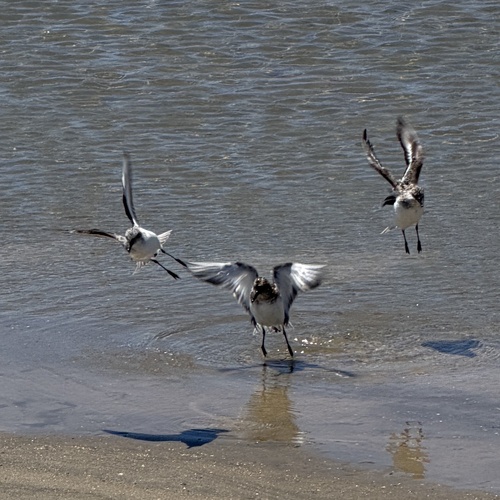
03.06.2026
Bodie Island Lifesaving and Coast Guard StationBildnachweis
(c) Conway Hawn, some rights reserved (CC BY)
Lizenz: CC BY 4.0 ↗
Das Bild wird möglicherweise zugeschnitten im Kartenrahmen angezeigt.
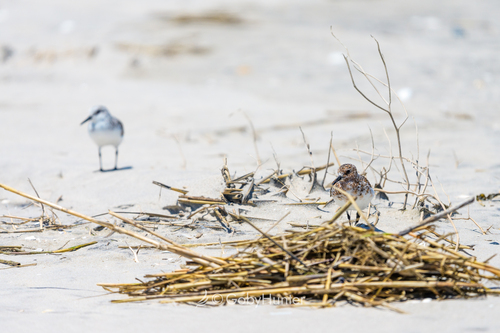
02.06.2026
Stone Harbor Bird SanctuaryBildnachweis
(c) GobyHunter, some rights reserved (CC BY)
Lizenz: CC BY 4.0 ↗
Das Bild wird möglicherweise zugeschnitten im Kartenrahmen angezeigt.
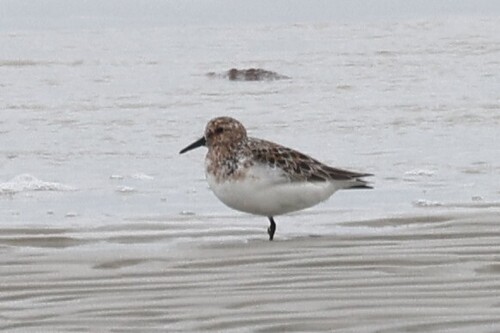
25.05.2026
Cape Charles Historic DistrictBildnachweis
(c) Kathy Richardson, some rights reserved (CC BY)
Lizenz: CC BY 4.0 ↗
Das Bild wird möglicherweise zugeschnitten im Kartenrahmen angezeigt.

US
Hier kann man sehen Meerassel, Fischadler und Steinwälzer.
Führer anzeigen →

Illinois, US
Hier kann man sehen Gewöhnliche Seidenpflanze und östliche Erdhummel.
Führer anzeigen →

Ohio, US
Hier kann man sehen Sandtigerhai, Ammenhai und Kuh.
Führer anzeigen →

Nouvelle-Aquitaine, FR
Hier kann man sehen Rosaflamingo, Giraffen und Roter Panda.
Führer anzeigen →

Florida, US
Hier kann man sehen Gorilla, Netzgiraffe und Südliches Breitmaulnashorn.
Führer anzeigen →
North Carolina, US
Hier kann man sehen Sanderling, Lachmöwe und Brauner Pelikan.
Führer anzeigen →
Nimm die Entdeckung mit
Fotografiere deinen Fund mit Snappit, bestimme die Art und füge die Entdeckung deiner Sammlung hinzu.




.jpg&width=800)








