

Schoenoplectiella
schoenoplectiella
Schoenoplectiella ist eine Gattung schlanker, büscheliger Feuchtgebietssimsen, die zur Familie der Sauergrasgewächse (Cyperaceae) gehört. Oft als "Keulenbinsen" bezeichnet, spielen diese widerstandsfähigen Pflanzen eine entscheidende Rolle in Feuchtgebietsökosystemen auf der ganzen Welt, indem sie Uferlinien stabilisieren und wesentliches Nistmaterial und Nahrung für verschiedene Wasserarten bereitstellen. Im Gegensatz zu einigen ihrer größeren Simsenverwandten sind Schoenoplectiella-Arten im Allgemeinen bescheiden in der Größe, was sie zu einem faszinierenden Studienobjekt für Botanik-Enthusiasten macht, die Sümpfe, Moore und Seeufer erkunden. Diese Pflanzen sind hervorragend an gesättigte Umgebungen angepasst und gedeihen an Orten, an denen der Wasserstand schwankt. Ihre vereinfachten, grasartigen Strukturen und kompakten Blütenstände ermöglichen es ihnen, Schlickflächen und flache Gewässer schnell zu besiedeln, insbesondere in gestörten oder saisonalen Feuchtgebieten.
Lebensraum: An sumpfigen Uferlinien, feuchten Schlickflächen und in flachen Gewässern saisonaler Teiche oder Seeufer gefunden.
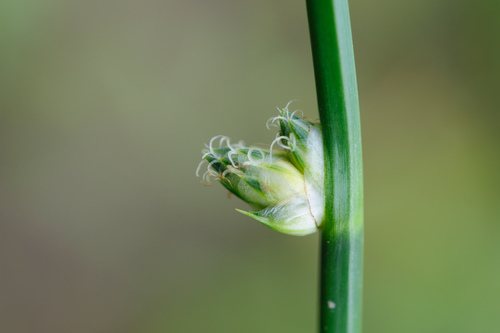
Schoenoplectiella-Simsen bilden typischerweise dichte, niedrig wachsende Büschel schlanker, zylindrischer grüner Stängel, die eine Höhe von 10 bis 100 cm erreichen. Die Blätter sind oft zu einfachen, scheidenartigen Strukturen an der Basis reduziert, sodass die glatten, photosynthetischen Stängel den größten Teil der Arbeit übernehmen. Das markanteste Merkmal ist die kompakte Ansammlung bräunlicher, eiförmiger Ährchen, die scheinbar seitlich aus der Seite des Stängels nahe der Spitze hervorbrechen; diese Illusion wird durch ein einzelnes, aufrechtes Tragblatt verursacht, das nahtlos nach oben weiterläuft und den Stängel selbst nachahmt.
Kategorie
PflanzenSeltenheit
Gewöhnlich
Gefahr
1/5 · Sehr gering
Snaps
Mach den ersten Snap!
Obwohl sie Blätter zu haben scheinen, findet die Photosynthese fast ausschließlich in ihren runden, hohlen Stängeln statt.
Der Name Schoenoplectiella leitet sich von griechischen Wörtern ab, die 'kleines geflochtenes Schilf' bedeuten, was auf ihre historische Verwendung beim Flechten kleiner Matten und Körbe hinweist.
Die Samen haben winzige rückwärts gerichtete Borsten, die ihnen helfen, auf den Federn und schlammigen Füßen von Zugvögeln mitzureiten, wodurch sie sich in neue Feuchtgebiete ausbreiten können.
Als photoautotrophe Pflanze produziert sie ihre eigene Energie, indem sie Chlorophyll nutzt, um Sonnenlicht einzufangen und Wasser sowie essentielle Bodenmineralien über ihr flaches Wurzelsystem aufzunehmen.
Für dieses Objekt sind noch keine Merkmal-Badges vergeben.
Noch keine Alternativnamen vorhanden.
Sammlungen für dieses Objekt erscheinen hier, wenn weitere Themen hinzugefügt werden.
Gefahr
1/5 · Sehr gering
Noch keine besonderen Sicherheitshinweise.
Vergleiche Blütenstände, Stängelform, den Ansatz der Blätter und das Gelenk, an dem das Blatt auf den Stängel trifft. Eine gemähte Rasenfläche zeigt selten genug für eine genaue Bestimmung. Gräser bestimmen: Lade ein Foto hoch und vergleiche die sichtbaren Merkmale.
10-100 cm
0.01-0.2 kg
1-5 Jahre
Als photoautotrophe Pflanze produziert sie ihre eigene Energie, indem sie Chlorophyll nutzt, um Sonnenlicht einzufangen und Wasser sowie essentielle Bodenmineralien über ihr flaches Wurzelsystem aufzunehmen.
An sumpfigen Uferlinien, feuchten Schlickflächen und in flachen Gewässern saisonaler Teiche oder Seeufer gefunden.
Zoome hinein, um Cluster aufzulösen und zu sehen, wo dieses Objekt fotografiert wurde.
Neueste Snaps erscheinen hier, wenn neue Beobachtungen hinzukommen.
Nimm die Entdeckung mit
Fotografiere deinen Fund mit Snappit, bestimme die Art und füge die Entdeckung deiner Sammlung hinzu.