

Sora
porzana carolina
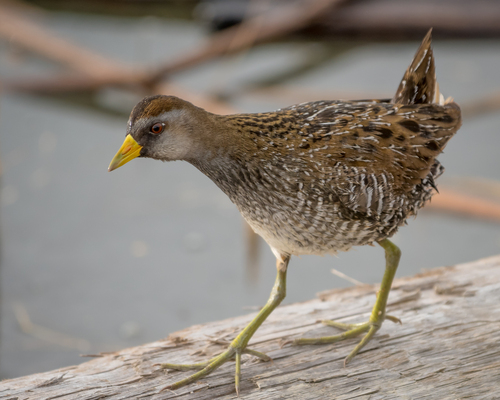
Das Sora-Sumpfhuhn ist ein kleiner, heimlicher Sumpfvogel aus der Familie der Rallenvögel, bekannt für seine scheue Natur und seine charakteristischen Rufe, die seine Anwesenheit in dichter Feuchtgebietsvegetation verraten. Oft gehört, aber selten gesehen, ist dieser reizvolle Vogel eine Zugvogelart, die in weiten Teilen Nordamerikas brütet und weiter südlich überwintert. Trotz seines plumpen Körpers und relativ kurzer Flügel ist das Sora ein überraschend starker Flieger, der lange nächtliche Wanderungen unternimmt. Es spielt eine Rolle in Feuchtgebietsökosystemen, indem es eine Vielzahl von Insekten und Pflanzenmaterial verzehrt und so zur Samenverbreitung und zur Kontrolle von Wirbellosen beiträgt. Seine Geschicklichkeit, durch dichtes Schilf zu navigieren, und sein getarntes Gefieder machen es zu einem wahren Geist des Sumpfes.
Lebensraum: Es lebt in Süßwassersümpfen, Mooren und Feuchtwiesen mit dichter, aufsteigender Vegetation wie Rohrkolben, Seggen und Gräsern.
Das Sora-Sumpfhuhn ist ein kleiner, hühnerähnlicher Sumpfvogel mit einer Länge von etwa 20-25 cm und einem kompakten Körperbau. Erwachsene Tiere zeigen ein auffälliges schwarzes Gesicht und eine schwarze Kehle, die sich scharf von einer schiefergrauen Brust und einem ebensolchen Hals abheben. Krone und Rücken sind gesprenkelt olivbraun mit feinen weißen Streifen, was eine hervorragende Tarnung zwischen den Schilfrohren bietet. Die Flanken sind schwarz-weiß gebändert, und es hat einen kurzen, leuchtend gelben Schnabel. Seine Beine sind gelblich-grün. Im Flug zeigen seine kurzen, abgerundeten Flügel eine bräunlich-graue Unterseite, und sein kurzer Schwanz ist oft nach oben gerichtet. Jungvögeln fehlt das schwarze Gesicht und sie haben ein matteres, bräunlicheres Gefieder.
Kategorie
VögelSeltenheit
Gewöhnlich
Gefahr
1/5 · Sehr gering
Snaps
Mach den ersten Snap!
Obwohl sie Sumpfvögel sind, sind Soras keine starken Schwimmer und bevorzugen es, durch die Vegetation zu gehen oder zu rennen.
Der Name 'Sora' stammt von einem seiner charakteristischen Rufe, einem aufsteigenden 'Sora'-Laut, der oft im Sumpf zu hören ist.
Ihre Körper sind seitlich abgeflacht, das heißt, sie sind von der Seite her dünn, was es ihnen ermöglicht, leicht durch dichte Sumpfschilf zu gleiten.
Junge Soras schlüpfen mit schwarzem Daunenkleid, das ihnen hilft, Wärme aufzunehmen und in ihren dunklen, sumpfigen Nestern getarnt zu bleiben.
Soras sind unglaublich wendig und nutzen ihre starken Beine und ihren abgeflachten Körper, um sich mühelos durch dichte Sumpfvegetation zu bewegen, oft gehen sie auf schwimmenden Pflanzen.
Sie verfügen über eine Vielzahl charakteristischer Rufe, darunter ein wieherndes 'ker-wee' und einen aufsteigenden 'sora'-Laut, die oft der einzige Hinweis auf ihre Anwesenheit sind.
Trotz ihres scheinbar schwachen Fluges sind Soras kräftige Zugvögel, die lange Reisen zwischen Brut- und Überwinterungsgebieten hauptsächlich unter dem Schutz der Dunkelheit unternehmen.
Die Nahrung des Sora-Sumpfhuhns besteht aus einer Mischung kleiner Wirbelloser, insbesondere Insekten, sowie verschiedenen Pflanzensamen und Wasserpflanzen.
Altersunterschiede: Junge Küken werden hauptsächlich von ihren Eltern mit Insekten gefüttert. Erwachsene Tiere ernähren sich gemischt.

Neovison vison
Ein häufiger Prädator in Feuchtgebieten, der Sora-Eier oder -Küken jagen kann.

Ardea herodias
Ein großer Watvogel, der in denselben Feuchtgebieten vorkommt und dafür bekannt ist, kleine Vögel zu jagen.

Typha latifolia
Wasserpflanzen, die Nahrung und Deckung bieten.
Anisoptera larvae
Eine Hauptnahrungsquelle für Soras.
Für dieses Objekt sind noch keine Merkmal-Badges vergeben.
Noch keine Alternativnamen vorhanden.
Sammlungen für dieses Objekt erscheinen hier, wenn weitere Themen hinzugefügt werden.
Gefahr
1/5 · Sehr gering
Noch keine besonderen Sicherheitshinweise.
Vergleiche Silhouette, Schnabelform, Schwanzlänge, Flügelbinden und die Zeichnung um die Augen. Derselbe kleine braune Vogel am Futterhaus kann im Brutkleid, im Winterkleid oder im ersten Lebensjahr ganz anders aussehen. Vögel bestimmen: Lade ein Foto hoch und vergleiche die sichtbaren Merkmale.
20-25 cm
30-35 cm
0.05-0.1 kg
2-5 Jahre
Die Nahrung des Sora-Sumpfhuhns besteht aus einer Mischung kleiner Wirbelloser, insbesondere Insekten, sowie verschiedenen Pflanzensamen und Wasserpflanzen.
Es lebt in Süßwassersümpfen, Mooren und Feuchtwiesen mit dichter, aufsteigender Vegetation wie Rohrkolben, Seggen und Gräsern.
Futtersuche
Zoome hinein, um Cluster aufzulösen und zu sehen, wo dieses Objekt fotografiert wurde.
Neueste Snaps erscheinen hier, wenn neue Beobachtungen hinzukommen.
Nimm die Entdeckung mit
Fotografiere deinen Fund mit Snappit, bestimme die Art und füge die Entdeckung deiner Sammlung hinzu.