


Stauracanthus Genistoides
stauracanthus genistoides
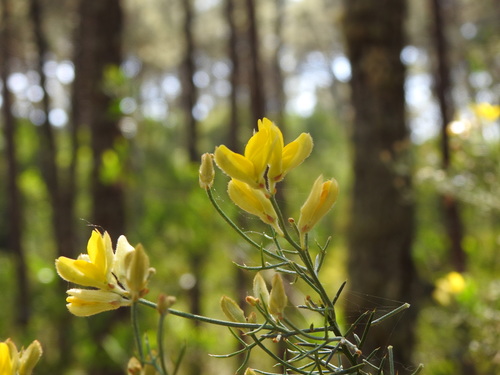
Stauracanthus genistoides ist ein markanter, dorniger Strauch, der in den sandigen Küstengebieten und Heidelandschaften der südwestlichen Iberischen Halbinsel beheimatet ist. Diese widerstandsfähige Pflanze gehört zur Familie der Hülsenfrüchtler (Fabaceae) und ist perfekt an die rauen, nährstoffarmen Bedingungen der mediterranen Dünen angepasst. Sie spielt eine wichtige Rolle in ihrem Ökosystem, indem sie lose Sande stabilisiert und den Boden durch stickstofffixierende Wurzelknöllchen anreichert. Während ihrer Hauptblütezeit verwandelt sie die karge Landschaft mit einer brillanten Darstellung goldgelber Blüten, die scharf mit ihren beeindruckenden grünen Dornen kontrastieren.
Lebensraum: Zu finden in Küstendünen, Kiefernwäldern und Binnenheiden mit sauren, nährstoffarmen Böden.
Dieser aufrechte, stark verzweigte Strauch wird typischerweise 40 bis 150 cm hoch und bildet dichte, polsterartige, dornige Dickichte. Sein markantestes Merkmal ist die kreuzförmige Anordnung seiner steifen, scharfen grünen Dornen (modifizierte Äste oder Kladodien), die anstelle von Blättern die Wasserverdunstung minimieren. Im Frühling und Frühsommer produziert er leuchtend gelbe, erbsenartige Blüten von etwa 1 bis 1,5 cm Länge, die dicht an den Astspitzen gebündelt sind und denen schließlich kleine, behaarte Samenschoten folgen.
Kategorie
PflanzenSeltenheit
Gewöhnlich
Gefahr
1/5 · Sehr gering
Snaps
Mach den ersten Snap!
Da sie keine traditionellen breiten Blätter besitzt, findet fast die gesamte Photosynthese der Pflanze direkt in ihren grünen, holzigen Dornen statt.
Sie fungiert als ökologischer Pionier, stabilisiert wandernde Sanddünen und schafft geschützte Mikrohabitate, in denen sich empfindlichere Pflanzen ansiedeln können.
Der Gattungsname Stauracanthus leitet sich von den griechischen Wörtern 'stauros' (Kreuz) und 'akantha' (Dorn) ab und bezieht sich auf das charakteristische kreuzförmige Muster ihrer Dornen.
Produziert ihre eigene Energie durch Photosynthese, unter Nutzung von Sonnenlicht, Kohlendioxid, Wasser und Bodenmineralien, während sie ihren eigenen Stickstoff fixiert.
Für dieses Objekt sind noch keine Merkmal-Badges vergeben.
Noch keine Alternativnamen vorhanden.
Sammlungen für dieses Objekt erscheinen hier, wenn weitere Themen hinzugefügt werden.
Gefahr
1/5 · Sehr gering
Noch keine besonderen Sicherheitshinweise.
Beginne mit der ganzen Pflanze und vergleiche dann Blattstellung, Blattränder, Stängel und eventuelle Blüten oder Früchte. Gegenständige Blätter wachsen paarweise, wechselständige einzeln am Stängel. Zusammen verraten diese Details weit mehr als ein einzelnes grünes Blatt. Pflanzen bestimmen: Lade ein Foto hoch und vergleiche die sichtbaren Merkmale.
40-150 cm
5-15 Jahre
Produziert ihre eigene Energie durch Photosynthese, unter Nutzung von Sonnenlicht, Kohlendioxid, Wasser und Bodenmineralien, während sie ihren eigenen Stickstoff fixiert.
Zu finden in Küstendünen, Kiefernwäldern und Binnenheiden mit sauren, nährstoffarmen Böden.
Zoome hinein, um Cluster aufzulösen und zu sehen, wo dieses Objekt fotografiert wurde.
Neueste Snaps erscheinen hier, wenn neue Beobachtungen hinzukommen.
Nimm die Entdeckung mit
Fotografiere deinen Fund mit Snappit, bestimme die Art und füge die Entdeckung deiner Sammlung hinzu.


















