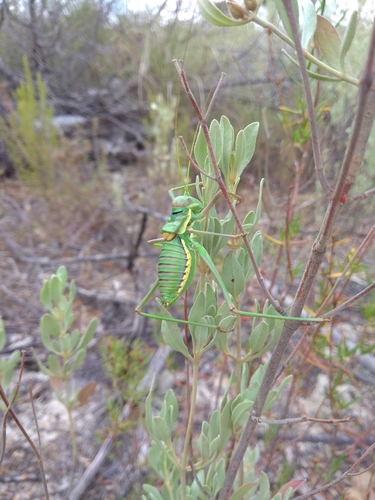


Steropleurus Recticarinatus
steropleurus recticarinatus
Die Steropleurus Recticarinatus ist eine faszinierende Art der Sattelschrecke, die ausschließlich in den trockenen Busch- und Graslandschaften der Iberischen Halbinsel vorkommt. Dieses plumpe, schwer gebaute Insekt gehört zur Familie der Tettigoniidae und ist leicht an seinem charakteristischen sattelartigen Pronotum zu erkennen, das seine stark reduzierten Flügel schützt. Da ihre Flügel hauptsächlich zur Geräuscherzeugung und nicht zum Fliegen modifiziert sind, verlassen sich diese Heuschrecken auf Tarnung und kräftige Hinterbeine, um sich in ihren sonnenverwöhnten Umgebungen fortzubewegen. Es ist faszinierend, sie in den warmen Sommermonaten zu beobachten, wenn die Männchen laute, rhythmische Zirplaute, bekannt als Stridulation, erzeugen, um Weibchen anzulocken. Als sowohl generalistische Pflanzenfresser als auch gelegentliche Jäger kleinerer Insekten tragen sie zum lokalen Ökosystem bei und sind somit wichtige Bestandteile der mediterranen Trockengebiete. Eine dieser getarnten Heuschrecken an einem dornigen Strauch zu entdecken, ist eine lohnende Herausforderung für jeden Naturfreund.
Lebensraum: Vorkommend in trockenen mediterranen Buschlandschaften, Garrigues und grasbewachsenen lichten Wäldern, oft auf niedrigen Büschen oder dornigen krautigen Pflanzen sitzend.
Diese robuste Sattelschrecke besitzt einen prallen, abgerundeten Hinterleib und ein sehr ausgeprägtes, sattelförmiges Pronotum, das am Rücken nach oben gekrümmt ist. Ihre Färbung ist typischerweise eine Mischung aus kryptischen Grün-, Mattgelb- und Erdbrauntönen, die es ihr ermöglicht, nahtlos mit trockenen Gräsern und Sträuchern zu verschmelzen. Sie besitzt sehr kurze, verkümmerte Flügel, die unter dem Pronotum verborgen sind, wodurch sie flugunfähig ist. Ihre langen, schlanken Antennen reichen weit über die Körperlänge hinaus, und ihre kräftigen Hinterbeine sind mit kleinen Dornen ausgestattet, die das Klettern durch dichte, dornige Vegetation ermöglichen.
Kategorie
InsektenSeltenheit
Gewöhnlich
Gefahr
1/5 · Sehr gering
Snaps
Mach den ersten Snap!
Obwohl dieses Insekt Flügel besitzt, ist es völlig flugunfähig, da seine Flügel ausschließlich zur Erzeugung akustischer Signale entwickelt wurden.
Um ihre Eier vor dem rauen mediterranen Winter zu schützen, verwenden die Weibchen einen langen, schwertartigen Legebohrer, um sie tief in der Erde zu vergraben.
Wenn sie bedroht sind, können sie ein übelriechendes Sekret abgeben oder ein lautes Warnzirpen ausstoßen, um potenzielle Raubtiere zu erschrecken.
Ernährt sich opportunistisch von einer Vielzahl wilder krautiger Pflanzen, Blüten und zarter Blätter, ergänzt durch kleine, langsam bewegliche Insekten.
Altersunterschiede: Nymphen ernähren sich fast ausschließlich von zartem Pflanzengewebe und Mikroarthropoden, während erwachsene Tiere eine größere Vielfalt an grober Vegetation und größeren Insekten konsumieren.
Für dieses Objekt sind noch keine Merkmal-Badges vergeben.
Noch keine Alternativnamen vorhanden.
Sammlungen für dieses Objekt erscheinen hier, wenn weitere Themen hinzugefügt werden.
Gefahr
1/5 · Sehr gering
Noch keine besonderen Sicherheitshinweise.
Achte auf sechs Beine, Fühler, drei Körperabschnitte und die Form der Flügel. Käfer haben gehärtete Vorderflügel, Fliegen nur ein funktionierendes Flügelpaar. Winzige Insekten müssen oft aus der Nähe betrachtet werden, bevor ihre Gruppe klar wird. Insekten bestimmen: Lade ein Foto hoch und vergleiche die sichtbaren Merkmale.
3-5 cm
0.002-0.005 kg
1 Jahre
Ernährt sich opportunistisch von einer Vielzahl wilder krautiger Pflanzen, Blüten und zarter Blätter, ergänzt durch kleine, langsam bewegliche Insekten.
Vorkommend in trockenen mediterranen Buschlandschaften, Garrigues und grasbewachsenen lichten Wäldern, oft auf niedrigen Büschen oder dornigen krautigen Pflanzen sitzend.
Futtersuche
30-80
Zoome hinein, um Cluster aufzulösen und zu sehen, wo dieses Objekt fotografiert wurde.
Neueste Snaps erscheinen hier, wenn neue Beobachtungen hinzukommen.
Nimm die Entdeckung mit
Fotografiere deinen Fund mit Snappit, bestimme die Art und füge die Entdeckung deiner Sammlung hinzu.