

Tachina Canariensis
tachina canariensis
Die Kanaren-Raupenfliege (Tachina canariensis) ist eine faszinierende Art von Raupenfliege, die auf den Kanarischen Inseln endemisch ist. Bekannt für ihren robusten, borstigen Körper und ihren aktiven Flug, spielt dieses Insekt eine entscheidende Doppelrolle in seinem Ökosystem: Es ist sowohl ein wichtiger Bestäuber der lokalen Flora als auch ein wesentlicher natürlicher Regulator der Raupenpopulationen. Als erwachsene Tiere sieht man sie häufig unter der warmen Inselsonne zwischen Wildblumen hin und her flitzen, auf der Suche nach Nektar, um ihr energiereiches Leben zu befeuern.
Lebensraum: Findet man in offenen kanarischen Kiefernwäldern, buschigen vulkanischen Hängen und küstennahen Strauchzonen, die reich an blühenden Pflanzen sind.
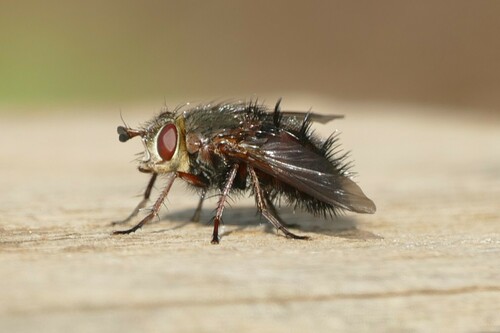
Diese mittelgroße bis große Fliege zeichnet sich durch einen kräftigen, dunkelbraunen bis schwärzlichen Körper aus, der dicht mit kräftigen, schützenden schwarzen Borsten bedeckt ist, besonders am abgerundeten Hinterleib. Die Seiten des Hinterleibs weisen oft warme, subtile orange-rote Akzente auf, und der Kopf hat große, rötliche Facettenaugen. Ihre klaren Flügel, die bis zu 3 Zentimeter Spannweite erreichen, werden in Ruhestellung schräg gehalten und enthüllen so die klassische, kräftige Silhouette einer Raupenfliege.
Kategorie
InsektenSeltenheit
Gewöhnlich
Gefahr
1/5 · Sehr gering
Snaps
Mach den ersten Snap!
Da sie auf den Kanarischen Inseln endemisch sind, haben sie sich perfekt an die einzigartigen Mikroklimata und vulkanischen Terrains des Archipels angepasst.
Die Larven von Tachina canariensis töten ihren Wirt nicht sofort; stattdessen fressen sie zuerst nicht-essentielle Gewebe, um die Raupe so lange wie möglich am Leben zu erhalten.
Ihr dichtes Borstenkleid dient als hochentwickeltes Winddetektionssystem, das ihnen hilft, herannahende Raubtiere in Millisekunden zu erkennen.
Weibchen nutzen ausgeprägte chemische und visuelle Hinweise, um Wirte, typischerweise Schmetterlingsraupen, zu finden, auf denen sie Eier ablegen können.
Die dicke Anordnung steifer Borsten am Körper bietet mechanischen Schutz vor Raubtieren und aggressiven Wirten.
Ausgestattet mit kräftigen Flugmuskeln, kann diese Fliege schweben, flitzen und schnelle Luftmanöver ausführen, um der Gefangennahme zu entgehen und Wirte zu verfolgen.
Die Larven sind interne Parasitoide, die sich von lebendem Raupengewebe ernähren, während die erwachsenen Tiere hauptsächlich Nektar und Pollen von endemischen Wildblumen fressen.
Altersunterschiede: Larven sind strikte Endoparasitoide, die sich von Raupenwirten ernähren, während erwachsene Tiere vollständig auf eine Diät aus zuckerhaltigem Nektar und Pollen umstellen.
Caradrina rebeli
Die Larven von Tachina canariensis parasitieren die Raupen dieser endemischen Kanaren-Mottenart und helfen so, deren Population zu kontrollieren.
Euphorbia canariensis
Erwachsene Fliegen besuchen die Kanaren-Wolfsmilch und ernähren sich von ihrem süßen Nektar, wodurch sie zur Bestäubung der Pflanze beitragen.
Für dieses Objekt sind noch keine Merkmal-Badges vergeben.
Noch keine Alternativnamen vorhanden.
Sammlungen für dieses Objekt erscheinen hier, wenn weitere Themen hinzugefügt werden.
Gefahr
1/5 · Sehr gering
Noch keine besonderen Sicherheitshinweise.
Achte auf sechs Beine, Fühler, drei Körperabschnitte und die Form der Flügel. Käfer haben gehärtete Vorderflügel, Fliegen nur ein funktionierendes Flügelpaar. Winzige Insekten müssen oft aus der Nähe betrachtet werden, bevor ihre Gruppe klar wird. Insekten bestimmen: Lade ein Foto hoch und vergleiche die sichtbaren Merkmale.
1+ cm
1+ cm
0.0001+ kg
0+ Jahre
15 km/h
Die Larven sind interne Parasitoide, die sich von lebendem Raupengewebe ernähren, während die erwachsenen Tiere hauptsächlich Nektar und Pollen von endemischen Wildblumen fressen.
Findet man in offenen kanarischen Kiefernwäldern, buschigen vulkanischen Hängen und küstennahen Strauchzonen, die reich an blühenden Pflanzen sind.
Zoome hinein, um Cluster aufzulösen und zu sehen, wo dieses Objekt fotografiert wurde.
Neueste Snaps erscheinen hier, wenn neue Beobachtungen hinzukommen.
Nimm die Entdeckung mit
Fotografiere deinen Fund mit Snappit, bestimme die Art und füge die Entdeckung deiner Sammlung hinzu.