

Tachytes
tachytes
Tachytes ist eine Gattung stämmiger, solitärer Raubwespen aus der Familie der Crabronidae, die gemeinhin als Sandwespen bekannt sind. Diese fleißigen Insekten sind für ihre hochspezialisierten Jagdfähigkeiten und ihr Nistverhalten bekannt, bei dem die Weibchen tiefe Gänge in sandigen Böden graben, um ihren Nachwuchs aufzuziehen. Als schnelle und unglaublich agile Flieger sind Tachytes in vielen Ökosystemen äußerst nützliche Räuber, die dazu beitragen, Populationen von pflanzenfressenden Schädlingen wie Heuschrecken und Laubheuschrecken auf natürliche Weise zu kontrollieren. Im Gegensatz zu sozialen Wespen arbeitet jedes Weibchen völlig allein, um ihr Nest zu bauen und Nahrung für ihre zukünftige Brut zu beschaffen. Ihre fleißigen Grabgewohnheiten, ihre pfeilschnellen Flugmuster und ihre markanten Gesichtsmerkmale machen sie zu einem faszinierenden Studienobjekt für Naturbeobachter und Insektenliebhaber gleichermaßen.
Lebensraum: Typischerweise in offenen, sonnigen Umgebungen mit lockeren, sandigen Böden zu finden, wie z.B. Küstendünen, Flussufern und sandigen Feldern.
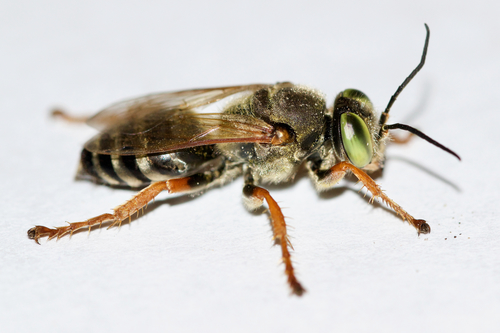
Tachytes-Wespen messen typischerweise zwischen 1 und 2 Zentimeter Länge und haben robuste Körper, die mit feinen, schimmernden goldenen oder silbrigen Haaren bedeckt sind, die ihnen ein leicht staubiges oder metallisches Aussehen verleihen. Ihr auffälligstes und markantestes Merkmal sind ihre großen Facettenaugen, die im lebenden Zustand oft ein brillantes, lebhaftes Grün oder Goldgrün sind. Sie besitzen kurze, breite Köpfe und klare oder leicht rauchige Flügel mit einer Flügelspannweite von etwa 1,5 bis 3 Zentimetern. Ihre Beine sind stark mit stachelartigen Borsten bewaffnet, insbesondere an den Vorderbeinen, die eine kammartige Struktur bilden, die zum Verschieben von Sand angepasst ist.
Kategorie
InsektenSeltenheit
Gewöhnlich
Gefahr
1/5 · Sehr gering
Snaps
Mach den ersten Snap!
Einige Arten werden liebevoll 'Heuschreckenschlepper' genannt, wegen des schnellen Summgeräuschs und der hohen Geschwindigkeit, mit der sie schwere Beute durch die Luft tragen.
Ihre leuchtend grünen Augen verlieren ihre brillante Farbe und werden kurz nach dem Tod der Wespe dunkel, was lebende Exemplare besonders auffällig macht.
Um zu verhindern, dass andere Raubtiere oder Parasiten ihre Nester finden, bedecken weibliche Tachytes ihre Nesteingänge sorgfältig mit Sand, wann immer sie zur Jagd ausfliegen.
Adulte Tiere ernähren sich hauptsächlich von zuckerreichem Nektar aus Blüten, während ihre räuberischen Larven ausschließlich von gelähmten Orthopteren ernährt werden, die von der Mutter bereitgestellt werden.
Melanoplus femurrubrum
Weibchen jagen und lähmen diese Art, um ihre unterirdischen Larvenkammern zu bestücken.

Daucus carota
Adulte Wespen ernähren sich vom Nektar dieser Blüten und helfen dabei bei der Bestäubung.
Sphex ichneumoneus
Konkurriert um geeignete sandige Nistplätze und sich überschneidende Orthopteren-Beutearten.
Für dieses Objekt sind noch keine Merkmal-Badges vergeben.
Noch keine Alternativnamen vorhanden.
Sammlungen für dieses Objekt erscheinen hier, wenn weitere Themen hinzugefügt werden.
Gefahr
1/5 · Sehr gering
Noch keine besonderen Sicherheitshinweise.
Achte auf sechs Beine, Fühler, drei Körperabschnitte und die Form der Flügel. Käfer haben gehärtete Vorderflügel, Fliegen nur ein funktionierendes Flügelpaar. Winzige Insekten müssen oft aus der Nähe betrachtet werden, bevor ihre Gruppe klar wird. Insekten bestimmen: Lade ein Foto hoch und vergleiche die sichtbaren Merkmale.
1+ cm
1+ cm
0.0001+ kg
1+ Jahre
15 km/h
Adulte Tiere ernähren sich hauptsächlich von zuckerreichem Nektar aus Blüten, während ihre räuberischen Larven ausschließlich von gelähmten Orthopteren ernährt werden, die von der Mutter bereitgestellt werden.
Typischerweise in offenen, sonnigen Umgebungen mit lockeren, sandigen Böden zu finden, wie z.B. Küstendünen, Flussufern und sandigen Feldern.
Zoome hinein, um Cluster aufzulösen und zu sehen, wo dieses Objekt fotografiert wurde.
Neueste Snaps erscheinen hier, wenn neue Beobachtungen hinzukommen.
Nimm die Entdeckung mit
Fotografiere deinen Fund mit Snappit, bestimme die Art und füge die Entdeckung deiner Sammlung hinzu.