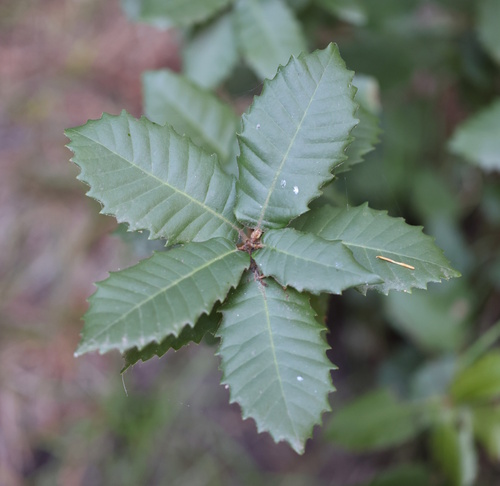


Tanoak
notholithocarpus densiflorus
Die Tanoak ist ein majestätischer immergrüner Baum, der in den Küstenregionen Kaliforniens und des südwestlichen Oregons heimisch ist. Trotz ihres gebräuchlichen Namens ist sie keine echte Eiche, sondern ein evolutionäres Bindeglied zwischen Eichen und Kastanien, klassifiziert in ihrer eigenen einzigartigen Gattung Notholithocarpus. Historisch wurde sie wegen ihrer tanninreichen Rinde geschätzt, die einst stark für die Ledergerbung geerntet wurde. Dieser Baum spielt eine grundlegende Rolle in seinen heimischen Waldökosystemen, indem er eine Fülle von Nahrung und Unterschlupf für eine Vielzahl von Wildtieren bietet. Tanoaks sind unglaublich widerstandsfähig und können nach Waldbränden kräftig aus ihren Wurzelstöcken austreiben, was sie zu einer Eckpfeilerart des pazifischen Nordwestens und des kalifornischen Chaparrals macht.
Lebensraum: Findet sich in feuchten Küstenwäldern, gemischten immergrünen Wäldern und Mammutbaum-Ökosystemen Kaliforniens und Oregons.
Tanoaks wachsen typischerweise als mittelgroße bis große Bäume und erreichen Höhen von 15 bis 45 Metern, obwohl sie in trockeneren Lebensräumen auch dichte, mehrstämmige Sträucher bilden können. Sie sind leicht an ihren dicken, ledrigen, immergrünen Blättern zu erkennen, die ausgeprägte parallele Adern und scharf gezahnte Ränder aufweisen. Die Blätter haben eine markante blasse, flaumige Unterseite, die mit feinen, wolligen gold-weißen Haaren bedeckt ist. Ihr vielleicht auffälligstes Merkmal ist die eichelähnliche Frucht, die in einem einzigartigen Becher sitzt, der dicht mit langen, spreizenden, bur-ähnlichen Schuppen bedeckt ist, was ihnen ein borstiges oder stacheliges Aussehen verleiht, das an eine Kastanienhülle erinnert.
Kategorie
PflanzenSeltenheit
Common
Gefahr
1/5 · Sehr gering
Snaps
4
Trotz ihres gebräuchlichen Namens ist die Tanoak keine echte Eiche, sondern ein evolutionäres Bindeglied zwischen Kastanien und Eichen.
Ihre Eicheln liegen in einzigartigen, bürstenartigen Bechern, die mit langen, haarigen Fasern bedeckt sind, die wie winzige Seeigel aussehen.
Der gebräuchliche Name Tanoak bezieht sich auf die historische Verwendung ihrer Rinde durch frühe Siedler zum Gerben von Leder aufgrund ihres extrem hohen Tanningehalts.
Kann nach intensiven Waldbränden schnell aus unterirdischen Wurzelstöcken wieder austreiben.
Bildet tiefe Mykorrhiza-Netzwerke mit unterirdischen Pilzen, um die Nährstoff- und Wasseraufnahme zu maximieren.
Speichert hohe Konzentrationen bitterer Tannine in Rinde und Blättern, um Pflanzenfresser und Insektenschädlinge abzuwehren.
Als photoautotrophe Pflanze produziert die Tanoak ihre eigene Energie durch Photosynthese, indem sie Sonnenlicht, Kohlendioxid, Wasser und Bodenmineralien nutzt.
Phytophthora ramorum
Tanoak dient diesem zerstörerischen Wasserschimmel-Erreger als kritische Nahrungsquelle und Wirt.

Aphelocoma californica
Der Buschhäher ernährt sich von Tanoak-Eicheln und versteckt sie, was zur Samenverbreitung und Vermehrung des Baumes beiträgt.
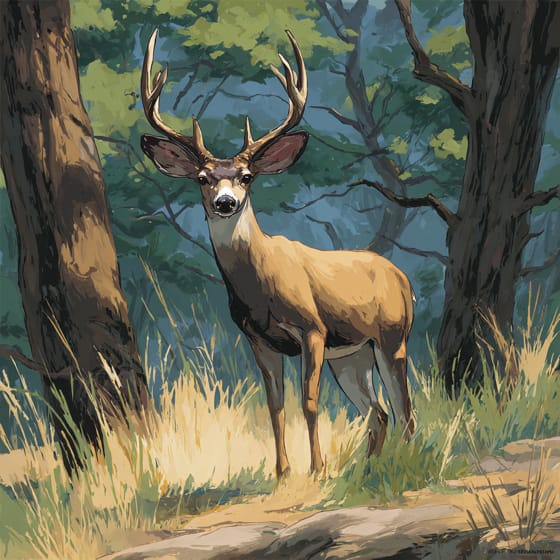
Odocoileus hemionus
Maultierhirsche fressen die Blätter und Zweige der Tanoak-Sämlinge und konsumieren ihre sehr nahrhaften Eicheln.
Für dieses Objekt sind noch keine Merkmal-Badges vergeben.
Noch keine Alternativnamen vorhanden.
Sammlungen für dieses Objekt erscheinen hier, wenn weitere Themen hinzugefügt werden.
Gefahr
1/5 · Sehr gering
Noch keine besonderen Sicherheitshinweise.
Der einfachste Weg, Tanoak zu bestimmen, ist die Verwendung der Naturführer-App Snappit.
1000-4500 cm
150-300 Jahre
Als photoautotrophe Pflanze produziert die Tanoak ihre eigene Energie durch Photosynthese, indem sie Sonnenlicht, Kohlendioxid, Wasser und Bodenmineralien nutzt.
Findet sich in feuchten Küstenwäldern, gemischten immergrünen Wäldern und Mammutbaum-Ökosystemen Kaliforniens und Oregons.
Zoome hinein, um Cluster aufzulösen und zu sehen, wo dieses Objekt fotografiert wurde.

California, US
Hier kann man sehen Mammutbaum-Sauerklee und Küstenmammutbaum.
Führer anzeigen →

California, US
Hier kann man sehen Küstenmammutbaum und Pazifische Dreiblattblume.
Führer anzeigen →
Nimm die Entdeckung mit
Fotografiere deinen Fund mit Snappit, bestimme die Art und füge die Entdeckung deiner Sammlung hinzu.











.jpg&width=800)



_001.jpg&width=800)




