


Taupata
coprosma repens
Die Taupata, auch bekannt als Spiegelpflanze, ist ein bemerkenswert robuster und anpassungsfähiger immergrüner Strauch, der in Neuseeland heimisch ist. Bekannt für sein auffallend glänzendes, tiefgrünes Laub und leuchtend orangefarbene Beeren, gedeiht er in anspruchsvollen Küstenumgebungen, wo viele andere Pflanzen zugrunde gehen würden. Seine angeborene Widerstandsfähigkeit gegen Salznebel, starke Winde und trockene, sandige Böden macht ihn zu einer unschätzbaren Art für Küstenbegrünungsprojekte und zu einer sehr beliebten Zierpflanze in verschiedenen Klimazonen weltweit. Über seine Robustheit und Ästhetik hinaus spielt die Taupata eine entscheidende ökologische Rolle, indem sie ein wichtiges Nahrungs- und Schutzangebot für einheimische Vogelarten und Insekten bietet. Ihr dichter, ausladender Wuchs trägt auch wesentlich zur Stabilisierung von Küstendünen und Ufern bei, verhindert Erosion und fördert gesündere Ökosysteme. Dieser widerstandsfähige Strauch verkörpert eine doppelte Identität, indem er sowohl als beeindruckender Überlebenskünstler in der Wildnis als auch als geschätzte Bereicherung für Gärten und Landschaften existiert.
Lebensraum: Man findet sie hauptsächlich in Küstengebieten, wo sie auf felsigen Ufern, Klippen, Sanddünen und in Küstenwäldern wächst, ist aber auch an verschiedene Gartenumgebungen anpassungsfähig.
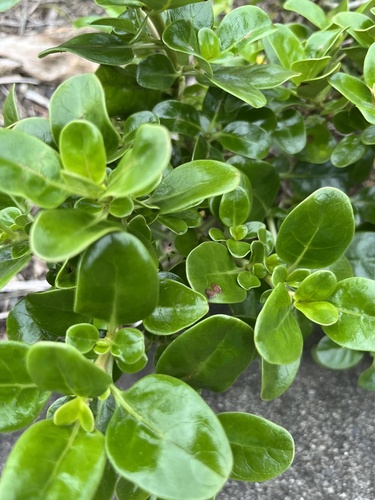
Die Taupata ist leicht an ihren dicken, lederartigen und außergewöhnlich glänzenden Blättern zu erkennen, die ein leuchtendes Dunkelgrün aufweisen und oft einen leicht gekräuselten oder gewellten Rand haben, typischerweise 5-8 cm lang. Sie bildet einen dichten, ausladenden Strauch, der oft breiter als hoch wächst und eine Höhe von 1 bis 2,5 Metern erreicht. Ein wichtiges visuelles Merkmal im Herbst und Winter ist die reichliche Produktion kleiner, fleischiger, leuchtend oranger bis rot-oranger Steinfrüchte (Beeren), die sich an ihren Stängeln ansammeln. Die Stängel selbst sind kräftig und zeigen oft einen rötlichen Schimmer, besonders bei jungen Trieben.
Kategorie
PflanzenSeltenheit
Gewöhnlich
Gefahr
1/5 · Sehr gering
Snaps
Mach den ersten Snap!
Coprosma repens ist eine zweihäusige Pflanze, das heißt, einzelne Pflanzen sind entweder männlich oder weiblich; nur die weiblichen Pflanzen bilden die charakteristischen leuchtend orangefarbenen Beeren.
Trotz ihrer weiten Verbreitung in Gärten sind die reichlichen orangefarbenen Beeren der Taupata eine wichtige traditionelle Nahrungsquelle für mehrere einheimische neuseeländische Vogelarten.
Der intensive Glanz ihrer Blätter wird oft mit einem polierten Spiegel verglichen, was ihr den beliebten alternativen deutschen Namen 'Spiegelpflanze' eingebracht hat.
Dieser unglaublich robuste Strauch verträgt eine Vielzahl von Wachstumsbedingungen, von voller Sonne bis Halbschatten und verschiedene Bodentypen, was zu seinem Erfolg als Pionierpflanze an der Küste und widerstandsfähiges Gartenexemplar beiträgt.
Als photosynthetische Pflanze produziert die Taupata ihre eigene Nahrung, indem sie Sonnenlicht, Wasser und Kohlendioxid durch Photosynthese in Zucker umwandelt. Sie nimmt essentielle mineralische Nährstoffe aus dem Boden über ihr ausgedehntes Wurzelsystem auf.
Für dieses Objekt sind noch keine Merkmal-Badges vergeben.
Noch keine Alternativnamen vorhanden.
Sammlungen für dieses Objekt erscheinen hier, wenn weitere Themen hinzugefügt werden.
Gefahr
1/5 · Sehr gering
Noch keine besonderen Sicherheitshinweise.
Beginne mit der ganzen Pflanze und vergleiche dann Blattstellung, Blattränder, Stängel und eventuelle Blüten oder Früchte. Gegenständige Blätter wachsen paarweise, wechselständige einzeln am Stängel. Zusammen verraten diese Details weit mehr als ein einzelnes grünes Blatt. Pflanzen bestimmen: Lade ein Foto hoch und vergleiche die sichtbaren Merkmale.
100-250 cm
5-50 kg
20-50 Jahre
Als photosynthetische Pflanze produziert die Taupata ihre eigene Nahrung, indem sie Sonnenlicht, Wasser und Kohlendioxid durch Photosynthese in Zucker umwandelt. Sie nimmt essentielle mineralische Nährstoffe aus dem Boden über ihr ausgedehntes Wurzelsystem auf.
Man findet sie hauptsächlich in Küstengebieten, wo sie auf felsigen Ufern, Klippen, Sanddünen und in Küstenwäldern wächst, ist aber auch an verschiedene Gartenumgebungen anpassungsfähig.
Zoome hinein, um Cluster aufzulösen und zu sehen, wo dieses Objekt fotografiert wurde.
Neueste Snaps erscheinen hier, wenn neue Beobachtungen hinzukommen.
Nimm die Entdeckung mit
Fotografiere deinen Fund mit Snappit, bestimme die Art und füge die Entdeckung deiner Sammlung hinzu.


















