

Texas-Madrone
arbutus xalapensis
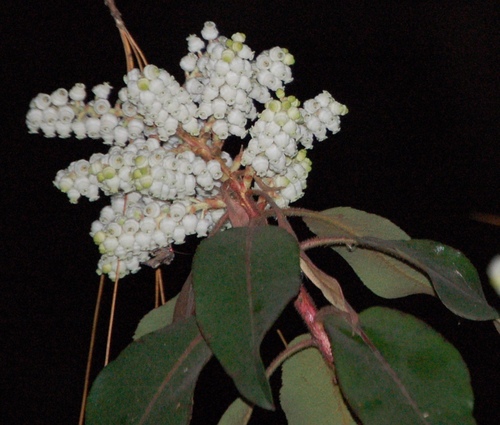
Die Texas-Madrone (Arbutus xalapensis) ist ein bezaubernder immergrüner Baum, heimisch in den felsigen, kalkreichen Böden des südwestlichen Teils der Vereinigten Staaten und Mexikos. Bekannt für ihre auffällige, mehrfarbig abblätternde Rinde, enthüllt dieser Baum glatte, polierte Stammflächen darunter, die von Cremefarben bis zu tiefen Korallen- und Rottönen reichen – was ihr den umgangssprachlichen Spitznamen „nacktes Holz“ einbrachte. Im Frühling erstrahlt der Baum mit duftenden, urnenförmigen, weiß- bis rosafarbenen Blütenbüscheln, die eine Vielzahl von Bestäubern anziehen. Diese Blüten weichen im Herbst leuchtend orangefarbenen und roten Beeren, die eine wichtige Nahrungsquelle für die lokale Tierwelt darstellen. Trotz ihrer rauen Schönheit ist die Texas-Madrone bekanntermaßen schwer zu vermehren und umzupflanzen, was reife Wildexemplare zu hochgeschätzten Schätzen für Wanderer und Naturforscher macht, die die Canyons der Chihuahua-Wüste und die Wälder des Edwards Plateaus erkunden.
Lebensraum: Vorkommend in felsigen Kalkstein-Canyons, Berghängen und Eichen-Wacholder-Wäldern in Höhen zwischen 900 und 2.400 Metern.
Die Texas-Madrone wächst typischerweise als kleiner bis mittelgroßer Baum oder großer Strauch und erreicht Höhen von 4 bis 12 Metern. Ihr markantestes Merkmal ist die glatte, sich kalt anfühlende Rinde, die sich in papierartigen Schichten ablöst und ein Spektrum von inneren Rindenfarben enthüllt, darunter Pfirsich, Aprikose und tiefes Rotbraun. Sie besitzt dicke, ledrige, dunkelgrüne ovale Blätter mit glatten oder leicht gezackten Rändern. Im zeitigen Frühling bildet sie endständige Rispen kleiner, cremeweißer, laternenförmiger Blüten, denen im Herbst Büschel von holprigen, kugelförmigen, leuchtend rot-orangefarbenen Beeren von etwa 8 bis 12 Millimetern Durchmesser folgen.
Kategorie
PflanzenSeltenheit
Gewöhnlich
Gefahr
1/5 · Sehr gering
Snaps
Mach den ersten Snap!
Ihr Holz ist unglaublich dicht, schwer und hart, weshalb es historisch für Werkzeuggriffe und Holzkohle begehrt war, obwohl das Fällen aufgrund ihrer Seltenheit in den USA nicht empfohlen wird.
Einheimische bezeichnen die Texas-Madrone oft als „Damenbein“ oder „nacktes Holz“, da die abblätternde Rinde einen bemerkenswert glatten, rosafarbenen Stamm darunter enthüllt.
Im Gegensatz zu den meisten immergrünen Bäumen kann die Texas-Madrone durch ihre Rinde Photosynthese betreiben, wenn ihre Blätter gestresst sind oder abgeworfen werden, dank des Chlorophylls, das in den glatten rot-orangen Stammschichten vorhanden ist.
Sie wirft regelmäßig ihre äußere Rinde ab, was das Wachstum von epiphytischen Pflanzen und Moosen darauf verhindert und gleichzeitig etwas Photosynthese direkt durch ihre glatte Unterrinde ermöglicht.
Besitzt dicke, ledrige Blätter mit einer wachsartigen Kutikula, die den Wasserverlust minimiert, wodurch der Baum in trockenen Kalksteingebieten gedeihen kann.
Verlässt sich auf spezialisierte unterirdische Pilznetzwerke, um knappe Nährstoffe und Feuchtigkeit aus felsigen, nährstoffarmen Böden aufzunehmen, wo ihre Wurzeln allein Schwierigkeiten hätten, sich zu etablieren.
Als photoautotrophe Pflanze produziert die Texas-Madrone ihre eigene Energie durch Photosynthese, indem sie Sonnenlicht, Kohlendioxid und Wasser nutzt und dabei essentielle Bodennährstoffe aufnimmt.

Bombycilla cedrorum
Ernährt sich während seiner Herbst- und Winterwanderungen stark von den reifen roten Beeren der Texas-Madrone und trägt zur Samenverbreitung bei.

Apis mellifera
Besucht im zeitigen Frühjahr die duftenden urnenförmigen Blüten, um Nektar zu sammeln, und fungiert als primärer Bestäuber.
Arbutaceae mycorrhizae
Bildet obligate Mykorrhiza-Assoziationen mit spezialisierten Bodenpilzen, um Mineralien und Wasser in Kalksteinböden zu sichern.
Für dieses Objekt sind noch keine Merkmal-Badges vergeben.
Noch keine Alternativnamen vorhanden.
Sammlungen für dieses Objekt erscheinen hier, wenn weitere Themen hinzugefügt werden.
Gefahr
1/5 · Sehr gering
Noch keine besonderen Sicherheitshinweise.
Beginne mit der ganzen Pflanze und vergleiche dann Blattstellung, Blattränder, Stängel und eventuelle Blüten oder Früchte. Gegenständige Blätter wachsen paarweise, wechselständige einzeln am Stängel. Zusammen verraten diese Details weit mehr als ein einzelnes grünes Blatt. Pflanzen bestimmen: Lade ein Foto hoch und vergleiche die sichtbaren Merkmale.
400-1200 cm
50-150 Jahre
Als photoautotrophe Pflanze produziert die Texas-Madrone ihre eigene Energie durch Photosynthese, indem sie Sonnenlicht, Kohlendioxid und Wasser nutzt und dabei essentielle Bodennährstoffe aufnimmt.
Vorkommend in felsigen Kalkstein-Canyons, Berghängen und Eichen-Wacholder-Wäldern in Höhen zwischen 900 und 2.400 Metern.
Zoome hinein, um Cluster aufzulösen und zu sehen, wo dieses Objekt fotografiert wurde.
Neueste Snaps erscheinen hier, wenn neue Beobachtungen hinzukommen.
Nimm die Entdeckung mit
Fotografiere deinen Fund mit Snappit, bestimme die Art und füge die Entdeckung deiner Sammlung hinzu.