

Tillandsia Fasciculata
tillandsia fasciculata
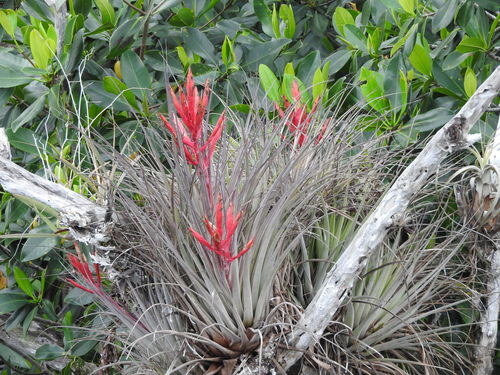
Tillandsia Fasciculata, gemeinhin bekannt als Riesige Luftpflanze oder Kardinal-Luftpflanze, ist eine ikonische und visuell auffällige epiphytische Bromelie, die in den tropischen und subtropischen Regionen Amerikas heimisch ist. Im Gegensatz zu terrestrischen Pflanzen wächst diese bemerkenswerte Art auf den Ästen von Wirtsbäumen, schwebend im Waldkronendach. Sie parasitiert ihren Wirt nicht, sondern nutzt ihn ausschließlich zur strukturellen Unterstützung, indem sie Feuchtigkeit und essentielle Nährstoffe direkt aus der feuchten Luft, dem Regen und herabfallenden organischen Materialien bezieht.
Lebensraum: Findet sich in feuchten Hängemattenwäldern, Zypressensümpfen und Kiefernflachwäldern, typischerweise hoch an den Stämmen und Ästen von Wirtsbäumen wachsend.
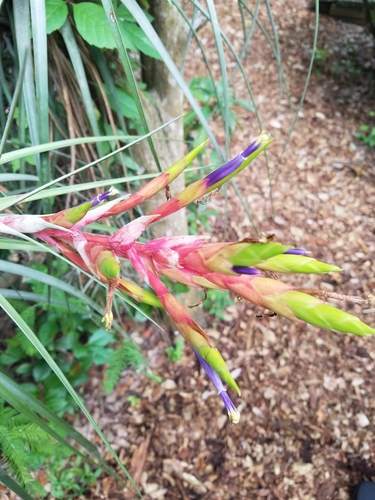
Diese große Luftpflanze bildet eine Rosette aus steifen, sich verjüngenden, graugrünen Blättern, die bis zu 60 Zentimeter lang werden können. Das Laub hat ein staubiges Aussehen aufgrund einer dichten Bedeckung mit mikroskopischen, wasserabsorbierenden Schuppen. Bei der Fortpflanzung entwickelt sie einen spektakulären, mehrfach verzweigten Blütenstand mit leuchtenden, überlappenden Hochblättern in brillanten Rot-, Gelb- und Grüntönen, aus denen kleine, röhrenförmige, violett-purpurfarbene Blüten hervorgehen.
Kategorie
PflanzenSeltenheit
Gewöhnlich
Gefahr
1/5 · Sehr gering
Snaps
Mach den ersten Snap!
Obwohl sie Wurzeln besitzt, kann sie überleben und sogar gedeihen, wenn sie vollständig in der Luft an einem Draht oder einer Schnur hängt, solange sie besprüht wird.
Sie wird Kardinal-Luftpflanze genannt, wegen der feurigen roten und gelben Farben ihrer prächtigen Blütenhochblätter.
Ihre Samen sind mit seidigen, fallschirmartigen Haaren ausgestattet, die es ihnen ermöglichen, kilometerweit auf Windströmungen zu reiten, bevor sie sich an einem neuen Wirtsbaum festsetzen.
Erzeugt Energie durch Photosynthese und absorbiert dabei Wasser und gelöste Mineralien aus der Atmosphäre, dem Regen und verfallendem organischem Staub.
Für dieses Objekt sind noch keine Merkmal-Badges vergeben.
Sammlungen für dieses Objekt erscheinen hier, wenn weitere Themen hinzugefügt werden.
Gefahr
1/5 · Sehr gering
Noch keine besonderen Sicherheitshinweise.
Beginne mit der ganzen Pflanze und vergleiche dann Blattstellung, Blattränder, Stängel und eventuelle Blüten oder Früchte. Gegenständige Blätter wachsen paarweise, wechselständige einzeln am Stängel. Zusammen verraten diese Details weit mehr als ein einzelnes grünes Blatt. Pflanzen bestimmen: Lade ein Foto hoch und vergleiche die sichtbaren Merkmale.
20-60 cm
0.1-0.8 kg
10-20 Jahre
Erzeugt Energie durch Photosynthese und absorbiert dabei Wasser und gelöste Mineralien aus der Atmosphäre, dem Regen und verfallendem organischem Staub.
Findet sich in feuchten Hängemattenwäldern, Zypressensümpfen und Kiefernflachwäldern, typischerweise hoch an den Stämmen und Ästen von Wirtsbäumen wachsend.
Zoome hinein, um Cluster aufzulösen und zu sehen, wo dieses Objekt fotografiert wurde.
Neueste Snaps erscheinen hier, wenn neue Beobachtungen hinzukommen.
Nimm die Entdeckung mit
Fotografiere deinen Fund mit Snappit, bestimme die Art und füge die Entdeckung deiner Sammlung hinzu.