


Utah-Agave
agave utahensis
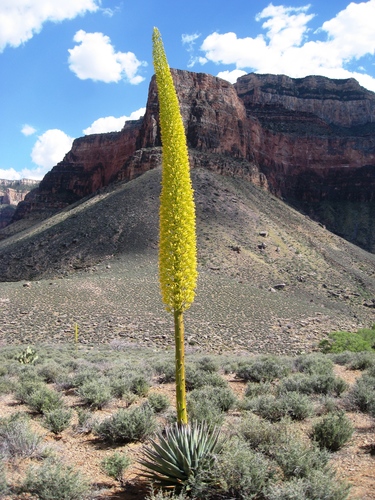
Die Utah-Agave (Agave utahensis) ist eine bemerkenswerte, kälteharte Sukkulente, die in einigen der trockensten und zerklüftetsten Gelände des amerikanischen Südwestens gedeiht. In kompakten, sehr schützenden Rosetten wachsend, ist diese langsam wachsende Staude einzigartig an extreme Temperaturschwankungen angepasst, von sengender Sommerhitze bis zu eisigem Winterschnee. Ihre Überlebensstrategie gipfelt in einem einzigen, spektakulären Lebensereignis, bei dem sie all ihre gespeicherte Energie aufwendet, um einen hoch aufragenden, goldgelben Blütenstiel zu produzieren, bevor sie stirbt. Dieser dramatische Fortpflanzungszyklus macht sie zu einem Brennpunkt der Wüstenökologie und zieht verschiedene Bestäuber zu ihren hochgelegenen felsigen Standorten. Für Wanderer und Wüstenliebhaber ist die Begegnung mit einer blühenden Utah-Agave ein unvergessliches Highlight der südwestlichen Wildnis. Ihre Fähigkeit, an steilen Kalksteinklippen zu haften, demonstriert die unglaubliche Widerstandsfähigkeit der Wüstenflora.
Lebensraum: Man findet sie an Kalksteinklippen, kiesigen Hängen und felsigen Vorsprüngen in ariden Wüstengebirgen.
Diese Art zeichnet sich durch ihre kompakten, kugelförmigen Rosetten aus dicken, fleischigen, lanzettförmigen Blättern aus, die blassblau-grün bis graugrün gefärbt sind. Jedes Blatt ist entlang seiner Ränder mit scharfen, ausgeprägten Zähnen und an der Spitze mit einer langen, stachelartigen Endnadel bewaffnet, die mit dem Alter grau oder weiß werden kann. Die Rosette misst typischerweise 15 bis 40 Zentimeter im Durchmesser. Während ihrer seltenen Blütephase treibt die Pflanze einen monumentalen, unverzweigten Blütenstiel aus, der eine Höhe von 2 bis 4 Metern erreicht und auf seiner oberen Hälfte dicht mit leuchtend gelben, röhrenförmigen Blüten besetzt ist.
Kategorie
PflanzenSeltenheit
Gewöhnlich
Gefahr
1/5 · Sehr gering
Snaps
Mach den ersten Snap!
Indigene Völker rösteten traditionell die nährstoffreichen Herzen dieser Agave in steinausgekleideten Gruben als Nahrung.
Der Blütenstiel der Utah-Agave kann bis zum 10-fachen der Höhe der eigentlichen Rosette wachsen.
Die faserigen Blätter der Pflanze wurden historisch geerntet und verarbeitet, um starke Seile, Sandalen und Körbe herzustellen.
Öffnet seine Spaltöffnungen nur nachts, um Kohlendioxid aufzunehmen und so den Wasserverlust durch Transpiration während des heißen Tages drastisch zu reduzieren.
Im Gegensatz zu den meisten Agavenarten kann sie Gefriertemperaturen bis zu -18 Grad Celsius überleben, indem sie natürliche Frostschutz-Zucker produziert.
Spart Ressourcen jahrzehntelang an, bevor sie rasch einen massiven Blütenstiel hervorbringt, der bis zu 15 Zentimeter pro Tag wachsen kann.
Als photoautotrophe Pflanze produziert die Utah-Agave ihre eigene Nahrung unter Verwendung von Sonnenlicht, Wasser und Kohlendioxid durch Photosynthese.
Xylocopa varipuncta
Ernährt sich vom Blütennektar und fungiert als primärer Bestäuber während der Blütezeit.
Ovis canadensis nelsoni
Ernährt sich im Frühling von den aufkommenden, feuchtigkeitsreichen Blütenstielen und zerstört manchmal die Blüte.
Caulotops barberi
Saugt Saft aus den saftigen Blättern, was gelegentlich lokale Gewebeschäden verursacht.
Für dieses Objekt sind noch keine Merkmal-Badges vergeben.
Noch keine Alternativnamen vorhanden.
Sammlungen für dieses Objekt erscheinen hier, wenn weitere Themen hinzugefügt werden.
Gefahr
1/5 · Sehr gering
Noch keine besonderen Sicherheitshinweise.
Vergleiche Blattstellung, Rosettenform, Rippen, Dornen und Blüten. Bedenke, dass Trockenheit und starke Sonne Farbe und Form einer Pflanze verändern können. Sukkulenten bestimmen: Lade ein Foto hoch und vergleiche die sichtbaren Merkmale.
15-40 cm
1-5 kg
15-30 Jahre
Als photoautotrophe Pflanze produziert die Utah-Agave ihre eigene Nahrung unter Verwendung von Sonnenlicht, Wasser und Kohlendioxid durch Photosynthese.
Man findet sie an Kalksteinklippen, kiesigen Hängen und felsigen Vorsprüngen in ariden Wüstengebirgen.
Zoome hinein, um Cluster aufzulösen und zu sehen, wo dieses Objekt fotografiert wurde.
Neueste Snaps erscheinen hier, wenn neue Beobachtungen hinzukommen.

Arizona, US
Hier kann man sehen Gambel-Eiche, Abert-Hörnchen und Große Kurzhorn-Krötenechse.
Führer anzeigen →

Arizona, US
Hier kann man sehen Gambel-Eiche, Große Kurzhorn-Krötenechse und Abert-Hörnchen.
Führer anzeigen →

Arizona, US
Hier kann man sehen Kolkrabe, Gambel-Eiche und Geier.
Führer anzeigen →
Nimm die Entdeckung mit
Fotografiere deinen Fund mit Snappit, bestimme die Art und füge die Entdeckung deiner Sammlung hinzu.

















