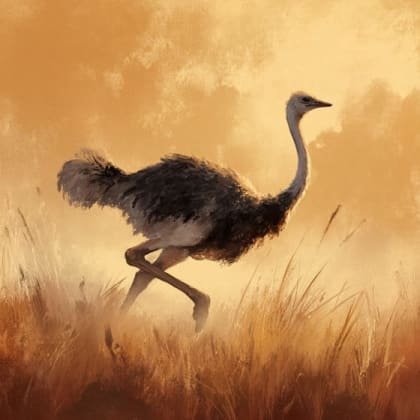
Vesper Sparrow
Pooecetes gramineus
The Vesper Sparrow is a small, brown bird that loves to sing! You can often find it hopping around in fields and grasslands, especially during the warm months.
Lebensraum: Grasslands
The Vesper Sparrow is a medium-sized, streaky brown bird with a pale belly. It has a distinctive chestnut patch on its shoulder, a fine eye-ring, and, most notably, white outer tail feathers that flash visibly in flight.
Kategorie
VögelSeltenheit
Common
Gefahr
1/5 · Sehr gering
Snaps
Mach den ersten Snap!
Baby Vesper Sparrows grow super fast, leaving the nest in just 7-10 days, even before they can fly well!
Their name, "Vesper," means "evening," because they often sing their beautiful song as the sun sets.
They use a cool "double-scratch" move, kicking dirt with both feet at once to find buried snacks.
Wow! The Vesper Sparrow is the ONLY sparrow with white outer tail feathers, like a secret signal!
Vesper Sparrows can disappear into grassy fields because their streaky brown feathers perfectly blend with the dry vegetation, protecting them from predators.
Vesper Sparrows have a beautiful, melodious song they often sing at dusk, giving them their name ("vesper" means evening) and helping them attract mates.
Vesper Sparrows can build cleverly concealed nests directly on the ground, tucked under dense grass clumps, keeping their eggs safe from prying eyes.
Vesper Sparrows use their feet to scratch and kick away leaf litter, uncovering hidden seeds and insects for a tasty meal, much like a tiny chicken!
Tiny ground birds that snack on tasty insects and various seeds found on the ground.
Altersunterschiede: Adults eat more seeds in winter, while young chicks need protein-rich insects.
Thamnophis sirtalis
preys on nests and young Vesper Sparrow chicks.
Accipiter cooperii
hunts adult sparrows in open areas.
Andropogon gerardii
relies on its seeds for food and dense cover for nests.

Melanoplus differentialis
a key insect food source for growing chicks and adults.
Gefiedert beschreibt Tiere, hauptsächlich Vögel, die ein Federkleid besitzen.
Soziale Tiere leben in organisierten Gruppen und kooperieren, um ihr Überleben zu sichern, beispielsweise bei der Nahrungssuche, Verteidigung und Aufzucht der Jungen.
Singende Tiere erzeugen komplexe Lautäußerungen, oft um Partner anzulocken, ihr Revier zu verteidigen oder innerhalb ihrer Art zu kommunizieren.
Grasland-Lebensräume sind terrestrische Biome, die von Gräsern und krautigen Pflanzen dominiert werden und einer Vielzahl von Weidetieren als Lebensraum dienen.

Dieses Merkmal kennzeichnet Organismen, deren Nahrung hauptsächlich aus Insekten und anderen kleinen Wirbellosen besteht.

Tagaktive Tiere sind hauptsächlich bei Tageslicht aktiv und ruhen oder schlafen in der Regel nachts.
Noch keine Alternativnamen vorhanden.
Gefahr
1/5 · Sehr gering
It's best to watch birds from a distance and not disturb their nests.
13-16 cm
23-28 cm
0.02-0.03 kg
2-5 Jahre
40 km/h
Tiny ground birds that snack on tasty insects and various seeds found on the ground.
Grasslands
Foraging
Zoome hinein, um Cluster aufzulösen und zu sehen, wo dieses Objekt fotografiert wurde.
Neueste Snaps erscheinen hier, wenn neue Beobachtungen hinzukommen.
South Dakota, US
Hier kann man sehen Dickhornschaf und Narrow-Leaved Purple Coneflower.
Führer anzeigen →
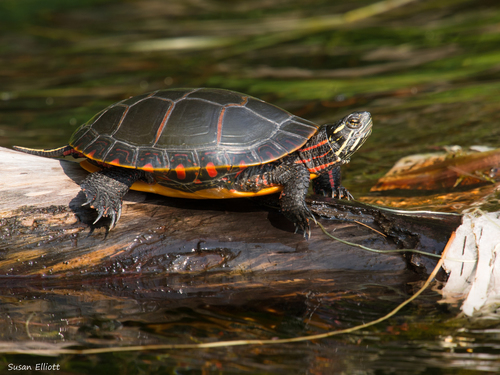
British Columbia, CA
Hier kann man sehen Zierschildkröte und Antelope Bitterbrush.
Führer anzeigen →