White-eared titi
Callicebus donacophilus
The White-eared titi is a small monkey with fluffy fur and big, bright eyes. They love to swing through trees and are very playful with their friends!
Lebensraum: Forests
The White-eared titi has soft, grayish-brown fur on its body, often with reddish-orange underparts. Its most distinctive features are the prominent tufts of white fur on its ears. Its long, bushy tail is darker, sometimes with a whitish tip, and is not prehensile.
Kategorie
SäugetiereSeltenheit
Common
Gefahr
1/5 · Sehr gering
Snaps
Mach den ersten Snap!
Male titis are super dads, carrying their babies almost all the time!
These monkeys often warm up by sunbathing on branches after chilly forest nights.
They mate for life and are one of the few truly monogamous primates.
Titis "shout" at neighboring groups to tell them to stay away from their area.
White-eared titis can intertwine their long tails with family members, creating a secure and cozy bond while resting high in the trees.
White-eared titis have complex, loud calls they perform in duets with their mate, that helps them communicate and defend their territory.
White-eared titis can leap effortlessly between branches with incredible agility, because of their strong legs that helps them move through the dense forest canopy.
These small monkeys mostly munch on delicious fruits and leaves, but also enjoy a side of tasty insects!
Harpia harpyja
A powerful bird of prey in its habitat.
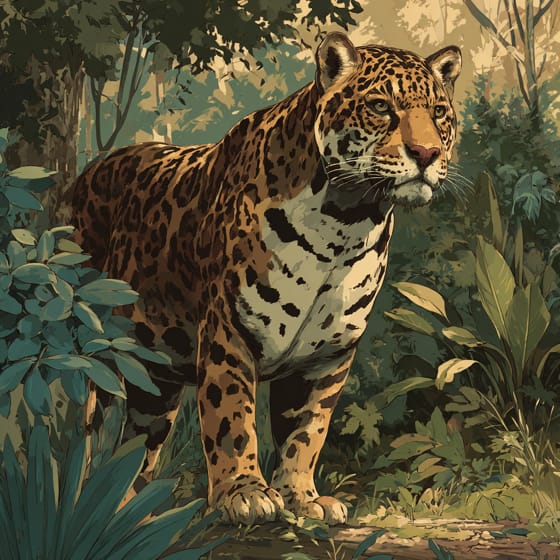
Panthera onca
A large feline predator of the forest.
Boa constrictor
A large snake that ambushes small primates.
Pelzig beschreibt Tiere, die eine dichte Schicht aus weichen Haaren oder Fell besitzen.
Soziale Tiere leben in organisierten Gruppen und kooperieren, um ihr Überleben zu sichern, beispielsweise bei der Nahrungssuche, Verteidigung und Aufzucht der Jungen.
Baumbewohnende Tiere leben hauptsächlich in Bäumen und nutzen diese als Unterschlupf, Nahrungsquelle und zum Schutz vor Raubtieren.
Dieses Merkmal kennzeichnet Lebewesen, deren Ernährung vollständig oder hauptsächlich aus pflanzlichem Material besteht.

Waldlebensräume sind terrestrische Lebensräume, die von dichtem Baumbestand dominiert werden und eine große Vielfalt an Pflanzen- und Tierarten beherbergen.

Tagaktive Tiere sind hauptsächlich bei Tageslicht aktiv und ruhen oder schlafen in der Regel nachts.

Der Status 'Stark gefährdet' bedeutet, dass eine Art in naher Zukunft einem sehr hohen Risiko ausgesetzt ist, in freier Wildbahn auszusterben.
Noch keine Alternativnamen vorhanden.
Gefahr
1/5 · Sehr gering
Always watch animals from a distance and never try to touch them in the wild.
25-35 cm
0.5-1.5 kg
10-20 Jahre
15 km/h
These small monkeys mostly munch on delicious fruits and leaves, but also enjoy a side of tasty insects!
Forests
Foraging
1-2
Zoome hinein, um Cluster aufzulösen und zu sehen, wo dieses Objekt fotografiert wurde.
Neueste Snaps erscheinen hier, wenn neue Beobachtungen hinzukommen.






.jpg&width=800)