

Woronichinia naegeliana
woronichinia naegeliana
Woronichinia naegeliana ist ein faszinierendes koloniales Süßwasser-Cyanobakterium, das allgemein für sein Potenzial bekannt ist, auffällige Wasserblüten zu bilden. Diese mikroskopisch kleinen Organismen spielen eine entscheidende Rolle als Primärproduzenten in aquatischen Ökosystemen, indem sie Sonnenlicht durch Photosynthese in Energie umwandeln. Was Woronichinia besonders interessant macht, ist ihre Fähigkeit, sich zu markanten, oft kugelförmigen oder unregelmäßigen Kolonien zu aggregieren, die in einer klaren Schleimhülle eingeschlossen sind, wodurch sie sich an unterschiedliche Lichtverhältnisse und Nährstoffverfügbarkeit in ihrer wässrigen Umgebung anpassen kann. Ihre Präsenz, insbesondere in dichten Blüten, kann auf eutrophe Bedingungen hinweisen und erhebliche ökologische und Umweltfolgen haben.
Lebensraum: Dieses Cyanobakterium ist typischerweise in nährstoffreichen (eutrophen) Süßwasserumgebungen wie Seen, Teichen, Stauseen und langsam fließenden Flüssen zu finden, wo es oft bei wärmeren Temperaturen gedeiht.
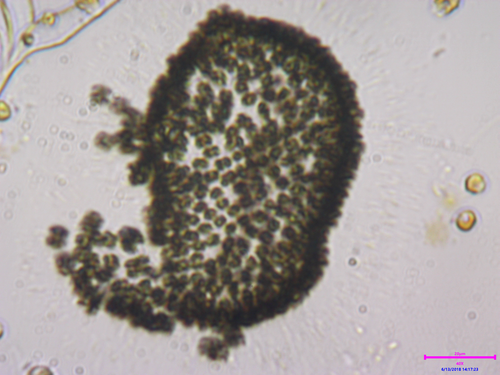
Woronichinia naegeliana erscheint als mikroskopisch kleine, annähernd kugelförmige oder unregelmäßige Kolonien, typischerweise mit einem Durchmesser von wenigen Mikrometern bis zu mehreren Millimetern, oft mit bloßem Auge als grünliche oder bläuliche Flecken oder trübe Suspension im Wasser sichtbar. Innerhalb dieser Kolonien sind einzelne Zellen klein, kugelförmig bis eiförmig und radial angeordnet oder verstreut innerhalb einer transparenten, gelatinösen Matrix. Die Kolonien selbst können freischwimmend oder angeheftet sein, und ihre Farbe kann von hellgrün bis blaugrün variieren, manchmal auch gelblich oder bräunlich erscheinen, abhängig von der Pigmentzusammensetzung und Umweltfaktoren.
Kategorie
AnimalSeltenheit
Gewöhnlich
Gefahr
1/5 · Sehr gering
Snaps
Mach den ersten Snap!
Einzelne Zellen innerhalb einer Woronichinia-Kolonie sind oft radial angeordnet und erscheinen wie kleine, sternförmige Cluster, die in der Schleimschicht eingebettet sind.
Die Bildung dichter Blüten durch Woronichinia naegeliana kann den Sauerstoffgehalt im Wasser nachts oder bei der Zersetzung erheblich reduzieren, was zu Fischsterben führt.
Die Gasvakuolen in Woronichinia ermöglichen es ihr, ihren Auftrieb zu regulieren, tagsüber an die Oberfläche zu schweben, um Photosynthese zu betreiben, und nachts zu sinken, um Nährstoffe aus tieferem Wasser aufzunehmen.
Woronichinia naegeliana-Kolonien können beim Verfall übelriechende Verbindungen freisetzen, die zu Geschmacks- und Geruchsproblemen in Trinkwasserquellen beitragen.
Woronichinia naegeliana synthetisiert ihre eigene Nahrung unter Verwendung von Sonnenlicht, Kohlendioxid und in Wasser gelösten anorganischen Nährstoffen, ein Prozess, der grundlegend für die Primärproduktion in aquatischen Ökosystemen ist.
Für dieses Objekt sind noch keine Merkmal-Badges vergeben.
Noch keine Alternativnamen vorhanden.
Sammlungen für dieses Objekt erscheinen hier, wenn weitere Themen hinzugefügt werden.
Gefahr
1/5 · Sehr gering
Noch keine besonderen Sicherheitshinweise.
Der einfachste Weg, Woronichinia naegeliana zu bestimmen, ist die Verwendung der Naturführer-App Snappit.
Woronichinia naegeliana synthetisiert ihre eigene Nahrung unter Verwendung von Sonnenlicht, Kohlendioxid und in Wasser gelösten anorganischen Nährstoffen, ein Prozess, der grundlegend für die Primärproduktion in aquatischen Ökosystemen ist.
Dieses Cyanobakterium ist typischerweise in nährstoffreichen (eutrophen) Süßwasserumgebungen wie Seen, Teichen, Stauseen und langsam fließenden Flüssen zu finden, wo es oft bei wärmeren Temperaturen gedeiht.
Photosynthese Und Nährstoffaufnahme
Zoome hinein, um Cluster aufzulösen und zu sehen, wo dieses Objekt fotografiert wurde.
Neueste Snaps erscheinen hier, wenn neue Beobachtungen hinzukommen.
Nimm die Entdeckung mit
Fotografiere deinen Fund mit Snappit, bestimme die Art und füge die Entdeckung deiner Sammlung hinzu.