
.jpg&width=800)





Yellow Quill-tipped Porcupine
Coendou prehensilis
The Yellow Quill-tipped Porcupine is a cute, spiky animal that loves to climb trees! It has special quills that help protect it from danger and is mostly active at night.
Lebensraum: Forests
The Yellow Quill-tipped Porcupine has a robust body covered in short, sharp quills, prominently tipped with bright yellow. Its fur ranges from dark brown to black underneath, providing a striking contrast. It also features a long, almost bare, prehensile tail.
Kategorie
SäugetiereSeltenheit
Common
Gefahr
3/5 · Mittel
Snaps
Mach den ersten Snap!
Despite myths, it cannot 'shoot' its quills; they detach easily when touched!
Its eyes are perfectly adapted for seeing in the dark, helping it find food at night.
These porcupines communicate with grunts and cries, especially at night to find each other.
They rest curled up in tree hollows during the day, high above the ground.
Yellow Quill-tipped Porcupine has a strong prehensile tail that helps them grasp branches like an extra hand.
Yellow Quill-tipped Porcupine can raise its barbed quills to deter predators, making itself a tough meal.
Yellow Quill-tipped Porcupine can skillfully climb through trees because of its agile body and strong claws.
Eats a variety of plants, including leaves, fruits, and flowers found in trees.
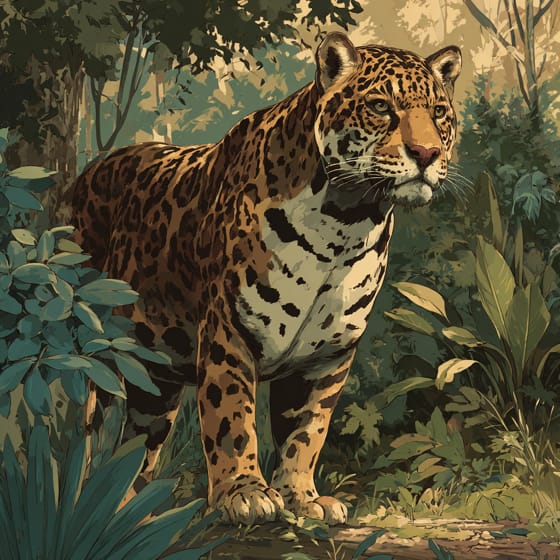
Panthera onca
Jaguars are powerful enough to sometimes hunt adult porcupines.
Leopardus pardalis
Ocelots may occasionally prey on them despite their quills.
Harpia harpyja
Large raptors like harpy eagles can snatch young porcupines from trees.
Ficus obtusifolia
They forage on the leaves and fruits of various fig species.
Pelzig beschreibt Tiere, die eine dichte Schicht aus weichen Haaren oder Fell besitzen.
Baumbewohnende Tiere leben hauptsächlich in Bäumen und nutzen diese als Unterschlupf, Nahrungsquelle und zum Schutz vor Raubtieren.
Dieses Merkmal kennzeichnet Lebewesen, deren Ernährung vollständig oder hauptsächlich aus pflanzlichem Material besteht.
Besitzt scharfe, spitze Vorsprünge oder Stacheln auf dem Körper oder der Oberfläche.

Waldlebensräume sind terrestrische Lebensräume, die von dichtem Baumbestand dominiert werden und eine große Vielfalt an Pflanzen- und Tierarten beherbergen.

Nachtaktive Tiere sind hauptsächlich in den Nachtstunden aktiv und ruhen oder schlafen normalerweise tagsüber.
Noch keine Alternativnamen vorhanden.
Gefahr
3/5 · Mittel
Never try to touch a porcupine; their quills can hurt you!
45-70 cm
2-5 kg
10-15 Jahre
5 km/h
Eats a variety of plants, including leaves, fruits, and flowers found in trees.
Forests
Foraging
1
Zoome hinein, um Cluster aufzulösen und zu sehen, wo dieses Objekt fotografiert wurde.
Neueste Snaps erscheinen hier, wenn neue Beobachtungen hinzukommen.












