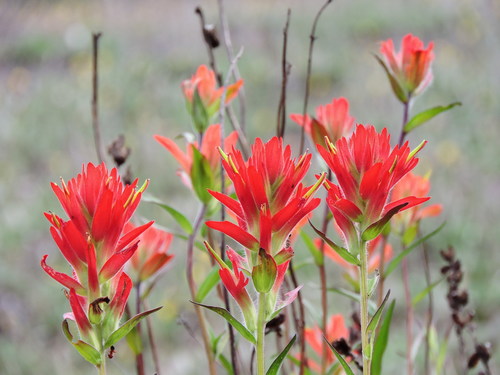

American alpine speedwell
Veronica wormskjoldii
The American alpine speedwell is a small, pretty plant that grows in high mountain areas. It has lovely blue flowers that bloom in the summer, making it a delightful sight in nature!
Hábitat: Mountain regions
The American alpine speedwell has striking deep blue to purplish-blue flowers, each with four petals and often distinct darker veins, clustered at the top of fuzzy stems. Its small, oval, toothed green leaves are arranged opposite along the stem, often appearing low and spreading. It stands out in rocky alpine environments.
Categoría
PlantasRareza
Common
Peligro
1/5 · Muy bajo
Snaps
¡Sé la primera persona en hacer un snap!
Even at over 10,000 feet high, this tough plant can survive frosty nights and strong winds.
Its tiny blue flowers bloom where few other plants dare, high up in the mountains!
Look closely! Each tiny flower has four petals, often with stripes to guide hungry bees!
The plant's name "speedwell" comes from old beliefs it could make sick people "speedily well"!
American alpine speedwell can grow in harsh mountain environments, surviving cold, high winds, and short seasons.
American alpine speedwell has a compact, low-growing form that protects it from strong alpine winds and extreme cold.
American alpine speedwell has tiny hairs on its leaves and stems that help it retain moisture and protect it from frost.

Bombus vosnesenskii
Visits flowers for nectar and pollen.
Ovis canadensis
Grazes on the plant's leaves and stems.

Marmota flaviventris
Feeds on various alpine plants, including speedwell.
Peludo describe a los animales que poseen una cubierta densa de pelo o pelaje suave.
Las plantas con flores son cualquier planta que produce flores como parte de su ciclo reproductivo.
Las plantas de floración de verano producen sus flores durante la temporada estival, a menudo aportando un color vibrante cuando muchas otras plantas ya han terminado de florecer.
Las plantas resistentes al frío son capaces de soportar bajas temperaturas y condiciones de congelación sin sufrir daños significativos.

Describe plantas que son particularmente atractivas y beneficiosas para una amplia variedad de organismos polinizadores.

Este rasgo de hábitat identifica a las especies que se encuentran en regiones montañosas, caracterizadas por su gran altitud, pendientes pronunciadas y zonas climáticas variables.
Todavía no hay alias listados.
Peligro
1/5 · Muy bajo
Always look but don't touch wild plants unless an adult says it's safe.
5-30 cm
10-50 cm
0.5-1 cm
Verano
No
Ninguna
Perenne
Insectos
Acércate para separar los grupos y explorar dónde se ha fotografiado este objeto.
Los snaps recientes aparecerán aquí a medida que se añadan nuevas observaciones.