.jpg&width=800)





American Boas
Boinae
American Boas are large snakes that can be found in many places. They are known for their beautiful patterns and strong bodies. These snakes like to climb trees and can be very good at hiding.
Hábitat: Forests
The American Boas have muscular, often heavy-bodied frames with diverse patterns of blotches, spots, or stripes in earthy tones of brown, tan, and black. Their markings provide excellent camouflage, and some species exhibit iridescent scales, appearing different colors in varying light.
Categoría
ReptilesRareza
Common
Peligro
3/5 · Moderado
Snaps
¡Sé la primera persona en hacer un snap!
American Boas have thousands of tiny, backward-pointing teeth to hold onto slippery prey!
Some American Boas can stretch their jaws incredibly wide to swallow animals bigger than their head!
Their forked tongue 'tastes' the air, picking up scents to find food or sense danger!
They can go months without eating after a big meal, patiently waiting for their next hunt!
American Boas can constrict their prey because of incredibly powerful muscles that help them squeeze tight until the prey can no longer breathe.
American Boas have special heat-sensing pits, allowing them to 'see' warm-blooded prey in total darkness, which helps them hunt at night.
American Boas has a unique reproductive strategy, giving birth to live young instead of laying eggs, which helps their babies survive better.
American Boas have intricate patterns and colors on their skin that help them blend perfectly into their surroundings, hiding from both predators and prey.
These powerful constrictors are carnivores, eating a variety of animals they can overpower.
Diferencias por edad: null
Cuniculus paca
A common prey item for larger boas.
Dasypus novemcinctus
Eaten by larger American boas in their range.

Rattus rattus
A primary food source for many species of American Boas.
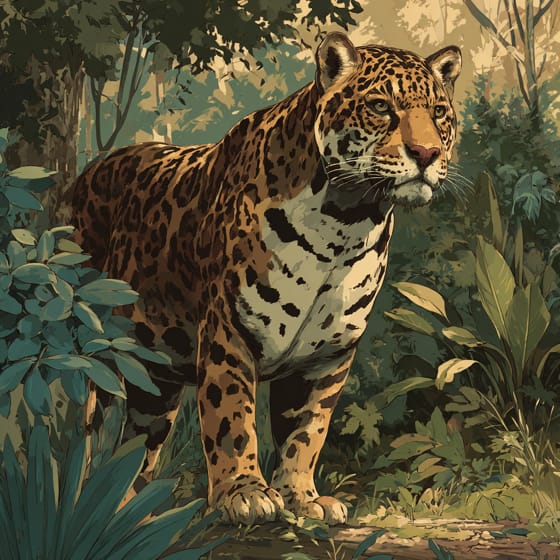
Panthera onca
Large jaguars can prey on adult boas, especially anacondas.
Harpia harpyja
Juvenile and smaller boas can be prey for this powerful raptor.
Marcado con manchas o parches de un color diferente.
Los animales solitarios viven solos durante la mayor parte de su vida y solo interactúan con otros para aparearse o cuidar de sus crías.
Los animales arborícolas viven principalmente en los árboles, utilizándolos como refugio, alimento y protección contra los depredadores.
Colorido describe a organismos u objetos que exhiben una amplia variedad de colores brillantes y distintivos.

Los hábitats boscosos son entornos terrestres dominados por una densa cubierta arbórea, que sustentan una gran diversidad de vida animal y vegetal.

Un depredador de emboscada caza esperando pacientemente y ocultándose, para luego lanzar un ataque repentino cuando una presa desprevenida se pone a su alcance.

Este rasgo identifica a los organismos cuya dieta consiste total o principalmente en tejido animal.
Todavía no hay alias listados.
Peligro
3/5 · Moderado
If you see a snake in the wild, it's best to watch from a distance and not touch it.
150-900 cm
10-250 kg
20-30 años
2.5 km/h
These powerful constrictors are carnivores, eating a variety of animals they can overpower.
8 km/h
Forests
Ambush
Acércate para separar los grupos y explorar dónde se ha fotografiado este objeto.
Los snaps recientes aparecerán aquí a medida que se añadan nuevas observaciones.