






American trailplant
Adenocaulon bicolor
The American trailplant is a special plant that grows in shady places. It has big, heart-shaped leaves and pretty white flowers that turn into fluffy seeds. This plant loves to grow near streams and in forests.
Hábitat: Forests
The American trailplant has large, heart-shaped leaves that are bright green on top and strikingly silvery-white and woolly underneath. Its small, unassuming white flowers grow on tall, sticky stems, making it distinctively visible along forest paths.
Categoría
PlantasRareza
Common
Peligro
1/5 · Muy bajo
Snaps
¡Sé la primera persona en hacer un snap!
Despite its name, it's not a common food for forest animals, possibly due to its sticky texture!
Its scientific name, Adenocaulon, means 'glandular stem,' hinting at its sticky hairs!
The American trailplant is also known as 'silver-green' due to its unique leaf colors.
You can often find this plant 'pointing' its silver undersides up on windy days!
American trailplant has bicolored leaves, green above and silvery below, which may reflect sunlight or deter herbivores.
American trailplant stems are covered in glandular hairs, trapping small insects, possibly for defense or nutrient absorption.
American trailplant produces seeds with a fluffy parachute, allowing them to drift on the wind to new growing spots.

Bombus melanopygus
visits flowers for nectar
Odocoileus hemionus
occasionally browses its leaves
Syrphus ribesii
visits flowers for pollen
Las plantas caducifolias pierden periódicamente todas sus hojas, por lo general durante el otoño o las estaciones secas.
Las plantas con flores son cualquier planta que produce flores como parte de su ciclo reproductivo.
Las plantas tolerantes a la sombra están adaptadas para crecer y prosperar en áreas con bajos niveles de luz, requiriendo menos luz solar directa.
Describe plantas que son particularmente atractivas y beneficiosas para una amplia variedad de organismos polinizadores.

Los hábitats boscosos son entornos terrestres dominados por una densa cubierta arbórea, que sustentan una gran diversidad de vida animal y vegetal.

Describe organismos que transfieren polen, permitiendo la fertilización y reproducción de las plantas.
Todavía no hay alias listados.
Peligro
1/5 · Muy bajo
Always look but don't touch plants unless you know they are safe.
30-90 cm
15-45 cm
0.5-1 cm
Verano
No
Ninguna
Perenne
Insectos
Acércate para separar los grupos y explorar dónde se ha fotografiado este objeto.
Los snaps recientes aparecerán aquí a medida que se añadan nuevas observaciones.

British Columbia, CA
Puedes ver American Dipper, Salmón Rojo y Pato.
Ver guía →

British Columbia, CA
Puedes ver Thimbleberry, Canadian Buffalo-Berry y Oregon Grape.
Ver guía →
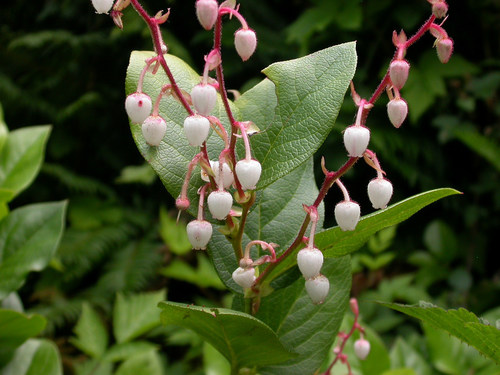
British Columbia, CA
Puedes ver Salal, Western Rattlesnake Plantain y Cascade Oregon-Grape.
Ver guía →
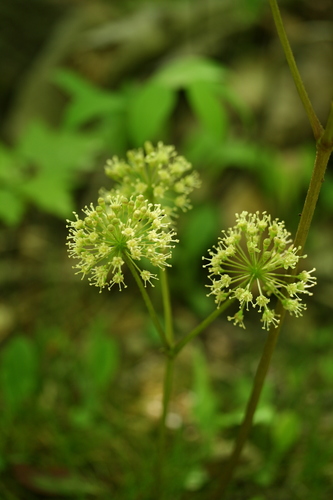
British Columbia, CA
Puedes ver Wild Sarsaparilla, Thimbleberry y Oregon Boxwood.
Ver guía →
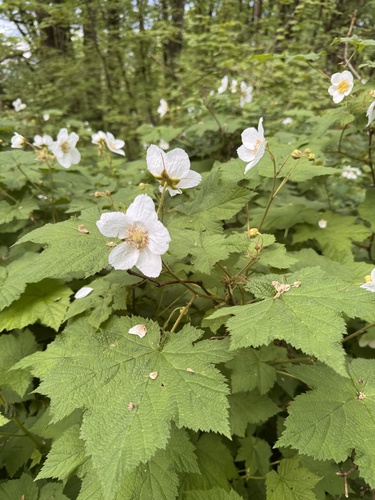
British Columbia, CA
Puedes ver Thimbleberry, Western Redcedar y Red Osier Dogwood.
Ver guía →


















