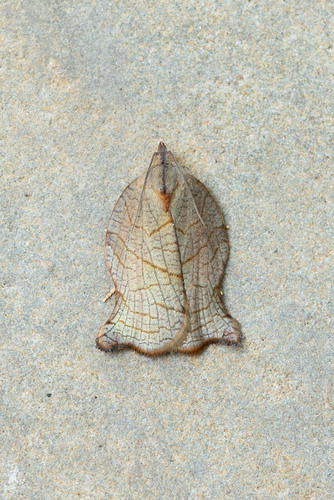


Archips Purpurana
archips purpurana
The Archips purpurana, commonly known as the Fruit-tree Leafroller, is a small but ecologically significant moth belonging to the Tortricidae family. While its adult form is a subtly beautiful creature, it is the larval stage that garners the most attention, particularly from agriculturists. These caterpillars are notorious for their leaf-rolling habits, where they expertly spin silk to create protective shelters within foliage, feeding voraciously from within. This species plays a dual role in ecosystems: contributing to the natural food web as prey for various insectivores, but also posing a considerable challenge in orchards due to its polyphagous nature and potential to damage a wide array of fruit crops and ornamental trees across North America. Understanding its life cycle and habits is crucial for both ecological studies and pest management.
Hábitat: Found in a wide range of environments including deciduous forests, orchards, suburban gardens, and parks where host plants are abundant.
Adult Archips purpurana moths are generally small, with a wingspan ranging from 1.5 to 2.5 cm. Their forewings typically exhibit a mottled pattern of purplish-brown, reddish-brown, or greyish hues, often with darker bands or patches that provide excellent camouflage against tree bark. The hindwings are usually a plainer, lighter brown or grey. The characteristic bell-shaped outline of the wings when at rest, typical of tortricid moths, is a key identifier. Larvae are greenish caterpillars, often with a darker head capsule, and are found curled inside rolled leaves.
Categoría
InsectosRareza
Common
Peligro
1/5 · Muy bajo
Snaps
¡Sé la primera persona en hacer un snap!
Adult moths are typically short-lived, with their main purpose being reproduction and laying eggs for the next generation.
Despite its common name, the Fruit-tree Leafroller feeds on over 100 different plant species, demonstrating its highly adaptable diet.
The 'leafroller' name comes from the caterpillar's unique habit of using silk to curl leaves around itself for protection.
This moth species is a significant agricultural pest in many regions due to the damage its larvae can inflict on fruit crops like apples, cherries, and pears.
Larvae spin silken webs to roll leaves into protective shelters. This conceals them from predators and provides a safe feeding environment.
Adult moths possess mottled brown and grey patterns on their forewings, allowing them to blend seamlessly with tree bark and foliage, avoiding detection.
The larval stage is highly polyphagous, meaning it can feed on a wide variety of deciduous trees and shrubs, increasing its survival chances in diverse environments.
The larval stage of Archips purpurana feeds on the foliage and developing fruits of a broad spectrum of deciduous trees and shrubs. Adult moths typically do not feed or only consume minimal nectar, focusing their energy on reproduction.
Diferencias por edad: Larvae are voracious folivores and frugivores, whereas adults primarily focus on reproduction and typically do not feed extensively, or only sip nectar.
Malus domestica
Primary host plant for larval feeding.
Quercus species
Additional host plant for larval feeding.
Polistes dominula
Predator that consumes Archips purpurana larvae.
Trichogramma minutum
Parasitic wasp that lays eggs within the eggs of Archips purpurana.
Aún no hay insignias de rasgos asignadas a este objeto.
Todavía no hay alias listados.
Las colecciones para este objeto aparecerán aquí a medida que se añadan más temas.
Peligro
1/5 · Muy bajo
Todavía no hay notas especiales de seguridad.
La forma más fácil de identificar a Archips Purpurana es usar la aplicación de identificación de naturaleza Snappit.
1-2 cm
1-2 cm
0.0001-0.0005 kg
0-1 años
The larval stage of Archips purpurana feeds on the foliage and developing fruits of a broad spectrum of deciduous trees and shrubs. Adult moths typically do not feed or only consume minimal nectar, focusing their energy on reproduction.
Found in a wide range of environments including deciduous forests, orchards, suburban gardens, and parks where host plants are abundant.
Foraging
Acércate para separar los grupos y explorar dónde se ha fotografiado este objeto.
Los snaps recientes aparecerán aquí a medida que se añadan nuevas observaciones.


















