






Atlantic White-sided Dolphin
Leucopleurus acutus
The Atlantic White-sided Dolphin is a playful and friendly marine mammal that loves to swim in the ocean. They are known for their beautiful gray and white coloring and can often be seen jumping out of the water!
Hábitat: Coastal areas
The Atlantic White-sided Dolphin has a sleek, torpedo-shaped body with a dark gray or black back and a bright white belly. Its most striking feature is a distinctive yellow-tan stripe on its side, curving from below its dorsal fin towards its tail, differentiating it from other dolphin species.
Categoría
MamíferosRareza
Common
Peligro
1/5 · Muy bajo
Snaps
¡Sé la primera persona en hacer un snap!
Atlantic White-sided Dolphins can live in huge groups, sometimes over a thousand!
Their yellow-tan side patch makes them easy to identify among other dolphin species.
These dolphins can dive over 200 meters deep to find tasty meals!
They often leap completely out of the water, a spectacular display called breaching!
Atlantic White-sided Dolphins can use echolocation to navigate and hunt prey in the dark depths of the ocean.
Atlantic White-sided Dolphins can reach bursts of 40 km/h, helping them chase down fast-moving fish and squid.
Atlantic White-sided Dolphins have complex whistles and clicks that help them communicate with large pods.
Atlantic White-sided Dolphins can breach high out of the water, which helps them communicate or dislodge parasites.
They love to eat small fish and squid found in the chilly waters of the Atlantic.
Scomber scombrus
A primary food source in their diet.
Clupea harengus
Often found feeding on large schools of these fish.
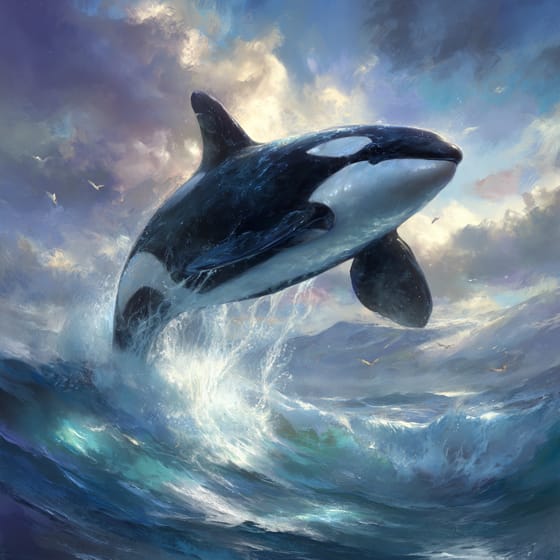
Orcinus orca
Sometimes preyed upon by these larger marine predators.
Illex illecebrosus
A significant part of their diet, especially in deeper waters.
Peludo describe a los animales que poseen una cubierta densa de pelo o pelaje suave.
Los animales sociales viven en grupos organizados, cooperando para obtener beneficios de supervivencia como la búsqueda de alimento, la defensa y la cría de descendencia.
Colorido describe a organismos u objetos que exhiben una amplia variedad de colores brillantes y distintivos.
La ecolocalización es un sonar biológico utilizado por los animales para navegar, cazar y comunicarse emitiendo ondas sonoras e interpretando los ecos.

Los hábitats costeros son entornos dinámicos situados a lo largo de la interfaz entre la tierra y el mar, influenciados por las mareas, las olas y el agua salada.

Este rasgo identifica a los organismos cuya dieta consiste total o principalmente en tejido animal.

Describe una especie cuya presencia y papel tienen un efecto desproporcionadamente grande en su entorno.

Este rasgo identifica a los organismos que exhiben una rapidez excepcional en sus movimientos para cazar, escapar o desplazarse.

Los hábitats marinos abarcan todos los entornos de agua salada de los océanos de la Tierra, sustentando una inmensa diversidad de vida acuática.

Los animales migratorios emprenden movimientos estacionales de una región a otra, típicamente en respuesta a cambios en el clima o la disponibilidad de alimentos.
Peligro
1/5 · Muy bajo
Always watch dolphins from a distance and never try to touch or feed them.
250-280 cm
200-230 kg
20-30 años
40 km/h
They love to eat small fish and squid found in the chilly waters of the Atlantic.
Coastal areas
Pursuit
1
Acércate para separar los grupos y explorar dónde se ha fotografiado este objeto.
Los snaps recientes aparecerán aquí a medida que se añadan nuevas observaciones.









.jpg&width=800)





