_Cayo.jpg&width=800)





Black Spiny-tailed Iguana
Ctenosaura similis
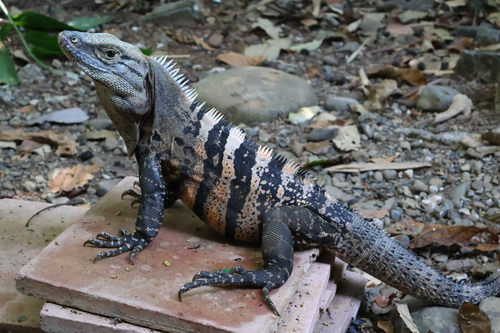
The Black Spiny-tailed Iguana is a lively lizard that loves to bask in the sun! With its spiky tail and strong legs, it can climb trees and run fast when it needs to escape.
Hábitat: Coastal areas
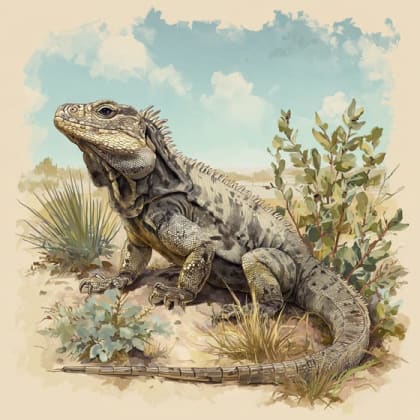
The Black Spiny-tailed Iguana is a large lizard, typically dark grey to black, sometimes with yellow or orange markings. It has distinct keeled scales forming prominent dorsal crests and a tail covered in sharp, spiky rings. Juveniles are often bright green.
Categoría
ReptilesRareza
Common
Peligro
2/5 · Bajo
Snaps
¡Sé la primera persona en hacer un snap!
Males turn bright orange and yellow during breeding season!
These speedy lizards can run up to 35 km/h on two legs!
They are the fastest lizard in the world, on average!
Young iguanas are often bright green, changing color as they grow!
Black Spiny-tailed Iguana can run at incredible speeds on two legs that helps them quickly escape predators.
Black Spiny-tailed Iguana has a tail covered in sharp spines that helps them powerfully swat away threats.
Black Spiny-tailed Iguana can dig deep burrows that helps them hide from heat and keep safe from predators.
Black Spiny-tailed Iguana can hold its breath for long periods that helps them hide from danger in water.
An omnivore, it enjoys a varied diet of plants, fruits, and small animals.
Diferencias por edad: Juveniles are primarily insectivorous, becoming more herbivorous as they mature.
Buteo jamaicensis
A common avian predator of young iguanas.
Mangifera indica
Feasts on ripe fruit when available in its habitat.
Homo sapiens
Hunted for food in parts of its native range.
Canis familiaris
Preyed upon by stray and pet dogs.
Este rasgo identifica organismos cuya dieta incluye tanto materia vegetal como animal.
Los animales arborícolas viven principalmente en los árboles, utilizándolos como refugio, alimento y protección contra los depredadores.
El camuflaje describe a los organismos que poseen colores o patrones que les permiten mezclarse con su entorno.
Colorido describe a organismos u objetos que exhiben una amplia variedad de colores brillantes y distintivos.

Posee proyecciones puntiagudas y afiladas o espinas en el cuerpo o en la superficie.

Los hábitats costeros son entornos dinámicos situados a lo largo de la interfaz entre la tierra y el mar, influenciados por las mareas, las olas y el agua salada.

Los animales diurnos están activos principalmente durante el día y suelen descansar o dormir por la noche.

Este rasgo identifica a los organismos que exhiben una rapidez excepcional en sus movimientos para cazar, escapar o desplazarse.
Todavía no hay alias listados.
Peligro
2/5 · Bajo
Always watch from a distance and don't try to touch wild iguanas.
25-150 cm
0.5-5 kg
15-25 años
35 km/h
An omnivore, it enjoys a varied diet of plants, fruits, and small animals.
5 km/h
Coastal areas
Foraging
Acércate para separar los grupos y explorar dónde se ha fotografiado este objeto.
Los snaps recientes aparecerán aquí a medida que se añadan nuevas observaciones.