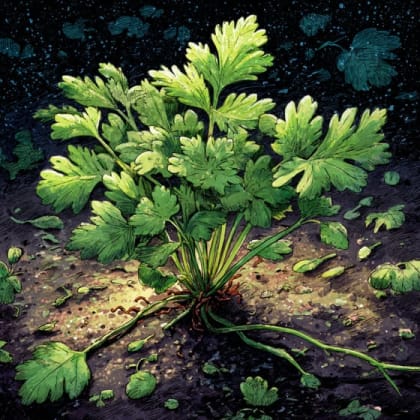
Common Marsh-bedstraw
Galium palustre
Common Marsh-bedstraw is a lovely plant that grows in wet places like marshes. It has small, white flowers and soft, green leaves that can be fun to touch!
Hábitat: Wetlands
The Common Marsh-bedstraw has delicate, sprawling stems with whorls of 4-6 narrow, lance-shaped leaves. Its tiny, star-like white flowers bloom in loose clusters, giving it a frothy appearance that stands out against marshy greens.
Categoría
PlantasRareza
Common
Peligro
1/5 · Muy bajo
Snaps
¡Sé la primera persona en hacer un snap!
Historically, people used this plant's stems to filter milk!
Its tiny fruits have hooks that help them hitchhike on animal fur!
The name 'bedstraw' comes from its ancient use as comfy mattress stuffing!
This plant is surprisingly related to coffee, tea, and quinine plants!
Common Marsh-bedstraw can tolerate waterlogged soils, thriving where many other plants would struggle to get enough oxygen to their roots.
Common Marsh-bedstraw has a sprawling growth habit, allowing it to quickly spread and form dense mats, helping it compete for space.
Common Marsh-bedstraw can have slightly sticky stems that help it cling to other plants, giving it support in its wet habitat.
Apis mellifera
Bees visit its small white flowers for nectar.

Arion ater
Slugs feed on its lush leaves and tender stems.
Bombus terrestris
Bumblebees help carry its pollen to other plants.
Las plantas con flores son cualquier planta que produce flores como parte de su ciclo reproductivo.
Las flores en racimo son inflorescencias donde las flores individuales están dispuestas muy juntas en un tallo común.
Las plantas de floración primaveral producen sus flores durante la temporada de primavera, lo que a menudo significa el final del invierno y el comienzo de un nuevo crecimiento.
Describe plantas que son particularmente atractivas y beneficiosas para una amplia variedad de organismos polinizadores.

Este rasgo de hábitat identifica especies que se encuentran en humedales, que son áreas de tierra saturadas de agua, ya sea permanente o estacionalmente, e incluyen marismas, pantanos y ciénagas.
Todavía no hay alias listados.
Peligro
1/5 · Muy bajo
Always explore plants with an adult and don't eat anything you find in nature without checking first.
15-60 cm
30-100 cm
0.2-0.4 cm
Late Spring to Early Autumn
Sí
Ninguna
Perenne
Insectos
Acércate para separar los grupos y explorar dónde se ha fotografiado este objeto.
Los snaps recientes aparecerán aquí a medida que se añadan nuevas observaciones.








.jpg&width=800)