






F-winged Barklouse
Graphopsocus cruciatus
The F-winged Barklouse is a tiny insect that loves to live on tree bark. It has special wings that look like a beautiful fan, making it unique among insects!
Hábitat: Forests
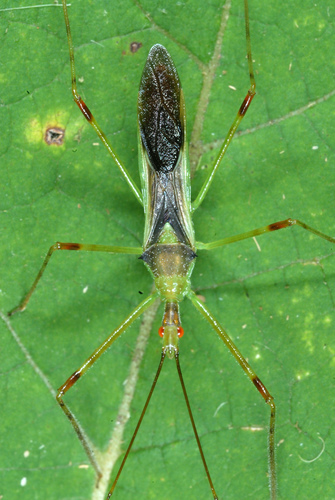
The F-winged Barklouse is a small, soft-bodied insect, typically pale yellow to light brown. It has delicate, transparent wings marked with a distinctive dark F-shaped pattern, which it holds tent-like over its back. These unique wing markings help distinguish it.
Categoría
InsectosRareza
Common
Peligro
1/5 · Muy bajo
Snaps
¡Sé la primera persona en hacer un snap!
Baby barklice, called nymphs, look like mini adults but often don't have wings yet!
Some barklouse species tap their abdomens on leaves to communicate with each other!
Their delicate wings are surprisingly strong, allowing them to flutter quickly between leaves.
These tiny tree dwellers are more closely related to true bugs than actual lice!
F-winged Barklouse can break down tiny bits of dead plants and fungi because of specialized mouthparts that help them clean tree surfaces.
F-winged Barklouse can create protective silken webs because of glands near its mouth that help them build shelters for their colonies.
F-winged Barklouse has a dappled body and patterned wings that help them blend perfectly with tree bark to avoid watchful predators.
These tiny insects munch on fungi, algae, and dead plant matter, helping to clean up trees.
Misumena vatia
A common predator that ambushes barklice on foliage.
%2C_Parc_de_Woluw%C3%A9%2C_Brussels_(13042792905).jpg&width=800)
Parus major
A common bird that forages for insects on tree bark.
Xanthoria parietina
Feeds on this widespread lichen growing on tree bark.
Alternaria alternata
Grazes on spores and hyphae of this ubiquitous mold.
Los animales solitarios viven solos durante la mayor parte de su vida y solo interactúan con otros para aparearse o cuidar de sus crías.
Colorido describe a organismos u objetos que exhiben una amplia variedad de colores brillantes y distintivos.
Este rasgo caracteriza a los organismos cuya dieta consiste total o principalmente en material vegetal.
Los hábitats boscosos son entornos terrestres dominados por una densa cubierta arbórea, que sustentan una gran diversidad de vida animal y vegetal.

Describe a los organismos que descomponen la materia orgánica muerta, reciclando los nutrientes de vuelta al ecosistema.

Los animales diurnos están activos principalmente durante el día y suelen descansar o dormir por la noche.

Relativo a especies que son significativamente más pequeñas que lo típico o promedio de su tipo.

Describe organismos que transfieren polen, permitiendo la fertilización y reproducción de las plantas.
Todavía no hay alias listados.
Peligro
1/5 · Muy bajo
These little insects are harmless, so you can watch them without worry!
5-12 mm
2-5 mm
30-90 días
1-5 km/h
These tiny insects munch on fungi, algae, and dead plant matter, helping to clean up trees.
Forests
Foraging
6
Acércate para separar los grupos y explorar dónde se ha fotografiado este objeto.
Los snaps recientes aparecerán aquí a medida que se añadan nuevas observaciones.










.jpg&width=800)
