




Grouse Whortleberry
Vaccinium scoparium
The Grouse Whortleberry is a small shrub that grows tasty berries. These berries are loved by birds and other animals. They are often found in the wild, making them a special treat in nature!
Hábitat: Forests
The Grouse Whortleberry is a small, upright shrub with slender, reddish-brown twigs. It has tiny, bright green oval leaves that turn brilliant red-orange in fall. Its delicate, pinkish-white bell-shaped flowers mature into small, shiny red to dark blue berries.
Categoría
PlantasRareza
Common
Peligro
1/5 · Muy bajo
Snaps
¡Sé la primera persona en hacer un snap!
Even though it's called 'whortleberry,' it's actually a close relative of the popular blueberry!
In autumn, its small green leaves put on a spectacular show, transforming into vibrant shades of red and orange!
It can thrive in challenging, rocky mountain soils where most other plants struggle to grow!
These tiny berries were once a key food source for Native American tribes in mountain regions!
Grouse Whortleberry thrives in acidic, nutrient-poor soils where many plants struggle, thanks to specialized root fungi helping it absorb nutrients.
Grouse Whortleberry spreads through underground stems (rhizomes), forming dense patches and quickly colonizing disturbed areas for survival.
Grouse Whortleberry produces abundant small, tart berries, providing a vital food source for birds and mammals, ensuring seed dispersal.
Ursus americanus
Forages on berries in late summer
Turdus migratorius
Eats berries for energy

Bombus vosnesenskii
Collects nectar and pollen
Rhizoscyphus ericae
Aids nutrient absorption in poor soils
Un arbusto es una planta leñosa más pequeña que un árbol, típicamente con múltiples tallos que se ramifican desde o cerca del suelo.
Las plantas tolerantes a la sombra están adaptadas para crecer y prosperar en áreas con bajos niveles de luz, requiriendo menos luz solar directa.
Las plantas frutales producen frutos, que son los ovarios maduros de las plantas con flores que contienen semillas.
Los colores otoñales se refieren al cambio estacional en la pigmentación del follaje, principalmente en plantas de hoja caduca, mostrando tonos vibrantes.

Las plantas comestibles son aquellas partes de una planta que se consideran seguras para el consumo humano.

Este rasgo de hábitat identifica a las especies que se encuentran en regiones montañosas, caracterizadas por su gran altitud, pendientes pronunciadas y zonas climáticas variables.

Los hábitats boscosos son entornos terrestres dominados por una densa cubierta arbórea, que sustentan una gran diversidad de vida animal y vegetal.
Todavía no hay alias listados.
Peligro
1/5 · Muy bajo
Always check with an adult before eating any berries in nature.
10-60 cm
15-75 cm
0.3-0.5 cm
Late spring to early summer
Sí
Ninguna
Perenne
Insectos
Acércate para separar los grupos y explorar dónde se ha fotografiado este objeto.
Los snaps recientes aparecerán aquí a medida que se añadan nuevas observaciones.
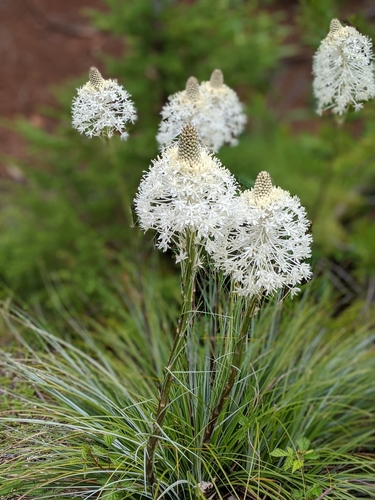
British Columbia, CA
Puedes ver Common Beargrass, Subalpine Larch y Mountain Bog Gentian.
Ver guía →
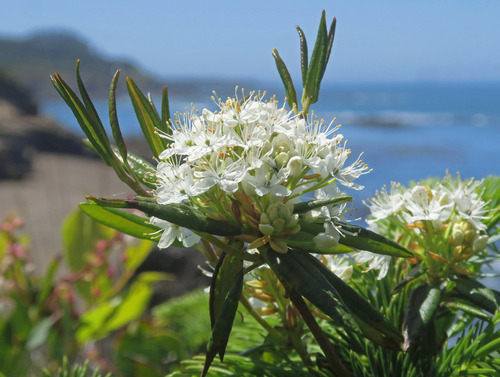
British Columbia, CA
Puedes ver Western Labrador Tea, Grouse Whortleberry y Pino Contorta.
Ver guía →