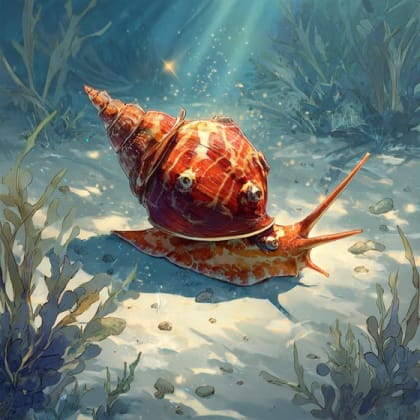
Milky Slug
deroceras reticulatum
The Milky Slug is a soft, slimy creature that glides across the ground, leaving a shiny trail behind! This little slug loves to munch on leaves and other plants in the garden.
Hábitat: Gardens, forests, and grassy areas.
The Milky Slug is typically a pale grey or brown slug with a distinctive, often net-like pattern on its back. It has a slightly translucent appearance, making it look 'milky,' and two pairs of retractable tentacles on its head. Its soft body lacks a shell, distinguishing it from snails.
Categoría
InvertebrateRareza
Common
Peligro
0/5 · Sin peligro conocido
Snaps
¡Sé la primera persona en hacer un snap!
A Milky Slug's brain is no bigger than a pinhead, yet it navigates complex environments!
Milky Slugs are hermaphrodites, meaning each slug has both male and female reproductive organs!
These slugs can survive short periods underwater by closing their breathing hole!
They breathe through a small hole on their right side called a pneumostome, which opens and closes!
Milky Slug has a sticky, defensive slime that makes it hard for predators to grasp and protects its soft body from drying out.
Milky Slug has two pairs of retractable tentacles: one pair detects light, and the other helps it smell and feel its way around.
Milky Slug can regrow lost tentacles or damaged parts, helping it recover from minor injuries or predator attacks.
Milky Slugs are omnivores, munching on a variety of plants, fungi, and decaying matter.
Turdus merula
Blackbirds frequently forage for slugs in gardens and fields.
Erinaceus europaeus
Hedgehogs are natural predators, consuming many slugs and snails.
Carabus nemoralis
Many species of ground beetles prey on slugs and their eggs.

Lactuca sativa
The Milky Slug often feeds on tender plant leaves, including lettuce.
Los animales solitarios viven solos durante la mayor parte de su vida y solo interactúan con otros para aparearse o cuidar de sus crías.
Este rasgo caracteriza a los organismos cuya dieta consiste total o principalmente en material vegetal.
Los hábitats de pastizales son biomas terrestres dominados por pastos y plantas herbáceas, que sustentan a una variedad de animales de pastoreo.
Describe a los organismos que descomponen la materia orgánica muerta, reciclando los nutrientes de vuelta al ecosistema.

Los animales nocturnos están principalmente activos durante la noche, y suelen descansar o dormir durante el día.
Peligro
0/5 · Sin peligro conocido
Todavía no hay notas especiales de seguridad.
2-5 cm
0.5-3 g
0.5-2 años
Milky Slugs are omnivores, munching on a variety of plants, fungi, and decaying matter.
Gardens, forests, and grassy areas.
Foraging
Acércate para separar los grupos y explorar dónde se ha fotografiado este objeto.
Los snaps recientes aparecerán aquí a medida que se añadan nuevas observaciones.




_(16639600986).jpg)