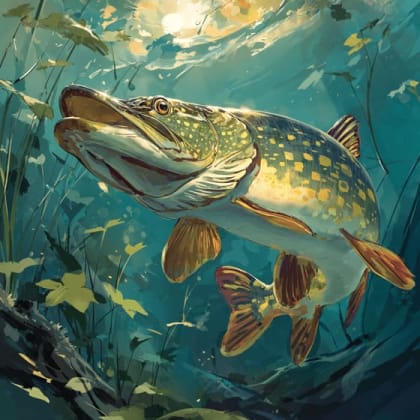
Parachromis managuensis
Parachromis managuensis
The Parachromis managuensis, also known as the Jaguar Cichlid, is a colorful fish that lives in warm waters. It has beautiful patterns and loves to swim around rocks and plants in its home.
Hábitat: Freshwater rivers and lakes
The Parachromis managuensis is a robust, elongated fish adorned with striking dark blotches and spots over a yellowish-gold or silvery body. These 'jaguar-like' markings make it visually distinct from most other freshwater fish. Its fins often have a reddish hue, adding to its vibrant appearance.
Categoría
PecesRareza
Common
Peligro
2/5 · Bajo
Snaps
¡Sé la primera persona en hacer un snap!
A female can lay thousands of eggs, often on flat rocks, which both parents guard!
Its name comes from Lake Managua, Nicaragua, where this stunning fish was first found!
These fish are sometimes called 'Jaguar Cichlids' because their spots look like a jaguar's fur!
These fish can make grunting sounds underwater using their swim bladder to communicate!
Parachromis managuensis can quickly change its skin patterns to blend seamlessly with its environment for hunting or hiding.
Parachromis managuensis has powerful jaws and sharp teeth that help them ambush and capture their prey with a strong bite.
Parachromis managuensis can vigorously defend their eggs and young, ensuring their offspring have a better chance of survival.
This carnivorous fish primarily eats smaller fish, insects, and crustaceans found in its freshwater home.
Diferencias por edad: Younger fish eat more insects and larvae; as they grow, their diet shifts to mainly smaller fish.
Poecilia sphenops
as food in their shared freshwater habitats.
Astyanax aeneus
a common food source for adult fish.
Caiman crocodilus
when larger predators hunt in the shallows.
Marcado con manchas o parches de un color diferente.
Los animales sociales viven en grupos organizados, cooperando para obtener beneficios de supervivencia como la búsqueda de alimento, la defensa y la cría de descendencia.
Colorido describe a organismos u objetos que exhiben una amplia variedad de colores brillantes y distintivos.
Los hábitats de agua dulce incluyen entornos acuáticos no salinos como ríos, lagos, estanques y humedales, vitales para numerosas especies.

Este rasgo identifica a los organismos cuya dieta consiste total o principalmente en tejido animal.

Los animales diurnos están activos principalmente durante el día y suelen descansar o dormir por la noche.

Los hábitats acuáticos abarcan entornos donde los organismos viven principalmente en el agua, incluidos océanos, ríos, lagos y humedales.
Peligro
2/5 · Bajo
Always watch your fingers around fish tanks to keep them safe and happy.
20-40 cm
0.3-1.5 kg
10-15 años
This carnivorous fish primarily eats smaller fish, insects, and crustaceans found in its freshwater home.
8 km/h
Freshwater rivers and lakes
Ambush
10 m
Acércate para separar los grupos y explorar dónde se ha fotografiado este objeto.
Los snaps recientes aparecerán aquí a medida que se añadan nuevas observaciones.