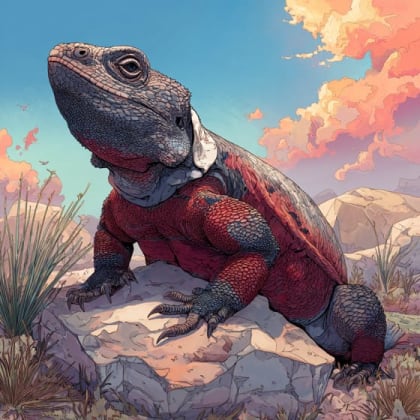
Prairie Lizard
Sceloporus consobrinus
The Prairie Lizard is a small, colorful lizard that loves to bask in the sun. It has a unique pattern that helps it blend into the grass and rocks of its home.
Hábitat: Grasslands
The Prairie Lizard has a flat body, typically grayish-brown or tan with dark spots and often stripes. Males flash bright blue patches on their throat and belly, especially vibrant during breeding season.
Categoría
ReptilesRareza
Common
Peligro
1/5 · Muy bajo
Snaps
¡Sé la primera persona en hacer un snap!
Each Prairie Lizard has a unique pattern of spots, like a special fingerprint!
Male Prairie Lizards do push-ups to show off their blue throat patches!
These lizards can hear super well, even tiny rustles in the grass!
They spend winter in a sleepy state called brumation, buried safely underground!
Prairie Lizard can drop its tail if caught, which wiggles to distract predators, giving the lizard time to run away!
Prairie Lizard has scales that help it change color slightly, making it disappear against rocks and dirt.
Prairie Lizard has strong claws and rough scales that help it climb rocks and tree trunks with ease.
These tiny hunters gobble up all sorts of creepy crawlies like grasshoppers and spiders!
Diferencias por edad: Young lizards eat smaller insects than adults do.
Coluber flagellum
Swift snake that hunts lizards.

Lanius ludovicianus
A bird that preys on small reptiles.

Schistocerca nitens
A common large insect it consumes.
El camuflaje describe a los organismos que poseen colores o patrones que les permiten mezclarse con su entorno.
Colorido describe a organismos u objetos que exhiben una amplia variedad de colores brillantes y distintivos.
Este rasgo identifica a los organismos cuya dieta consiste principalmente en insectos y otros pequeños invertebrados.
Los hábitats de pastizales son biomas terrestres dominados por pastos y plantas herbáceas, que sustentan a una variedad de animales de pastoreo.

Los organismos termorreguladores mantienen una temperatura corporal interna estable a pesar de las fluctuaciones en el entorno exterior.

Los animales diurnos están activos principalmente durante el día y suelen descansar o dormir por la noche.

Este rasgo identifica a los organismos que exhiben una rapidez excepcional en sus movimientos para cazar, escapar o desplazarse.
Todavía no hay alias listados.
Peligro
1/5 · Muy bajo
If you see a lizard, watch it from a distance and don't try to catch it.
13-23 cm
0.004-0.01 kg
2-5 años
15 km/h
These tiny hunters gobble up all sorts of creepy crawlies like grasshoppers and spiders!
Grasslands
Ambush
3-17
Acércate para separar los grupos y explorar dónde se ha fotografiado este objeto.
Los snaps recientes aparecerán aquí a medida que se añadan nuevas observaciones.