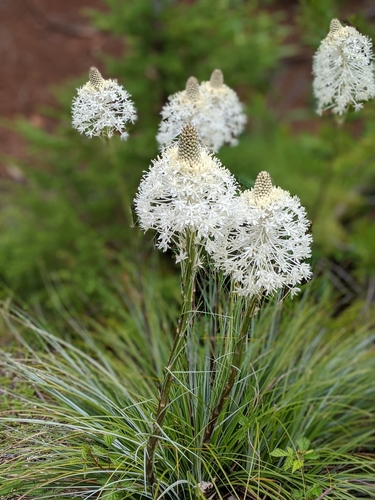
Sickletop Lousewort
Pedicularis racemosa
Sickletop Lousewort is a unique flower that grows in the mountains. Its pretty blooms can be pink or purple, and they have a special shape that looks like a little sickle!
Hábitat: Mountain regions
The Sickletop Lousewort has reddish-purple stems with deeply cut, fern-like leaves. Its distinctive tubular flowers are curved like a sickle, ranging from white to pinkish-purple, arranged in a loose cluster. This unique shape helps distinguish it from other alpine plants.
Categoría
PlantasRareza
Common
Peligro
1/5 · Muy bajo
Snaps
¡Sé la primera persona en hacer un snap!
Its unique flower shape perfectly fits the heads of its favorite pollinators, like a key in a lock!
The name 'Lousewort' came from an old belief that grazing animals eating it would get lice. (It's not true!)
This plant uses a hidden superpower: it can secretly connect to other plants underground to share resources.
You can often spot these tough flowers growing high up on mountain slopes, even among rocks and evergreen trees!
Sickletop Lousewort can tap into the roots of nearby plants to steal water and nutrients, helping it thrive in tough mountain soil.
The Sickletop Lousewort has adaptations that help it grow in cold, rocky mountain environments where many other plants struggle.
Sickletop Lousewort has perfectly curved flowers that guide specific bumblebees, ensuring efficient pollination and successful reproduction.
Bombus mixtus
Transfers pollen between flowers

Abies lasiocarpa
Steals nutrients from its roots
Cervus canadensis
Browses occasionally on leaves
Peludo describe a los animales que poseen una cubierta densa de pelo o pelaje suave.
Las plantas con flores son cualquier planta que produce flores como parte de su ciclo reproductivo.
Las plantas de floración primaveral producen sus flores durante la temporada de primavera, lo que a menudo significa el final del invierno y el comienzo de un nuevo crecimiento.
Describe plantas que son particularmente atractivas y beneficiosas para una amplia variedad de organismos polinizadores.

Este rasgo de hábitat identifica a las especies que se encuentran en regiones montañosas, caracterizadas por su gran altitud, pendientes pronunciadas y zonas climáticas variables.

El estado de peligro de extinción indica que una especie corre un riesgo muy alto de extinguirse en estado silvestre en un futuro próximo.
Todavía no hay alias listados.
Peligro
1/5 · Muy bajo
Always look but don't pick flowers, as they help nature and the animals around them.
15-60 cm
10-30 cm
1-2 cm
Summer to early fall
No
Leve
Perenne
Insectos
Acércate para separar los grupos y explorar dónde se ha fotografiado este objeto.
Los snaps recientes aparecerán aquí a medida que se añadan nuevas observaciones.