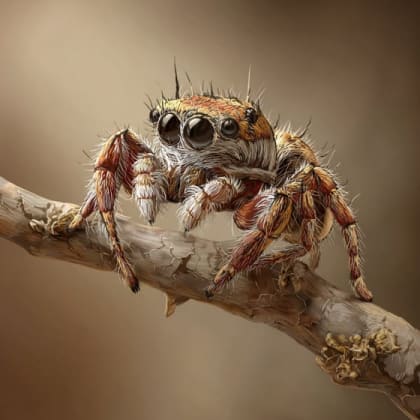
Trachysida aspera
Trachysida aspera
The Trachysida aspera is a special kind of beetle that has a bumpy, rough shell. These beetles are often found in gardens and forests, where they help break down dead plants.
Hábitat: Forests
The Trachysida aspera is a medium-sized beetle, typically dark brown to black, with a distinctly rough and bumpy texture across its body and wing covers. It has very long, slender antennae that are often longer than its body, setting it apart from many other beetles.
Categoría
InsectosRareza
Common
Peligro
1/5 · Muy bajo
Snaps
¡Sé la primera persona en hacer un snap!
Adult Trachysida aspera can fly but are often found resting on leaves or bark.
It can take up to three years for a Trachysida aspera larva to become an adult beetle.
Its larvae are called "round-headed borers" because of their unique shape.
The beetle's scientific name means "rough-sided" in Latin! How cool is that?
Trachysida aspera larvae can chew through tough dead wood because of their strong mandibles that help them get nutrients.
Trachysida aspera has extremely long antennae that help them detect food, mates, and predators in their environment.
Trachysida aspera has a rough, bark-like texture that helps them blend perfectly with tree trunks to hide from birds.
Larvae munch on dead wood, while adults might snack on nectar or tree sap.
Diferencias por edad: Larvae feed exclusively on decaying wood; adults may feed on sap or pollen.
Quercus alba
Larvae bore into dead wood of this tree species.
Acer saccharum
Larvae also feed within the decaying wood of this tree.
.jpg&width=800)
Dendroica coronata
Adult beetles can be a food source for insectivorous birds.
Picoides villosus
Woodpeckers extract Trachysida aspera larvae from infested trees.
Los animales solitarios viven solos durante la mayor parte de su vida y solo interactúan con otros para aparearse o cuidar de sus crías.
Este rasgo caracteriza a los organismos cuya dieta consiste total o principalmente en material vegetal.
Los hábitats boscosos son entornos terrestres dominados por una densa cubierta arbórea, que sustentan una gran diversidad de vida animal y vegetal.
Describe a los organismos que descomponen la materia orgánica muerta, reciclando los nutrientes de vuelta al ecosistema.

Acorazado describe a los animales protegidos por una cubierta externa dura o caparazón para defenderse.

Los animales nocturnos están principalmente activos durante la noche, y suelen descansar o dormir durante el día.
Todavía no hay alias listados.
Peligro
1/5 · Muy bajo
Be gentle and observe insects from a distance. They are best left in their homes.
20-40 mm
8-16 mm
30-90 días
Larvae munch on dead wood, while adults might snack on nectar or tree sap.
Forests
Foraging
6
Acércate para separar los grupos y explorar dónde se ha fotografiado este objeto.
Los snaps recientes aparecerán aquí a medida que se añadan nuevas observaciones.