






Western Leafcutter Bee
Megachile perihirta
The Western Leafcutter Bee is a small, friendly bee that loves to collect leaves to make its nest. These bees are important for helping flowers grow by spreading pollen.
Hábitat: Urban areas
The Western Leafcutter Bee is a medium-sized bee, typically dark-bodied with bands of pale hairs on its abdomen. It has a fuzzy appearance, especially on its head and thorax, which can range from yellowish to grey. It is distinctive for carrying pollen on a dense brush of hairs (scopa) on its underside, rather than on its legs.
Categoría
InsectosRareza
Common
Peligro
1/5 · Muy bajo
Snaps
¡Sé la primera persona en hacer un snap!
Each baby bee gets its own leafy bedroom, sealed up tight with plant glue for safety!
Female leafcutter bees build solo nests, creating individual nurseries for each of their babies!
They are expert 'surgeons' of leaves, cutting perfect circles without harming the plant!
Unlike honeybees, they carry pollen on their tummies, making them look extra fuzzy underneath!
Western Leafcutter Bee can precisely cut circular pieces from leaves because of its strong mandibles, which helps them build safe, cylindrical nest cells for their young.
Western Leafcutter Bee has special, thick hairs (scopa) on its abdomen that help them carry large amounts of pollen, making them efficient pollinators.
Western Leafcutter Bee can use mud, chewed plant matter, and resin to seal their individual nest chambers, protecting their developing larvae from predators.
These busy bees feed on nectar for energy and pollen for protein from a variety of flowering plants.
Helianthus annuus
Gathers nectar and pollen from sunflower blooms.

Medicago sativa
An important pollinator for alfalfa crops.
_Misumena_vatia_male.jpg&width=800)
Misumena vatia
Spiders ambush foraging bees on flowers.

Sayornis saya
Insectivorous bird that preys on bees in flight.
Peludo describe a los animales que poseen una cubierta densa de pelo o pelaje suave.
Los animales solitarios viven solos durante la mayor parte de su vida y solo interactúan con otros para aparearse o cuidar de sus crías.
Este rasgo caracteriza a los organismos cuya dieta consiste total o principalmente en material vegetal.
Describe plantas que son particularmente atractivas y beneficiosas para una amplia variedad de organismos polinizadores.

Esta característica de hábitat indica especies que pueden coexistir con los humanos en entornos urbanos y suburbanos, utilizando estructuras artificiales y espacios verdes.

Describe organismos que transfieren polen, permitiendo la fertilización y reproducción de las plantas.
Todavía no hay alias listados.
Peligro
1/5 · Muy bajo
Leafcutter bees are not aggressive, but it's best to watch them from a distance.
15-25 mm
8-15 mm
30-60 días
15 km/h
These busy bees feed on nectar for energy and pollen for protein from a variety of flowering plants.
Urban areas
Foraging
6
Acércate para separar los grupos y explorar dónde se ha fotografiado este objeto.
Los snaps recientes aparecerán aquí a medida que se añadan nuevas observaciones.
British Columbia, CA
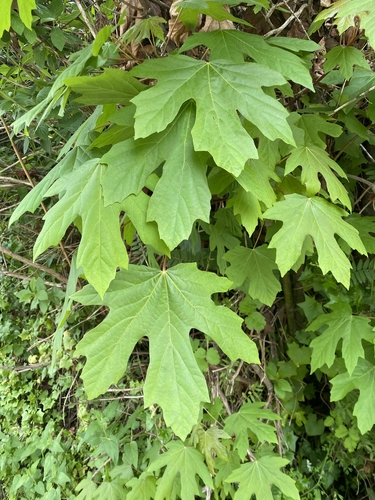
Puedes ver Bigleaf Maple, Western Sword Fern y Vanilla Leaf.
Ver guía →

British Columbia, CA
Puedes ver Barnacla Canadiense, Oregon Oak y Golondrina Común.
Ver guía →











_Gall_-_Guelph%2C_Ontario_2020-04-11_(02).jpg&width=800)
