






Western Rattlesnake
Crotalus oreganus
The Western Rattlesnake is a cool snake known for its rattling tail! It uses its rattle to warn others when it feels scared. These snakes can be found in many places and are important for nature.
Hábitat: Desert
The Western Rattlesnake has a stout body with diamond or blotchy patterns, usually in shades of brown, tan, or grey, edged in white or cream. Its triangular head is notably broader than its neck, and it famously ends with a segmented rattle, making it distinct from non-venomous snakes.
Categoría
ReptilesRareza
Common
Peligro
5/5 · Extremo
Snaps
¡Sé la primera persona en hacer un snap!
A rattlesnake's strike is incredibly fast, faster than a blink, but only covers a short distance!
Their fangs are like tiny, foldable hypodermic needles that inject venom into prey!
They add a new segment to their rattle each time they shed their skin, but not every year!
Unlike most snakes, Western Rattlesnakes give birth to live baby snakes, not eggs!
Western Rattlesnake can 'see' warm-blooded prey using special pits on its face that detect heat, even in total darkness.
Western Rattlesnake can vibrate its unique tail segments to create a loud, distinctive rattle, warning off potential threats.
Western Rattlesnake has retractable, hollow fangs that deliver potent venom, allowing it to quickly immobilize its prey.
This snake is a carnivore, primarily hunting small mammals and birds using its venomous bite.
Diferencias por edad: Younger rattlesnakes may consume a higher proportion of lizards and smaller rodents than adults.
Peromyscus maniculatus
A primary food source for adults and juveniles.

Thomomys bottae
Frequently preys on these burrowing rodents.
Buteo jamaicensis
Large raptors can prey on juvenile rattlesnakes.
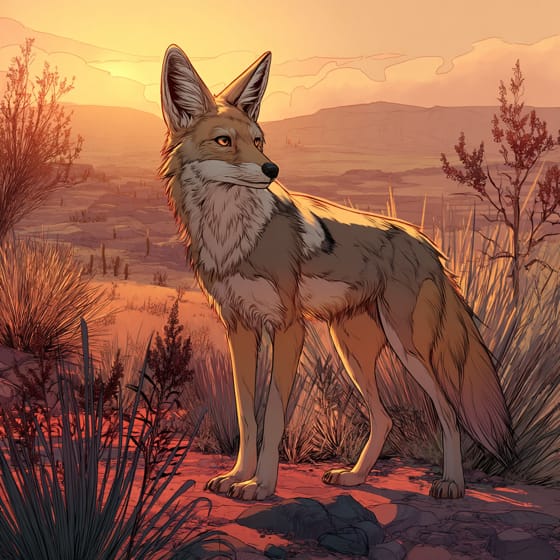
Canis latrans
Known to occasionally prey on rattlesnakes.
Marcado con manchas o parches de un color diferente.
Los animales solitarios viven solos durante la mayor parte de su vida y solo interactúan con otros para aparearse o cuidar de sus crías.
El camuflaje describe a los organismos que poseen colores o patrones que les permiten mezclarse con su entorno.
Los hábitats desérticos son regiones áridas caracterizadas por precipitaciones extremadamente bajas y, a menudo, temperaturas extremas, que albergan una flora y fauna especializadas.

Un depredador de emboscada caza esperando pacientemente y ocultándose, para luego lanzar un ataque repentino cuando una presa desprevenida se pone a su alcance.

Este rasgo caracteriza a los organismos con una esperanza de vida excepcionalmente larga en comparación con otros de su especie.

Este rasgo identifica a los organismos cuya dieta consiste total o principalmente en tejido animal.

Los animales diurnos están activos principalmente durante el día y suelen descansar o dormir por la noche.

Describe una especie cuya presencia y papel tienen un efecto desproporcionadamente grande en su entorno.

Los organismos venenosos producen toxinas que se inyectan en otro animal, generalmente a través de una mordedura o picadura.
Peligro
5/5 · Extremo
If you see a rattlesnake, stay calm and walk away slowly. It's best to admire them from a distance.
50-165 cm
0.2-1.5 kg
10-20 años
5 km/h
This snake is a carnivore, primarily hunting small mammals and birds using its venomous bite.
Desert
Ambush
3-12
Acércate para separar los grupos y explorar dónde se ha fotografiado este objeto.
Los snaps recientes aparecerán aquí a medida que se añadan nuevas observaciones.

Washington, US
Puedes ver Lagartija Espinosa Del Oeste y Ciervo Mulo.
Ver guía →
.JPG)
California, US
Puedes ver Cardinal Catchfly, Broad-Leaved Stonecrop y Mountain Misery.
Ver guía →
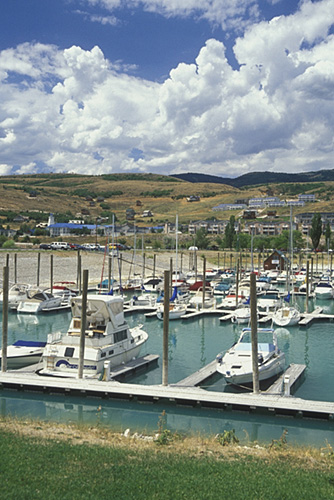
Utah, US
Puedes ver Barnacla Canadiense y Redstem Stork's-Bill.
Ver guía →

California, US
Puedes ver Roxburgh Fig, Rosas y Swan-Neck Agave.
Ver guía →

British Columbia, CA
Puedes ver Subalpine Larch, Arrowleaf Senecio y Moss Campion.
Ver guía →















_-_Flickr_-_2ndPeter_(2).jpg&width=800)

