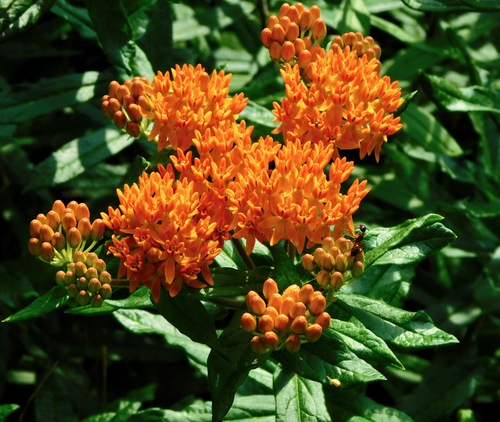
White Prairie Clover
dalea candida
White Prairie Clover is an elegant, native perennial wildflower that belongs to the legume family. Widely distributed across the grasslands of North America, it is renowned for its role in maintaining healthy ecosystems by improving soil quality. Its unique, dense spikes of white blossoms provide visual texture to open meadows and are highly attractive to local pollinators. It is heavily utilized in land reclamation and prairie restoration projects due to its hardiness and environmental benefits. Additionally, because of its high nutritional content and protein levels, it is an important source of forage for grazing mammals and diverse insect species in wild grassland habitats.
Hábitat: Typically found in open, sun-drenched locations such as tallgrass, mixed-grass, and shortgrass prairies, dry savannas, and rocky glades with well-drained soil.
This herbaceous plant features slender, upright stems reaching between 30 and 90 centimeters in height. Its leaves are compound and pinnate, divided into 5 to 9 narrow, light green, needle-like leaflets that grow along the stem. The most striking feature is its cylindrical flower spikes, which measure up to 5 centimeters long and sit at the tips of the branches. The individual white flowers are tiny and star-shaped, starting to bloom in a distinct wreath-like ring from the base of the spike and slowly moving upward to the top over several weeks.
Categoría
PlantasRareza
Common
Peligro
1/5 · Muy bajo
Snaps
¡Sé la primera persona en hacer un snap!
Because it is packed with protein, it is considered a highly palatable 'ice cream' plant for cattle, which will often selectively graze it over other prairie plants.
Native Americans, including the Oglala Lakota, chewed the sweet-tasting root of the plant like chewing gum and used its leaves to brew a medicinal tea.
The flowers open in a systematic ring that slowly ascends the flower spike, which is why it is sometimes called a climbing lace flower.
Forms a symbiotic relationship with rhizobia bacteria in its root system, allowing it to convert nitrogen gas from the atmosphere into a usable nutrient that enriches the surrounding soil.
Develops a rugged, woody taproot that can plunge over 1.5 meters deep into the earth to access moisture during periods of intense heat and drought.
Blooms slowly from the bottom of the flower spike upward, extending its pollination window and ensuring a continuous food resource for insects over several weeks.
As a photoautotrophic plant, White Prairie Clover converts solar energy, carbon dioxide, and soil water into sugars through the process of photosynthesis.
Bombus pensylvanicus
Feeds on the nutrient-rich pollen and nectar of the blossoms, serving as a primary pollinator.
Odocoileus virginianus
Feeds on the nutritious leaves and seedpods as part of its herbivorous diet.
Zerene cesonia
Utilizes the plant as a host; the caterpillars feed directly on the foliage.
Aún no hay insignias de rasgos asignadas a este objeto.
Todavía no hay alias listados.
Las colecciones para este objeto aparecerán aquí a medida que se añadan más temas.
Peligro
1/5 · Muy bajo
Todavía no hay notas especiales de seguridad.
La forma más fácil de identificar a White Prairie Clover es usar la aplicación de identificación de naturaleza Snappit.
30-90 cm
3-10 años
As a photoautotrophic plant, White Prairie Clover converts solar energy, carbon dioxide, and soil water into sugars through the process of photosynthesis.
Typically found in open, sun-drenched locations such as tallgrass, mixed-grass, and shortgrass prairies, dry savannas, and rocky glades with well-drained soil.
Photosynthesis
14-30 días
Acércate para separar los grupos y explorar dónde se ha fotografiado este objeto.
Los snaps recientes aparecerán aquí a medida que se añadan nuevas observaciones.