





Aloe Vera
Aloe vera
Aloe Vera is a succulent plant with thick, fleshy leaves. It's famous for its soothing gel that can help with cuts and burns!
Habitat: Dry and sunny areas
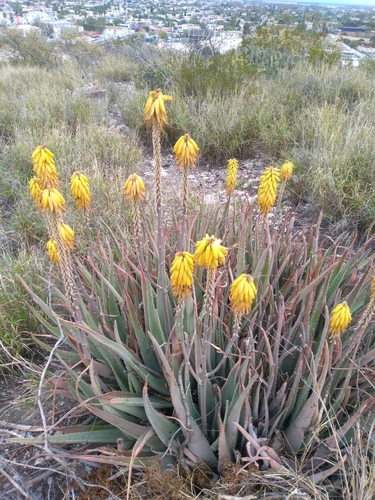
The Aloe Vera has thick, fleshy, spear-shaped leaves that radiate from a central stem, often reaching up to 3 feet tall. Its leaves are grey-green, sometimes with small white spots or serrated edges, and contain a clear, gel-like substance.
Category
PlantsRarity
Common
Danger
1/5 · Very low
Snaps
1
Aloe Vera flowers attract hummingbirds with their sweet nectar!
Ancient Egyptians called Aloe Vera the 'plant of immortality'!
Its clear gel is 99% water, packed with vitamins and minerals!
Some cultures use Aloe Vera to make refreshing drinks and desserts!
Aloe Vera can release a soothing gel from its leaves that helps it seal wounds and protect against infection.
Aloe Vera has thick, succulent leaves that store water, helping it survive long periods of drought in dry climates.
Aloe Vera can produce compounds in its gel that protect its leaves from harmful UV radiation, like natural sunscreen.
Apis mellifera
Collects nectar and pollen from its tubular flowers.

Archilochus colubris
Feeds on nectar, aiding flower fertilization.

Helix aspersa
Occasionally nibbles on the softer outer leaves.
Evergreen plants retain their foliage throughout the year, never shedding all their leaves at once.
Medicinal plants possess chemical compounds that can be used for therapeutic purposes to treat illnesses or maintain health.
Succulent plants have thickened, fleshy parts, usually leaves or stems, adapted to store water in arid climates.
Possessing sharp, pointed projections or spines on the body or surface.
Danger
1/5 · Very low
Explore with care and ask an adult if you’re unsure what to do.
The easiest way to identify Aloe Vera is to use the Snappit nature identifier app.
60-100 cm
30-60 cm
2-3 cm
Summer to Fall
Yes
Mild
Perennial
Zoom in to split clusters and explore where this object has been snapped.
Take the discovery with you
Snap it with Snappit to identify it, learn what makes it special, and add the discovery to your collection.











.jpg&width=800)



_001.jpg&width=800)



