





Bald-faced Hornet
Dolichovespula maculata
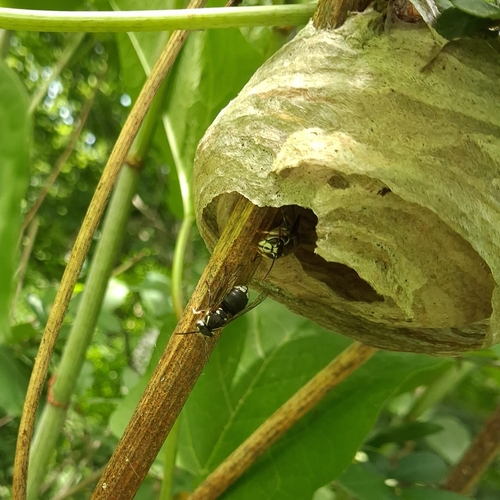
The Bald-faced Hornet is a black and white insect that builds big nests in trees. They are not true hornets but are actually wasps and can be very protective of their home!
Habitat: Forests
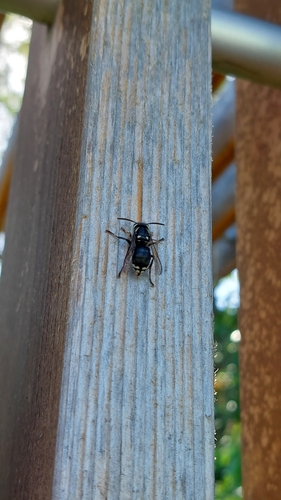
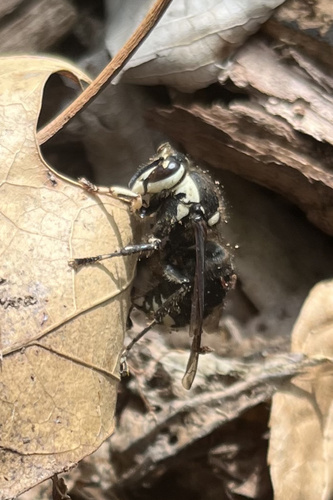
The Bald-faced Hornet is a striking black and white social wasp, distinguished by its mostly black body with a white or ivory-colored face and three characteristic white stripes at the end of its abdomen. Unlike many yellowjackets, it has a smoother, less hairy appearance.
Category
InsectsRarity
Common
Danger
3/5 · Moderate
Snaps
52
A single Bald-faced Hornet colony can eat thousands of harmful garden pests in one summer!
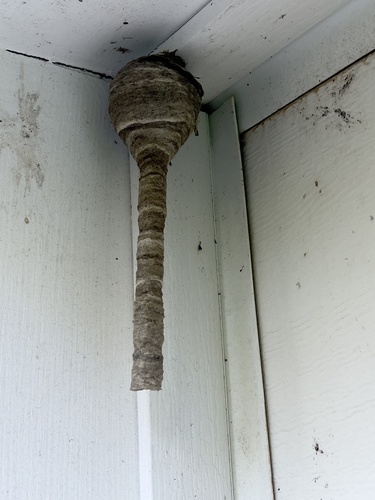
Their large, grey paper nests are often high in trees, sometimes bigger than a basketball!
These hornets are actually a type of yellowjacket, just with different colors!
They get their 'paper' for nests by chewing tiny bits of wood and mixing it with their saliva.
Bald-faced Hornets can build large, elaborate paper nests from chewed wood fibers because this material provides strong, lightweight shelter for their colony.
Bald-faced Hornets have a potent sting and venom because it helps them defend their nest fiercely and subdue prey.
Bald-faced Hornets can actively hunt and capture various insects because this provides essential protein for their developing larvae.
They hunt insects for their young and sip nectar or sap for their own energy.
Age differences: Larvae eat insects and spiders brought by adults; adult hornets consume nectar, sap, and fruit juice.
Musca domestica
Captures for larval food.
Malacosoma americanum
Feeds larvae on caterpillars.
.jpg&width=800)
Tyrannus tyrannus
Kingbirds catch flying wasps.
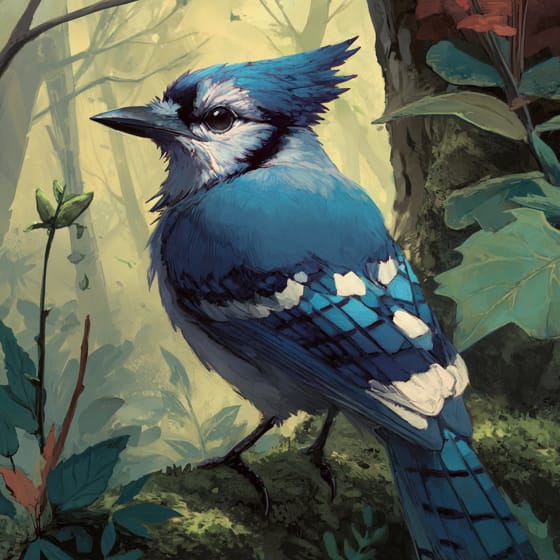
Cyanocitta cristata
Jays may raid nests.
Marked with spots or patches of a different color.
Marked with parallel bands or lines of color.
Social animals live in organized groups, cooperating for survival benefits such as foraging, defense, and raising offspring.
This trait identifies organisms whose diet primarily consists of insects and other small invertebrates.

Forest habitats are terrestrial environments dominated by dense tree cover, supporting a high diversity of plant and animal life.

Describes a species whose presence and role have a disproportionately large effect on its environment.

This trait identifies organisms that exhibit exceptional swiftness in movement for hunting, escape, or travel.

Describes organisms that transfer pollen, enabling the fertilization and reproduction of plants.
Danger
3/5 · Moderate
If you see a Bald-faced Hornet, it's best to stay away from their nest to avoid getting stung.
The easiest way to identify Bald-faced Hornet is to use the Snappit nature identifier app.
25-40 mm
12-20 mm
12-365 days
15 km/h
They hunt insects for their young and sip nectar or sap for their own energy.
Forests
Pursuit
Zoom in to split clusters and explore where this object has been snapped.
May 31, 2026
PrallsvillePhoto attribution
(c) Susan Mott, some rights reserved (CC BY-SA)
License: CC BY-SA 4.0 ↗
Image may be shown cropped inside the card frame.
May 30, 2026
Norfolk Botanical GardenPhoto attribution
no rights reserved
License: CC0 1.0 ↗
Image may be shown cropped inside the card frame.
May 12, 2026
Advance MillsPhoto attribution
no rights reserved
License: CC0 1.0 ↗
Image may be shown cropped inside the card frame.
Apr 27, 2023
La Grange Lock and DamPhoto attribution
(c) Bryant Brumbill-Corral, some rights reserved (CC BY)
License: CC BY 4.0 ↗
Image may be shown cropped inside the card frame.

Virginia, US
You might spot Eastern Box Turtle and White-Tailed Deer.
View guide →

Illinois, US
You might spot Common Eastern Bumble Bee and Brown-Belted Bumble Bee.
View guide →

Ohio, US
You might spot Spotted Lanternfly and White-Tailed Deer.
View guide →
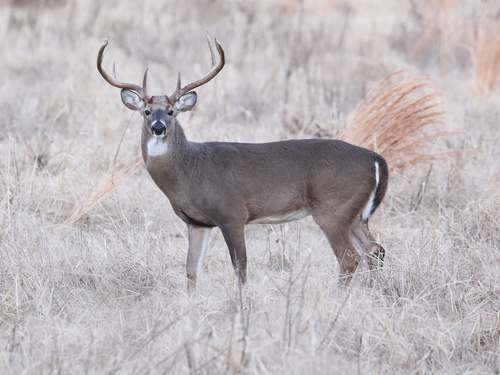
Virginia, US
You might spot White-Tailed Deer and House Sparrow.
View guide →

Indiana, US
You might spot Eastern Fox Squirrel, Duck, and Canada Goose.
View guide →

Massachusetts, US
You might spot Turkey, Garter Snake, and Multiflora Rose.
View guide →
Take the discovery with you
Snap it with Snappit to identify it, learn what makes it special, and add the discovery to your collection.










.jpg&width=800)


