





Blue Jay
Cyanocitta cristata
The Blue Jay is a beautiful bird with bright blue feathers and a loud, cheerful call. They are smart and can even mimic the sounds of other birds! You can often see them in trees or at bird feeders.
Habitat: Forests
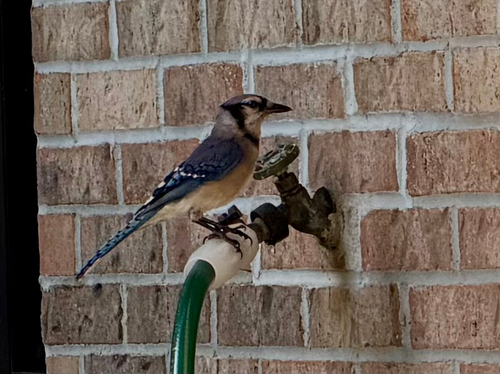
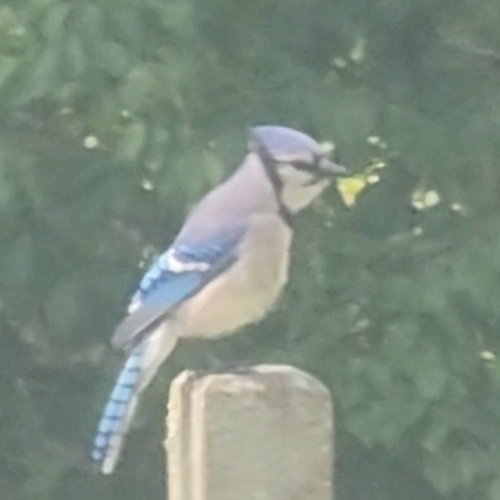
The Blue Jay is easily recognized by its vibrant blue crest, back, and tail feathers, contrasted by a white face with a distinctive black necklace. Its wings are barred with black and white, making it visually striking and unique among North American birds.
Category
BirdsRarity
Common
Danger
1/5 · Very low
Snaps
329
Blue Jay feathers aren't blue at all, it's just how light makes them look!
Blue Jays can learn to mimic human speech and even a cat's meow!
Some Blue Jays migrate thousands of miles, while others stay put!
They have a special pouch in their throat to carry many acorns at once!
Blue Jay can fly quickly and deftly through dense forest canopies because of their strong wings and agile bodies.
Blue Jay has complex vocalizations, including many different calls and whistles, that help them communicate within their social groups.
Blue Jay can gather in groups to mob and chase away larger predators like hawks or owls that threaten their nests.
Blue Jay has a powerful, pointed beak that helps them crack open hard nuts and seeds with ease.
Blue Jays are opportunistic omnivores, feasting on a wide variety of seeds, nuts, insects, and even small animals.
Quercus spp.
for acorns and nesting sites.
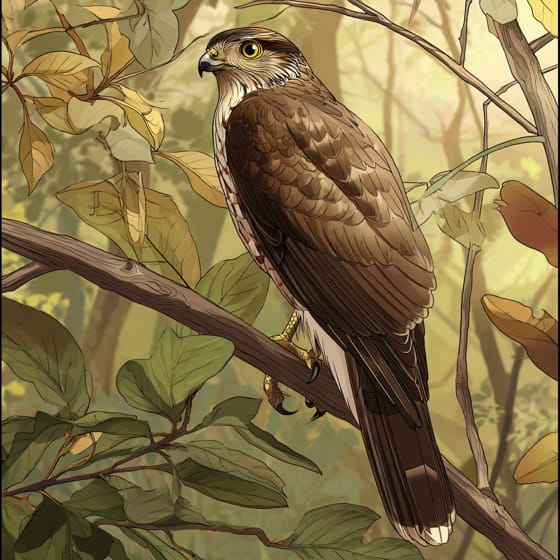
Accipiter cooperii
a common aerial predator.
Feathered describes animals, primarily birds, possessing a covering of feathers.
Social animals live in organized groups, cooperating for survival benefits such as foraging, defense, and raising offspring.
This trait identifies organisms whose diet includes both plant and animal matter.
Singing animals produce complex vocalizations, often for purposes of attracting mates, defending territory, or communicating within their species.

Colorful describes organisms or objects displaying a wide range of bright and distinct colors.

This trait describes organisms that manipulate external objects to achieve a specific goal.

Forest habitats are terrestrial environments dominated by dense tree cover, supporting a high diversity of plant and animal life.

Diurnal animals are primarily active during daylight hours, typically resting or sleeping at night.

Describes a species whose presence and role have a disproportionately large effect on its environment.

Migratory animals undertake seasonal movements from one region to another, typically in response to changes in climate or food availability.
Danger
1/5 · Very low
Enjoy watching Blue Jays from a distance and don't try to touch them.
The easiest way to identify Blue Jay is to use the Snappit nature identifier app.
22-30 cm
34-43 cm
0.07-0.1 kg
5-10 years
40 km/h
Blue Jays are opportunistic omnivores, feasting on a wide variety of seeds, nuts, insects, and even small animals.
Forests
Zoom in to split clusters and explore where this object has been snapped.
Jun 19, 2026
BroadmoorPhoto attribution
(c) Elliot Greiner, some rights reserved (CC BY)
License: CC BY 4.0 ↗
Image may be shown cropped inside the card frame.
Jun 18, 2026
BloomingdalePhoto attribution
(c) Lawson Cope, some rights reserved (CC BY)
License: CC BY 4.0 ↗
Image may be shown cropped inside the card frame.
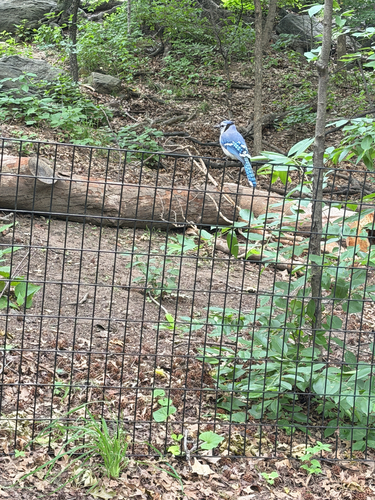
Jun 18, 2026
Jumel Terrace Historic DistrictPhoto attribution
(c) betsyyyy, some rights reserved (CC BY)
License: CC BY 4.0 ↗
Image may be shown cropped inside the card frame.
Jun 14, 2026
Alfred B. Maclay Gardens State ParkPhoto attribution
no rights reserved
License: CC0 1.0 ↗
Image may be shown cropped inside the card frame.
Jun 10, 2026
Haym Salomon Memorial ParkPhoto attribution
(c) i_da_naturalist, some rights reserved (CC BY)
License: CC BY 4.0 ↗
Image may be shown cropped inside the card frame.

New Jersey, US
You might spot Garlic Mustard, Sensitive Fern, and Common Mugwort.
View guide →

Florida, US
You might spot Anole, Eastern Box Turtle, and Golden Silk Spider.
View guide →

Ohio, US
You might spot Eastern Fox Squirrel and Spotted Lanternfly.
View guide →

Massachusetts, US
You might spot Eastern Cottontail and American Robin.
View guide →

District of Columbia, US
You might spot Eastern Gray Squirrel, Duck, and House Sparrow.
View guide →

Florida, US
You might spot Atala, Monarch, and Brown Anole.
View guide →
Take the discovery with you
Snap it with Snappit to identify it, learn what makes it special, and add the discovery to your collection.





.jpg&width=800)







