





Black Poplar
Populus nigra L.
The Black Poplar tree has tall, straight trunks and fluttering leaves. It grows near water and is home to many birds.
Habitat: Riverbanks and wetlands
The Black Poplar is a large, stately tree with dark, deeply furrowed bark that often develops distinctive burrs or burls. Its triangular, often heart-shaped, light green leaves shimmer in the breeze, and its upright, often irregular crown gives it a rugged appearance.
Category
TreesRarity
Common
Danger
1/5 · Very low
Snaps
Be the first to snap!
Ancient Romans sometimes planted Black Poplars to mark boundaries and shade sacred spots along rivers.
Its sticky buds produce a resin that bees collect and use to make propolis, a protective glue for their hives!
Sometimes, its trunk grows huge, gnarly burls (round growths) that are highly prized by woodworkers for their unique patterns.
The wood of Black Poplar is surprisingly resistant to rot when it's submerged in water, making it good for underwater structures.
Black Poplar can thrive in regularly flooded areas, helping it colonize riverbanks and wetlands where other trees struggle.
Black Poplar has branches that can root if they break off and land in moist soil, helping it spread new trees naturally.
Black Poplar can grow very quickly, helping it establish itself fast in newly opened sunny areas, outcompeting slower species.
Laothoe populi
Larvae feed on the leaves
Castor fiber
Fells for food and dam building
Pemphigus spyrothecae
Creates galls on leaf stalks
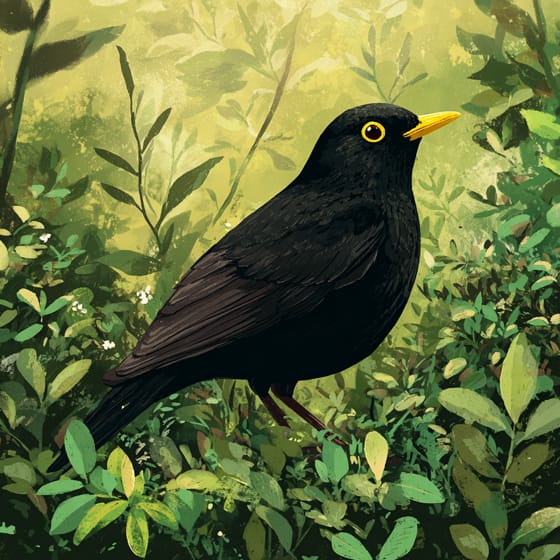
Turdus merula
Nests in its dense canopy
Polyporus squamosus
Decomposes dead wood
Deciduous plants periodically shed all their leaves, typically during autumn or dry seasons.
Shade tolerant plants are adapted to grow and thrive in areas with low light levels, requiring less direct sunlight.
Broadleaf trees are angiosperms characterized by flat, wide leaves that are typically shed annually in temperate climates.
Rapid growing plants exhibit accelerated growth rates, quickly increasing in size and biomass within a short period.

This habitat trait identifies species found in wetlands, which are areas of land saturated with water, either permanently or seasonally, including marshes, swamps, and bogs.
Danger
1/5 · Very low
Do not pick or eat anything you find. Some plants and mushrooms can be harmful.
The easiest way to identify Black Poplar is to use the Snappit nature identifier app.
20-35 m
10-18 m
Yes
100-200 cm
100-300 years
Riverbanks and wetlands
Capsule (containing cottony seeds)
Zoom in to split clusters and explore where this object has been snapped.
Recent snaps will appear here as new observations are added.
Take the discovery with you
Snap it with Snappit to identify it, learn what makes it special, and add the discovery to your collection.










