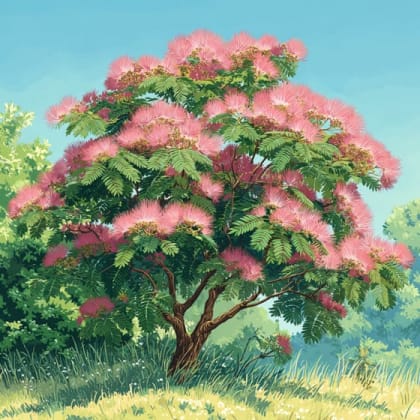
Silk Tree
Albizia julibrissin
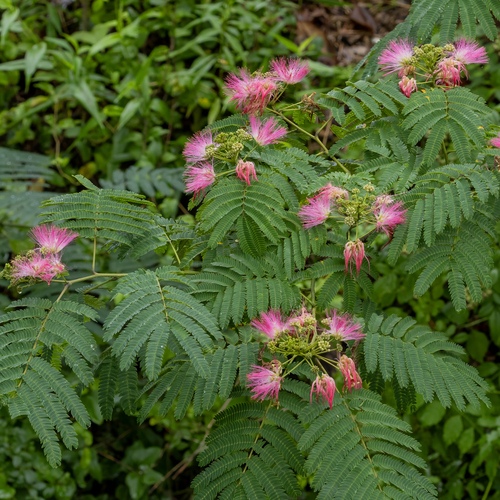
The Silk Tree has fluffy pink flowers that look like cotton candy! It’s a fun tree to see in bloom.
Habitat: Warm climates and gardens
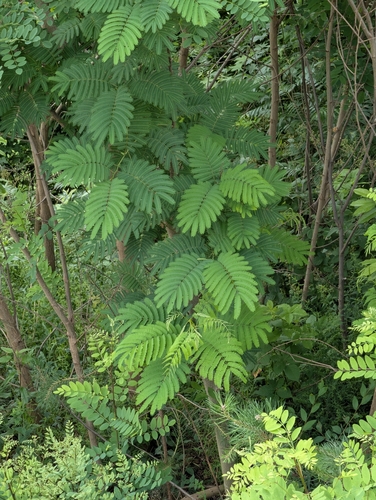
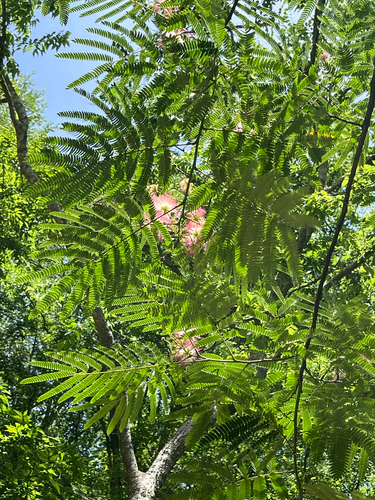
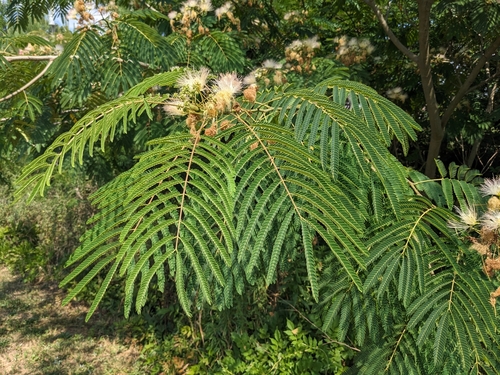
The Silk Tree has delicate, fern-like leaves and showy, fluffy pink flower clusters resembling silk threads. Its unique, flattened crown creates a broad, umbrella-like silhouette, making it easily recognizable with its vibrant summer blossoms.
Category
TreesRarity
Common
Danger
1/5 · Very low
Snaps
44
Ancient stories say its beautiful flowers can make people feel happy and calm.
Its fluffy flowers look like tiny pink fireworks exploding on the branches!
Many cultures call it the 'Sleeping Tree' because its leaves fold up at night!
The long seed pods can hang on the tree all winter, rattling in the wind.
Silk Tree can fold its feathery leaves at night or when it's very hot to conserve water and protect itself from harsh conditions.
Silk Tree has special glands that produce sweet nectar, attracting ants to protect its leaves from harmful insect pests.
Silk Tree can enrich the soil by partnering with bacteria to convert nitrogen from the air into plant food, helping it grow strong.
Bombus impatiens
Bees are drawn to its nectar-rich flowers.
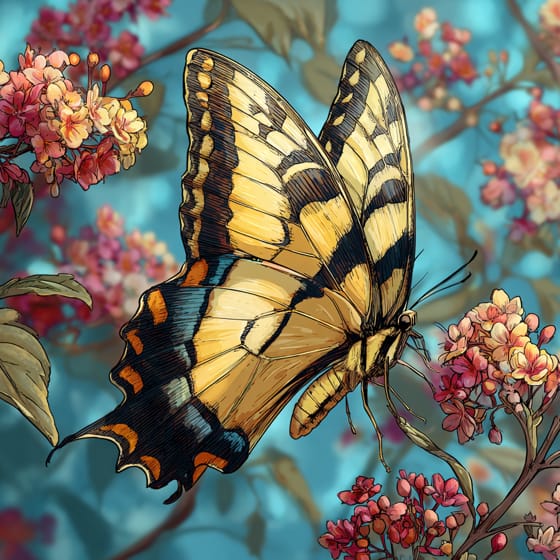
Papilio glaucus
Butterflies visit its sweet blossoms for nectar.
Rhizobium leguminosarum
Bacteria in root nodules fix nitrogen for the tree.
Lygus lineolaris
Plant bugs feed on the tree's sap and leaves.
Deciduous plants periodically shed all their leaves, typically during autumn or dry seasons.
Ornamental plants are cultivated primarily for their aesthetic appeal, enhancing landscapes and gardens with their attractive foliage, flowers, or form.
Cluster flowers are inflorescences where individual flowers are arranged closely together on a common stem.
Broadleaf trees are angiosperms characterized by flat, wide leaves that are typically shed annually in temperate climates.

Fragrant flowers emit a pleasant aroma, often to attract pollinators or for defense.

This human use trait identifies species that yield natural fibers, used by humans for textiles, rope, paper, and other manufactured goods.

This habitat trait indicates species that can coexist with humans in urban and suburban environments, utilizing man-made structures and green spaces.
Danger
1/5 · Very low
Do not pick or eat anything you find. Some plants and mushrooms can be harmful.
The easiest way to identify Silk Tree is to use the Snappit nature identifier app.
5-12 m
6-12 m
No
20-60 cm
20-50 years
Warm climates and gardens
Flat brown seed pod
Zoom in to split clusters and explore where this object has been snapped.
May 31, 2026
Arrowmont School of Arts and CraftsPhoto attribution
(c) Nick Kleinschmidt, some rights reserved (CC BY)
License: CC BY 4.0 ↗
Image may be shown cropped inside the card frame.
May 25, 2026
Murphey Candler ParkPhoto attribution
(c) Dan Vickers, some rights reserved (CC BY)
License: CC BY 4.0 ↗
Image may be shown cropped inside the card frame.
May 5, 2026
Flint RiverQuariumPhoto attribution
(c) Lexa, some rights reserved (CC BY)
License: CC BY 4.0 ↗
Image may be shown cropped inside the card frame.
Jun 17, 2024
Gillsville Historic DistrictPhoto attribution
(c) Matthew Gerke, some rights reserved (CC BY)
License: CC BY 4.0 ↗
Image may be shown cropped inside the card frame.

Virginia, US
You might spot Eastern Box Turtle and White-Tailed Deer.
View guide →

Alabama, US
You might spot Elf Orpine, Canada Goose, and Leatherleaf Mahonia.
View guide →

Tennessee, US
You might spot Black Bear, Yellow Wakerobin, and Pipevine Swallowtail.
View guide →

South Carolina, US
You might spot American Alligator, Anole, and Great Blue Heron.
View guide →

District of Columbia, US
You might spot Eastern Gray Squirrel, Duck, and House Sparrow.
View guide →

Virginia, US
You might spot Pharaoh Cicada, Lesser Celandine, and Eastern Box Turtle.
View guide →
Take the discovery with you
Snap it with Snappit to identify it, learn what makes it special, and add the discovery to your collection.