





Bongo
Tragelaphus eurycerus
Bongos are beautiful, brown antelopes with white stripes and big, curved horns. They love to live in forests and are very shy animals.
Habitat: Forests
The Bongo is a strikingly large antelope with a vibrant reddish-brown coat marked by 10-15 vertical white stripes. It has impressive, slightly spiraled horns on both males and females, and a distinctive white chevron between its eyes. This unique pattern helps it blend into dappled forest light.
Category
MammalsRarity
Common
Danger
1/5 · Very low
Snaps
Be the first to snap!
A Bongo can change direction instantly while running, making it hard to catch.
Baby Bongos stay hidden perfectly still for weeks after birth to avoid hungry predators.
Bongos are the only forest antelope species where both males and females grow horns!
They love to eat burnt wood and charcoal for minerals, especially after forest fires!
Bongo can disappear quickly because of its vibrant reddish-brown coat with striking white stripes that break up its outline.
Bongo has powerful spiraled horns that help them push through dense undergrowth and defend against predators effectively.
Bongo can detect danger from far away because of its large ears and excellent sense of smell, vital in dense forests.
Bongo can navigate tricky forest terrain and leap over obstacles quickly due to its strong legs and agile body.
These large forest antelopes munch on leaves, shoots, fruits, and bark found in their dense habitat.
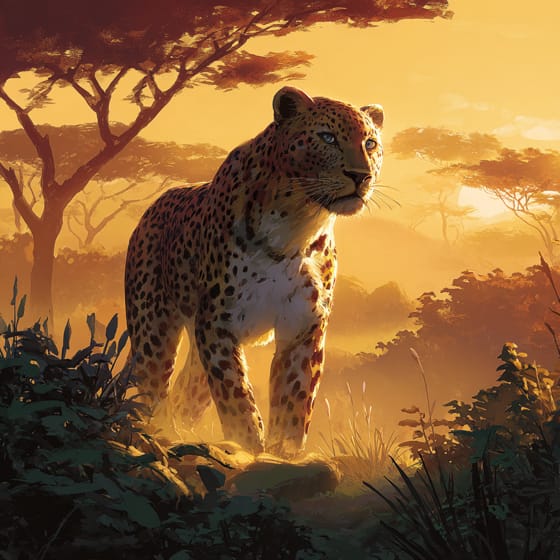
Panthera pardus
Main predator of adult and young Bongos.
Homo sapiens
Poaching and habitat loss threaten their survival.
Diospyros mespiliformis
Browses on leaves, shoots, and fruits.
Milicia excelsa
Consumes foliage from diverse forest plant species.
Wildlife encompasses all undomesticated animal and plant life existing in their natural habitats.
Furry describes animals possessing a dense covering of soft hair or fur.
Social animals live in organized groups, cooperating for survival benefits such as foraging, defense, and raising offspring.
Characterized by having one or more hard, permanent, pointed projections on the head.

This trait characterizes organisms whose diet consists entirely or primarily of plant material.

Forest habitats are terrestrial environments dominated by dense tree cover, supporting a high diversity of plant and animal life.

Nocturnal animals are primarily active during the nighttime hours, typically resting or sleeping during the day.
No aliases listed yet.
Danger
1/5 · Very low
Bongos are gentle animals and are not dangerous to people. It's best to admire them from a distance.
The easiest way to identify Bongo is to use the Snappit nature identifier app.
170-250 cm
210-405 kg
15-20 years
40 km/h
These large forest antelopes munch on leaves, shoots, fruits, and bark found in their dense habitat.
Forests
Foraging
Zoom in to split clusters and explore where this object has been snapped.
Recent snaps will appear here as new observations are added.
.jpg&width=800)
Ohio, US
You might spot Reticulated Giraffe, Zebra, and American Bison.
View guide →
New Jersey, US
You might spot African Lion, Snow Leopard, and Reticulated Giraffe.
View guide →

New Jersey, US
You might spot African Elephant, White Rhinoceros, and Grant's Zebra.
View guide →
New Jersey, US
You might spot African Elephant and White Rhinoceros.
View guide →

Virginia, US
You might spot Tiger, Giraffes, and White Rhinoceros.
View guide →
Texas, US
You might spot Komodo Dragon, Reticulated Giraffe, and Gorilla.
View guide →
Take the discovery with you
Snap it with Snappit to identify it, learn what makes it special, and add the discovery to your collection.




.jpg&width=800)


.JPG&width=800)


.jpg&width=800)
