





Cane Toad
Rhinella marina
The Cane Toad is a large amphibian with bumpy skin. It is known for its loud croaking sound and can puff up to look bigger when scared.
Habitat: Urban areas, Coastal areas
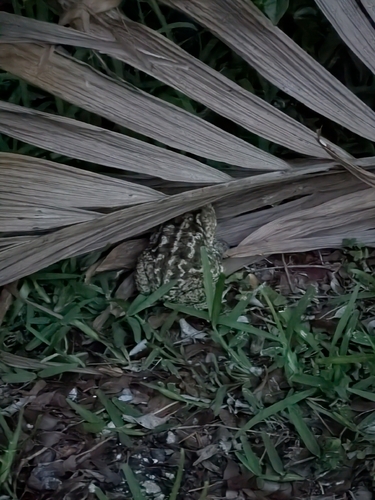
The Cane Toad has dry, warty skin, typically grey, olive-brown, or reddish-brown. It features prominent bony ridges above its eyes and very large, obvious parotoid glands behind its ears. This distinguishes it visually from most native Australian frogs.
Category
AmphibiansRarity
Common
Danger
3/5 · Moderate
Snaps
21
A single female cane toad can lay up to 35,000 eggs at once in long jelly strings!
Cane toads can absorb water through their skin, they don't need to drink with their mouth!
The biggest cane toad ever recorded was named 'Toadzilla' and weighed 2.7 kilograms!
These toads are nocturnal, meaning they are most active searching for food at night.
Cane Toads have large glands behind their eyes that release a milky toxin to protect them from predators.
Cane Toad tadpoles and eggs contain toxins, which helps them avoid being eaten by aquatic predators.
Cane Toads have tough, leathery skin that helps them resist water loss, enabling them to survive in drier habitats.
This opportunistic amphibian will eat almost anything that fits in its mouth, from insects to small rodents!
Age differences: Tadpoles eat algae and detritus. Juveniles and adults eat a wide variety of invertebrates and small vertebrates.
Musca domestica
Eats various insect species.

Periplaneta americana
Consumes many common invertebrates.
Liasis fuscus
Some populations have adapted to prey on them.
Homo sapiens
Introduced by humans to control agricultural pests.
This trait characterizes organisms with an exceptionally long lifespan compared to others of their kind.
Coastal habitats are dynamic environments located along the interface between land and sea, influenced by tides, waves, and saltwater.
This trait identifies organisms whose diet consists entirely or primarily of animal tissue.
Toxic organisms contain substances that are poisonous and can cause adverse effects upon exposure.

This habitat trait indicates species that can coexist with humans in urban and suburban environments, utilizing man-made structures and green spaces.

Invasive species are non-native organisms that cause harm to the environment, economy, or human health.

Nocturnal animals are primarily active during the nighttime hours, typically resting or sleeping during the day.

Venomous organisms produce toxins that are injected into another animal, typically through a bite or sting.
Danger
3/5 · Moderate
Never touch or pick up a Cane Toad as they can release harmful toxins. Always wash hands after being near them.
The easiest way to identify Cane Toad is to use the Snappit nature identifier app.
10-25 cm
0.05-2.65 kg
5-15 years
0.5 km/h
This opportunistic amphibian will eat almost anything that fits in its mouth, from insects to small rodents!
Urban areas, Coastal areas
Ambush
Zoom in to split clusters and explore where this object has been snapped.
May 20, 2026
Collins Waterfront Architectural DistrictPhoto attribution
no rights reserved
License: CC0 1.0 ↗
Image may be shown cropped inside the card frame.

Hawaii, US
You might spot Brown Anole, Gold Dust Day Gecko, and Red-Crested Cardinal.
View guide →

Florida, US
You might spot White Ibis, Green Iguana, and Black-Crowned Night Heron.
View guide →

Hawaii, US
You might spot Koster's Curse and White-Rumped Shama.
View guide →

US
You might spot Laughing Gull, Brown Anole, and Green Iguana.
View guide →
Hawaii, US
You might spot Gold Dust Day Gecko, Sea Turtle, and Brown Anole.
View guide →

Florida, US
You might spot African Lion, Reticulated Giraffe, and Florida Panther.
View guide →
Take the discovery with you
Snap it with Snappit to identify it, learn what makes it special, and add the discovery to your collection.










.JPG&width=800)




.jpg&width=800)
