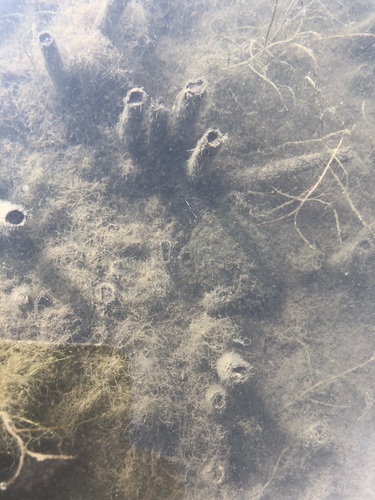
Common Musk Turtle
Sternotherus odoratus
The Common Musk Turtle is a small turtle that can produce a smelly musk when it feels scared. They are very good at swimming and love to munch on plants!
Habitat: Ponds, marshes, and slow-moving rivers
The Common Musk Turtle is a small turtle with a smooth, dark, dome-shaped shell often covered in algae. It has two distinct yellowish stripes on its head and neck. Its underside is small and fleshy.
Category
ReptilesRarity
Common
Danger
2/5 · Low
Snaps
25
Their small bottom shell gives them surprising flexibility for climbing.
These turtles rarely leave the water, even to bask in the sun.
They can breathe underwater through special tissues in their mouth!
They sometimes climb out onto low branches to sunbathe!
Common Musk Turtle has powerful legs that help them walk along the bottom of ponds instead of just swimming.
Common Musk Turtle has strong jaws that help them crush the shells of snails and other hard-bodied prey.
This turtle is an omnivore, eating insects, snails, worms, and some aquatic plants.
Age differences: Juveniles are more carnivorous; adults incorporate more plant matter.
Planorbarius corneus
An important food source for the turtle.
Chironomus plumosus
Preys on aquatic insect larvae in mud.
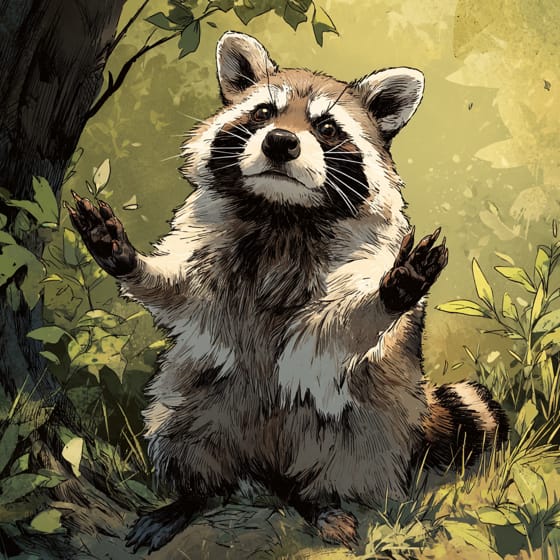
Procyon lotor
Raccoons prey on turtle eggs and young hatchlings.

Haliaeetus leucocephalus
Predatory birds might catch young turtles.
Wildlife encompasses all undomesticated animal and plant life existing in their natural habitats.
Solitary animals live alone for most of their lives, only interacting with others for mating or parental care.
This trait characterizes organisms whose diet consists entirely or primarily of plant material.
This trait signifies organisms belonging to a very old evolutionary group with ancestors dating back millions of years.

This trait characterizes organisms with an exceptionally long lifespan compared to others of their kind.

Armored describes animals protected by a hard, external covering or shell for defense.

Freshwater habitats include non-saline aquatic environments such as rivers, lakes, ponds, and wetlands, vital for numerous species.

Nocturnal animals are primarily active during the nighttime hours, typically resting or sleeping during the day.
Danger
2/5 · Low
Look but don’t touch. Keep a safe distance and wash hands after exploring.
The easiest way to identify Common Musk Turtle is to use the Snappit nature identifier app.
5-14 cm
0.1-0.3 kg
10-50 years
0.5 km/h
This turtle is an omnivore, eating insects, snails, worms, and some aquatic plants.
1.5 km/h
Ponds, marshes, and slow-moving rivers
Zoom in to split clusters and explore where this object has been snapped.
May 28, 2026
Arden Park–East Boston Historic DistrictPhoto attribution
(c) Nodnarb Nedloh, some rights reserved (CC BY-SA)
License: CC BY-SA 4.0 ↗
Image may be shown cropped inside the card frame.

Michigan, US
You might spot Eastern Gray Squirrel, Tree-Of-Heaven, and House Sparrow.
View guide →

Alabama, US
You might spot American Beautyberry, White-Tailed Deer, and Peppervine.
View guide →

Virginia, US
You might spot Eastern Tiger Swallowtail, Fowler's Toad, and Monarch.
View guide →

New Jersey, US
You might spot Duck, Canada Goose, and Red-Winged Blackbird.
View guide →

South Carolina, US
You might spot American Alligator, Great Blue Heron, and Anhinga.
View guide →

New York, US
You might spot Bald Eagle, Common Reed, and Ring-Billed Gull.
View guide →
Take the discovery with you
Snap it with Snappit to identify it, learn what makes it special, and add the discovery to your collection.