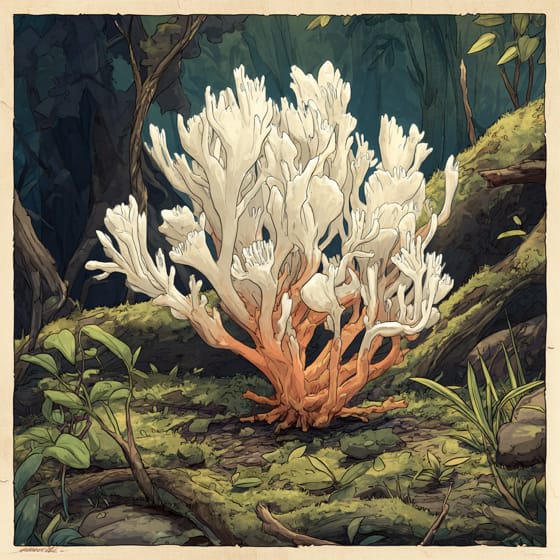





Coral Fungus
Clavulina
Coral Fungus looks like little corals from the ocean! It can be white or colorful and grows on the forest floor.
Habitat: Forest floor
The Coral Fungus is a unique fungus with an upright, highly branched structure, resembling sea coral on the forest floor. It typically appears white to cream-colored, sometimes with purple or yellowish tints, making it stand out among dead leaves.
Category
FungiRarity
Common
Danger
1/5 · Very low
Snaps
Be the first to snap!
Despite its name, it lives on land, not in the ocean like real coral!
Its branches don't have gills; they release spores from their smooth surfaces!
Many types of Coral Fungus are safe to eat, though they don't taste like much!
Some species look like tiny, ghostly white antlers growing on the forest floor!
Coral Fungus can form special partnerships with tree roots, sharing nutrients to help both thrive in the forest soil.
Coral Fungus has a branching structure that helps it spread out, increasing the surface area to absorb more food from its surroundings.
Coral Fungus can release tiny spores into the air, which are like seeds, to float away and grow new fungi far away.
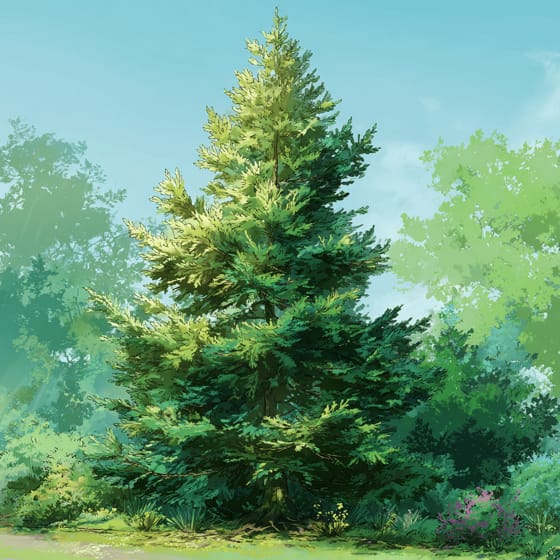
Picea abies
They share nutrients, helping both forest partners grow strong.
Arion lusitanicus
Slugs enjoy munching on its fleshy, branched structures.
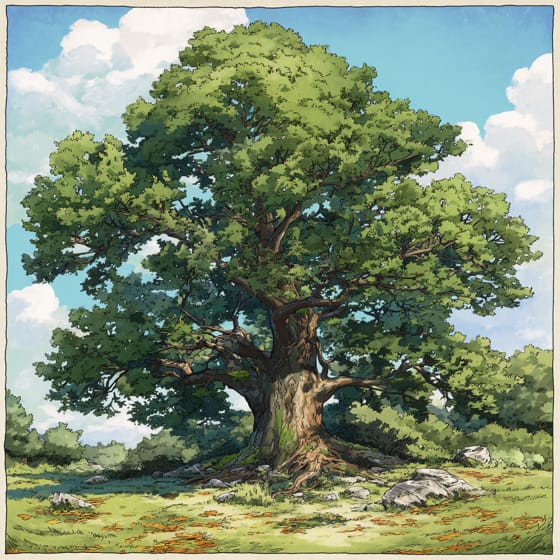
Quercus robur
It helps decompose fallen oak leaves and wood, enriching the forest soil.
Spore-producing organisms reproduce by releasing small, often single-celled, reproductive units called spores.
Colorful describes organisms or objects displaying a wide range of bright and distinct colors.
Forest habitats are terrestrial environments dominated by dense tree cover, supporting a high diversity of plant and animal life.
Danger
1/5 · Very low
Do not pick or eat anything you find. Some plants and mushrooms can be harmful.
The easiest way to identify Coral Fungus is to use the Snappit nature identifier app.
2-15 cm
edible
Forest floor
soil
Late summer to fall
White
Zoom in to split clusters and explore where this object has been snapped.
Recent snaps will appear here as new observations are added.
Take the discovery with you
Snap it with Snappit to identify it, learn what makes it special, and add the discovery to your collection.