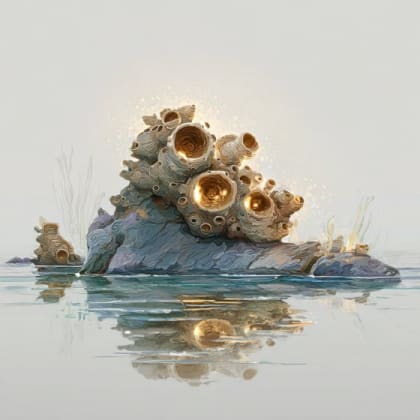

Ctenophore
Mertensia (ctenophore)
Ctenophores, also known as comb jellies, are beautiful creatures found in oceans. They have transparent bodies and rows of glowing cilia that help them move gracefully through the water.
Habitat: Marine
The Ctenophore has a transparent, jelly-like body, often shaped like a sphere or bell. It features eight distinct rows of shimmering, iridescent combs that glow with rainbow colours as it moves through water.
Category
InvertebrateRarity
Rare
Danger
2/5 · Low
Snaps
Be the first to snap!
Comb jellies are named for the tiny 'combs' they use to swim!
Ctenophores can completely regrow missing body parts, even their mouths!
Some ctenophores can even eat other ctenophores for dinner!
They were the first animals to evolve a complete gut with two openings!
Ctenophores have eight rows of tiny, hair-like cilia (combs) that beat in waves to propel them and create a rainbow effect.
Ctenophores can make their own light using special cells called photocytes, which helps them attract prey or scare predators.
Some Ctenophores have sticky cells called colloblasts on their tentacles to capture tiny prey, preventing their escape.
Tiny plankton and other small marine organisms are favorite meals for ctenophores.
Mola mola
Huge fish that often eats jellies.
Acartia tonsa
Major food source for many ctenophores.
Beroe ovata
Some ctenophores prey on other ctenophores.
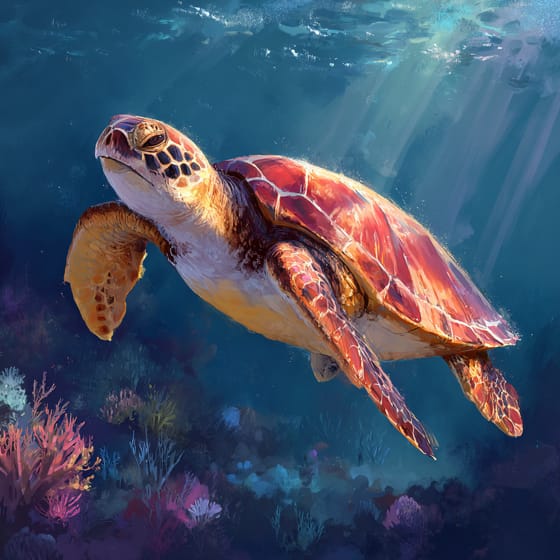
Caretta caretta
These turtles often mistake jellies for food.
Wildlife encompasses all undomesticated animal and plant life existing in their natural habitats.
This trait signifies organisms belonging to a very old evolutionary group with ancestors dating back millions of years.
This trait identifies organisms whose diet consists entirely or primarily of animal tissue.
Regenerative organisms possess the ability to regrow lost or damaged body parts, tissues, or organs.

Marine habitats encompass all saltwater environments of the Earth's oceans, supporting an immense diversity of aquatic life.

Pertaining to organisms that emit light through bioluminescence or fluorescence.

Nocturnal animals are primarily active during the nighttime hours, typically resting or sleeping during the day.
No aliases listed yet.
Danger
2/5 · Low
Do not touch ctenophores in the wild as some species can sting.
The easiest way to identify Ctenophore is to use the Snappit nature identifier app.
0.5 cm
1 years
Tiny plankton and other small marine organisms are favorite meals for ctenophores.
Marine
Filter Feeding
2000 m
2 cm/s
Zoom in to split clusters and explore where this object has been snapped.
Recent snaps will appear here as new observations are added.
Take the discovery with you
Snap it with Snappit to identify it, learn what makes it special, and add the discovery to your collection.