




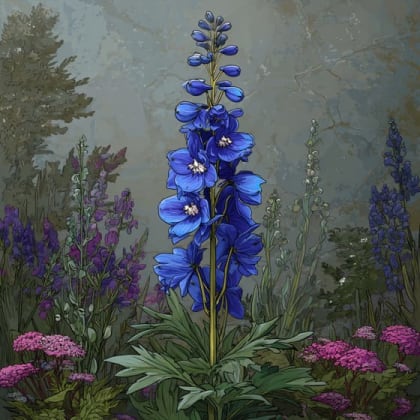
Delphinium
Delphinium ajacis
Delphiniums are tall flowers with spikes of blue, purple, or white blooms. They make any garden look magical!
Habitat: Gardens and flower beds
The Delphinium has tall, stately flower spikes, often in vivid blues, purples, pinks, or white, with individual flowers featuring a distinctive spur at the back. Its deeply lobed leaves form a neat clump below the colorful bloom.
Category
PlantsRarity
Common
Danger
1/5 · Very low
Snaps
5
"Delphinium" means "dolphin" in Greek, named for its flower buds resembling a leaping dolphin!
Ancient societies once used delphinium flowers to create beautiful blue dyes and inks!
Some delphinium petals contain special pigments that make their blue color even more vibrant!
The tiny spur on each flower acts like a secret hiding place for nectar, attracting thirsty insects!
Delphinium produces powerful toxins that deter hungry animals, helping it survive from being eaten.
Its tall flower spikes stand out against other plants, making them easy for pollinators to spot.
Delphinium has a unique spurred flower shape that guides specific pollinators directly to its nectar.
Apis mellifera
Collects nectar and pollen from flowers.
Bombus terrestris
Visits the spurred flowers for sweet nectar.
Aphis fabae
Sucks sap from stems, potentially causing damage.

Helix aspersa
Grazes on leaves and tender young plant parts.
Herbaceous plants are non-woody plants with soft stems that typically die back to the ground at the end of the growing season.
Flowering plants are any plants that produce flowers as part of their reproductive cycle.
Ornamental plants are cultivated primarily for their aesthetic appeal, enhancing landscapes and gardens with their attractive foliage, flowers, or form.
Summer blooming plants produce their flowers during the summer season, often providing vibrant color when many other plants have finished.

This habitat trait indicates species that can coexist with humans in urban and suburban environments, utilizing man-made structures and green spaces.
Danger
1/5 · Very low
Explore with care and ask an adult if you’re unsure what to do.
The easiest way to identify Delphinium is to use the Snappit nature identifier app.
30-100 cm
15-30 cm
2-4 cm
Late spring to late summer
No
High
Annual
Zoom in to split clusters and explore where this object has been snapped.
Kentucky, US
You might spot Kangaroos, Possums, Wombats, and Allies and Emu.
View guide →

Kentucky, US
You might spot Eastern Gray Squirrel and American Pokeweed.
View guide →

Kentucky, US
You might spot Eastern Gray Squirrel and American Robin.
View guide →
Take the discovery with you
Snap it with Snappit to identify it, learn what makes it special, and add the discovery to your collection.








.jpg&width=800)



_001.jpg&width=800)




