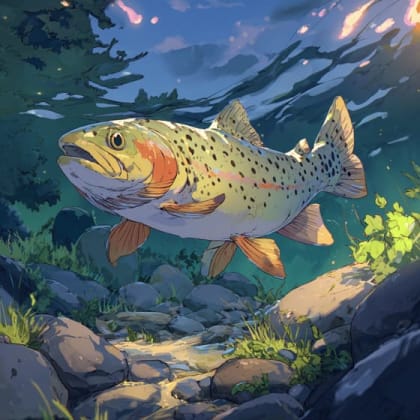
European Anchovy
Engraulis encrasicolus
The European Anchovy is a small fish that is often found in warm waters. They are known for their strong flavor and are used in many dishes!
Habitat: Warm coastal waters
The European Anchovy is a small, slender fish with a silvery-white belly and a bluish-green to black back. It has a distinctive pointed snout and a large mouth that extends behind its eye, setting it apart from other small schooling fish.
Category
FishRarity
Common
Danger
2/5 · Low
Snaps
Be the first to snap!
Anchovy populations can change dramatically from year to year, sometimes booming and sometimes declining!
Despite their small size, anchovies are an incredibly important food source for many larger ocean animals.
Many ancient civilizations, like the Romans, used anchovies to make a famous fermented sauce called garum!
Their tiny, transparent eggs float freely in the ocean, drifting with currents until they hatch into larvae.
European Anchovy can detect tiny food particles with its sensitive olfactory organs, helping it find meals efficiently.
European Anchovy has evolved to swim in massive schools that helps them confuse predators and find safety in numbers.
European Anchovy has specialized gill rakers that help them filter-feed tiny plankton efficiently from the water.
These tiny fish are filter-feeders, straining microscopic plants and animals from the water.
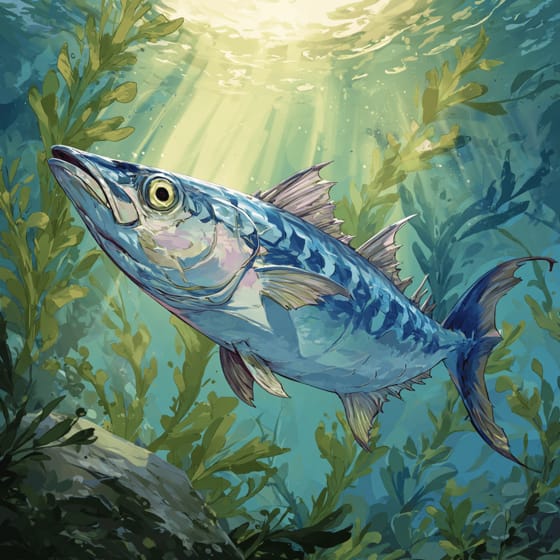
Scomber scombrus
Mackerel are common predators of anchovy schools.
Thunnus thynnus
Tuna rely heavily on anchovies as a vital food source.

Larus michahellis
Gulls dive into anchovy schools for easy meals.
Phocoena phocoena
Porpoises actively hunt anchovies in coastal waters.
Wildlife encompasses all undomesticated animal and plant life existing in their natural habitats.
Piscivorous organisms are animals that primarily subsist on a diet of fish.
Coastal habitats are dynamic environments located along the interface between land and sea, influenced by tides, waves, and saltwater.
Aquatic habitats encompass environments where organisms live predominantly in water, including oceans, rivers, lakes, and wetlands.

Marine habitats encompass all saltwater environments of the Earth's oceans, supporting an immense diversity of aquatic life.
Danger
2/5 · Low
Watch quietly from a distance and never try to feed or chase wild animals.
The easiest way to identify European Anchovy is to use the Snappit nature identifier app.
10-20 cm
0.01-0.03 kg
2-4 years
These tiny fish are filter-feeders, straining microscopic plants and animals from the water.
15 km/h
Warm coastal waters
Filter Feeding
Zoom in to split clusters and explore where this object has been snapped.
Recent snaps will appear here as new observations are added.
Take the discovery with you
Snap it with Snappit to identify it, learn what makes it special, and add the discovery to your collection.