



Honey Fungus
Armillaria
Honey Fungus is a sweet-looking fungus that grows on trees! It can be yellowish and often grows in clusters.
Habitat: On trees
The Honey Fungus has yellow-brown to honey-colored caps, often scaly, that grow in dense clusters. It features white gills underneath and a prominent ring around its stem. This fungus is distinctive for its tendency to grow at the base of trees or on stumps.
Category
FungiRarity
Common
Danger
1/5 · Very low
Snaps
Be the first to snap!
In some places, it’s cooked and eaten as a delicious wild mushroom!
Its long, black root-like structures are called rhizomorphs – they look like bootlaces!
The largest known living organism by area might be a single honey fungus colony!
This fungus can make infected wood glow in the dark, a phenomenon called 'foxfire'!
Honey Fungus can grow long, black 'shoelaces' underground because of special root-like structures called rhizomorphs that help them spread far.
Some Honey Fungus species can glow in the dark, because of bioluminescence that helps them emit a soft, spooky light.
Honey Fungus can infect and kill living trees because its mycelium invades and rots their wood, weakening them over time.

Quercus robur
Causes root rot and decay in oaks.
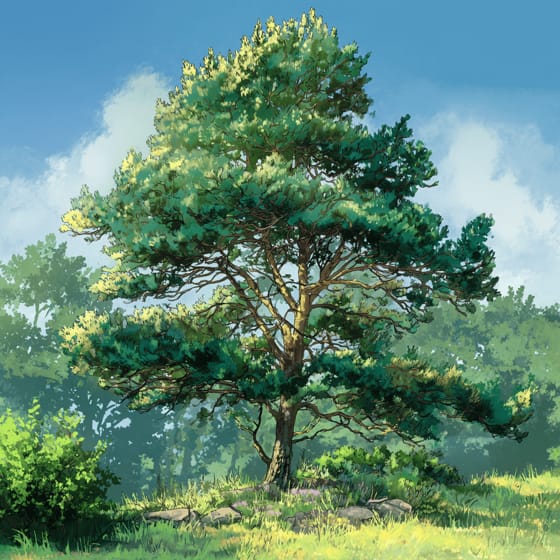
Pinus sylvestris
Weakens and can kill conifer trees.

Fagus sylvatica
Infects the roots and base of beech trees.
Homo sapiens
Collected and consumed as a culinary mushroom.
Deciduous plants periodically shed all their leaves, typically during autumn or dry seasons.
Spore-producing organisms reproduce by releasing small, often single-celled, reproductive units called spores.
Forest habitats are terrestrial environments dominated by dense tree cover, supporting a high diversity of plant and animal life.
Danger
1/5 · Very low
Do not pick or eat anything you find. Some plants and mushrooms can be harmful.
The easiest way to identify Honey Fungus is to use the Snappit nature identifier app.
5-15 cm
edible
3-15 cm
On trees
wood
Late summer to fall
White
Zoom in to split clusters and explore where this object has been snapped.
Recent snaps will appear here as new observations are added.
Take the discovery with you
Snap it with Snappit to identify it, learn what makes it special, and add the discovery to your collection.