

Scots pine
Pinus sylvestris
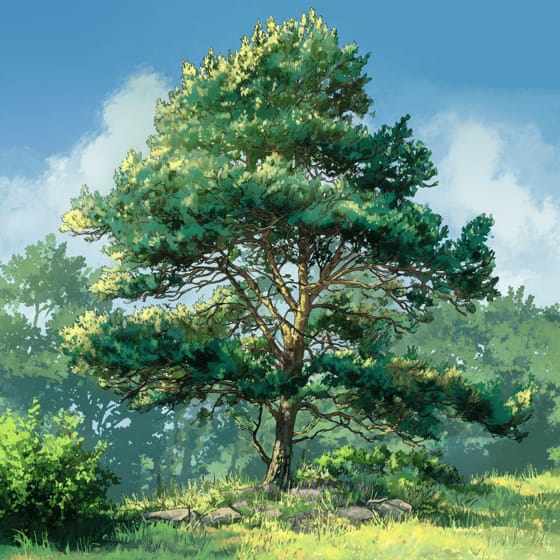
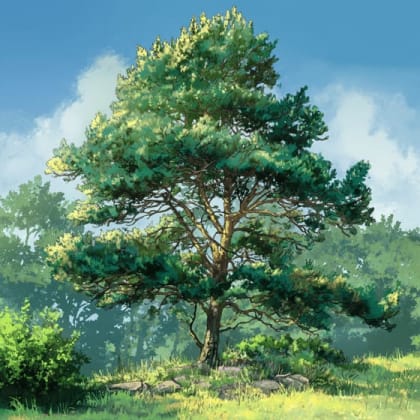
The Scots pine is a tall tree with long, slender trunks and soft, green needles. It grows in many places and is known for its beautiful, straight shape. This tree is important for wildlife and people alike!
Habitat: Forests
The Scots pine is a tall evergreen conifer with distinctive reddish-orange bark that peels in plates on its upper trunk and branches. It has paired, stiff, blue-green needles and an often irregular, open crown when mature, unlike many other conifers.
Category
PlantsRarity
Common
Danger
1/5 · Very low
Snaps
6
Its fresh needles can be brewed into a tea rich in vitamin C!
Its strong wood was once used to build the mighty masts of sailing ships!
The oldest Scots pine in Scotland is over 500 years old!
You can tell a Scots pine by its wonderfully distinctive orangey-red top bark!
Scots pine has thick, flaky bark, especially on its lower trunk, that helps protect it from ground fires, allowing it to survive.
Scots pine needles are covered in a waxy layer and grow in pairs, which helps them conserve water in dry or cold climates.
Scots pine can grow in nutrient-poor or sandy soils where other trees struggle, helping it establish new forests.
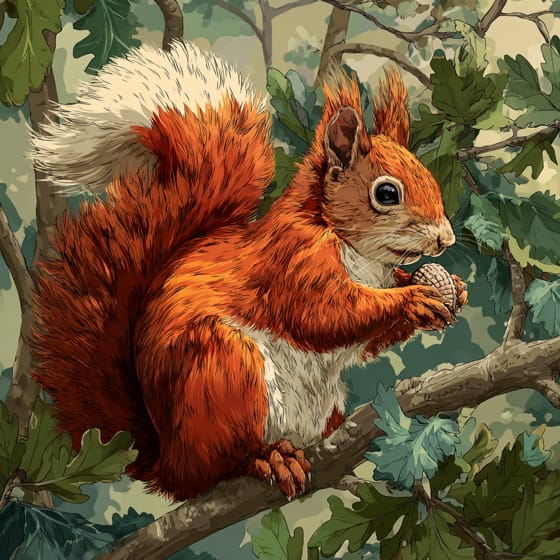
Sciurus vulgaris
Feeds on the nutritious seeds found within pine cones.
Loxia scotica
Its unique beak is perfectly shaped to extract seeds from pine cones.
Tetrao urogallus
Mainly feeds on its needles, especially during winter months.
Suillus luteus
Its roots and this fungus share nutrients underground.
Cold hardy plants are able to withstand low temperatures and freezing conditions without significant damage.
Coniferous plants are typically evergreen, bearing needles or scales and reproductive cones.
Evergreen plants retain their foliage throughout the year, never shedding all their leaves at once.
Timber refers to wood that has been prepared for use in building and carpentry.

This trait signifies organisms belonging to a very old evolutionary group with ancestors dating back millions of years.

Forest habitats are terrestrial environments dominated by dense tree cover, supporting a high diversity of plant and animal life.

This trait characterizes organisms with an exceptionally long lifespan compared to others of their kind.

Describes a species whose presence and role have a disproportionately large effect on its environment.
No aliases listed yet.
Danger
1/5 · Very low
Stay on paths when exploring forests and don't climb trees without an adult.
The easiest way to identify Scots pine is to use the Snappit nature identifier app.
1500-3500 cm
600-800 cm
Spring
No
None
Perennial
Wind
Zoom in to split clusters and explore where this object has been snapped.

Illinois, US
You might spot White-Tailed Deer, Lesser Celandine, and American Robin.
View guide →
.jpg&width=800)
Ohio, US
You might spot Reticulated Giraffe, Zebra, and American Bison.
View guide →

England, UK
You might spot African Lion, Tiger, and Southern White Rhinoceros.
View guide →

Östergötland County, SE
You might spot Tiger, Gorilla, and Bottlenose Dolphin.
View guide →

England, UK
You might spot Chimpanzee, Bornean Orangutan, and Sumatran Orangutan.
View guide →

Andalusia, ES
You might spot Omocestus Bolivari, Veronica Hederifolia, and Scots Pine.
View guide →
Take the discovery with you
Snap it with Snappit to identify it, learn what makes it special, and add the discovery to your collection.









.jpg&width=800)



_001.jpg&width=800)


