





European Beech
Fagus sylvatica
The European Beech is a tall tree with smooth gray bark and beautiful green leaves. In autumn, its leaves turn a lovely golden color!
Habitat: Forests and woodlands
The European Beech is a majestic tree known for its smooth, light grey bark and distinctive wavy-edged, oval leaves that turn brilliant copper in autumn. It often forms a dense, broad crown, casting deep shade below its elegant, spreading branches.
Category
TreesRarity
Common
Danger
2/5 · Low
Snaps
8
Beech trees in a forest can actually share nutrients and water through their interconnected root systems, like a hidden network!
In autumn, entire European Beech forests can transform into a breathtaking golden-copper spectacle, visible for miles!
Its strong, durable wood is so fine-grained that it's often used for furniture, flooring, and even musical instruments!
The European Beech holds onto some of its dried brown leaves all winter long, a trait called 'marcescence'!
European Beech can grow a dense canopy that helps it outcompete other plants by blocking sunlight from reaching the forest floor.
European Beech has incredibly smooth bark that makes it harder for climbing plants and some parasites to attach and spread on its trunk.
European Beech can produce huge amounts of nutritious beechnuts in 'mast years', overwhelming predators to ensure some seeds survive.
European Beech has leaves that decompose slowly, forming a rich, deep leaf litter that improves soil quality and suppresses competing undergrowth.
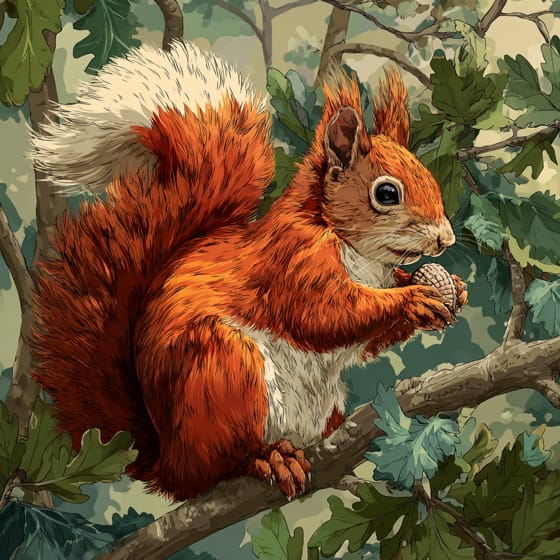
Sciurus vulgaris
Feeds on nutritious beechnuts, burying some for winter.
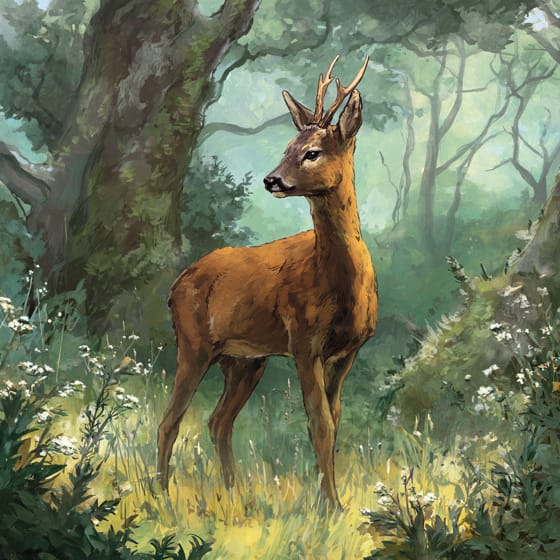
Capreolus capreolus
Browses on young leaves, shoots, and bark during leaner seasons.
Pernis apivorus
Often nests high in the strong branches of mature beech trees.
Boletus edulis
Its roots form mycorrhizal partnerships for nutrient exchange.
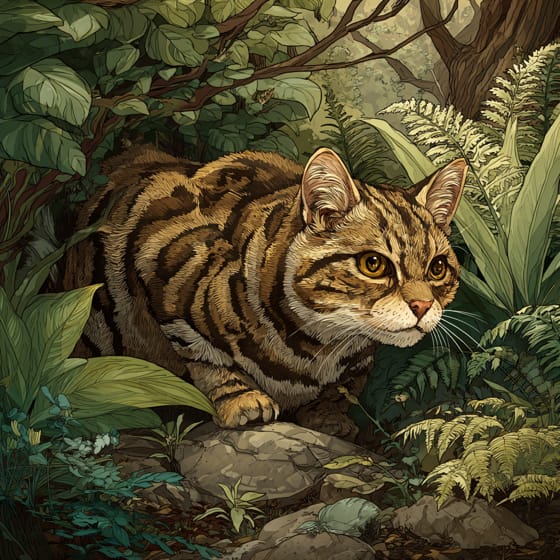
Felis silvestris
Uses dense undergrowth beneath canopies for hunting and cover.
Deciduous plants periodically shed all their leaves, typically during autumn or dry seasons.
Broadleaf trees are angiosperms characterized by flat, wide leaves that are typically shed annually in temperate climates.
Nut bearing plants produce hard-shelled fruits, commonly known as nuts, which contain a single seed and are a valuable food source.
Fall color refers to the seasonal change in foliage pigmentation, primarily in deciduous plants, displaying vibrant hues.

Forest habitats are terrestrial environments dominated by dense tree cover, supporting a high diversity of plant and animal life.

This trait characterizes organisms with an exceptionally long lifespan compared to others of their kind.
Danger
2/5 · Low
Do not pick or eat anything you find. Some plants and mushrooms can be harmful.
The easiest way to identify European Beech is to use the Snappit nature identifier app.
20-40 m
10-25 m
Yes
100-200 cm
150-300 years
Forests and woodlands
Beechnut
Zoom in to split clusters and explore where this object has been snapped.

Northern Ireland, UK
You might spot Giraffes, Spectacled Bear, and Goodfellow's Tree-Kangaroo.
View guide →

England, UK
You might spot Carpathian Lynx, Deer, and Visayan Warty Pig.
View guide →

Maryland, US
You might spot Spectacled Bear, Jaguar, and Canis Lupus Rufus.
View guide →

Normandy, FR
You might spot White Tiger, Giraffes, and White Rhinoceros.
View guide →

England, UK
You might spot Asian Elephant and Southern White Rhinoceros.
View guide →

British Columbia, CA
You might spot Greater Yellowlegs and Glaucous-Winged Gull.
View guide →
Take the discovery with you
Snap it with Snappit to identify it, learn what makes it special, and add the discovery to your collection.









